9.0 moaverage South-region build time for a custom, contractor-built house
13.7%of a production home’s price that is the finished lot, nationally
Ch. 720governs an HOA’s recorded declaration of covenants, if a lot has one
By Elbaz ConstructionUpdated October 9, 20267 min readSources: U.S. Census Bureau · NAHB · Florida Statutes
Custom vs. production vs. owner-built
The short answer
?
The Census Bureau sorts new single-family houses into three categories by who directs the build: built for sale (a builder designs and builds on its own lot, then sells the finished house – the “cookie-cutter” or production-home case), contractor-built (an owner hires a contractor to build on land the owner already controls – the custom-home case), and owner-built (the owner manages the build directly). The categories differ in design control, how long the project takes, and what the published price does and does not include – not in which Florida Building Code applies, which is the same either way.
01
Built for sale
A builder designs, permits and builds on land it already owns, to a model buyers choose from, then sells the finished house.
02
Contractor-built (custom)
An owner who already controls the land hires a contractor to design and build to the owner’s plan.
03
Owner-built
The owner acts as their own general contractor, managing trades directly.
Census start-to-completion data
A custom build runs longer, on average
The Census Bureau tracks how many months pass between the start of construction and completion, by construction purpose, in its Survey of Construction. Averaged across 2025, a contractor-built (custom) house took nearly twice as long as a house built for sale, both nationally and in the 16-state South region that includes Florida:
The South figure is a 16-state Census region, never a Florida or South Florida number on its own. The gap is the design and planning phase: a production builder reuses a plan it has already drawn and permitted before, while a custom plan is drawn, priced and permitted for the first time. The time from permit to the start of construction is close for both paths (1.4–1.6 months nationally and in the South) – the difference shows up before that, in design, and after, in the build itself. See our new home construction timeline guide for the permit and inspection milestones either path goes through.
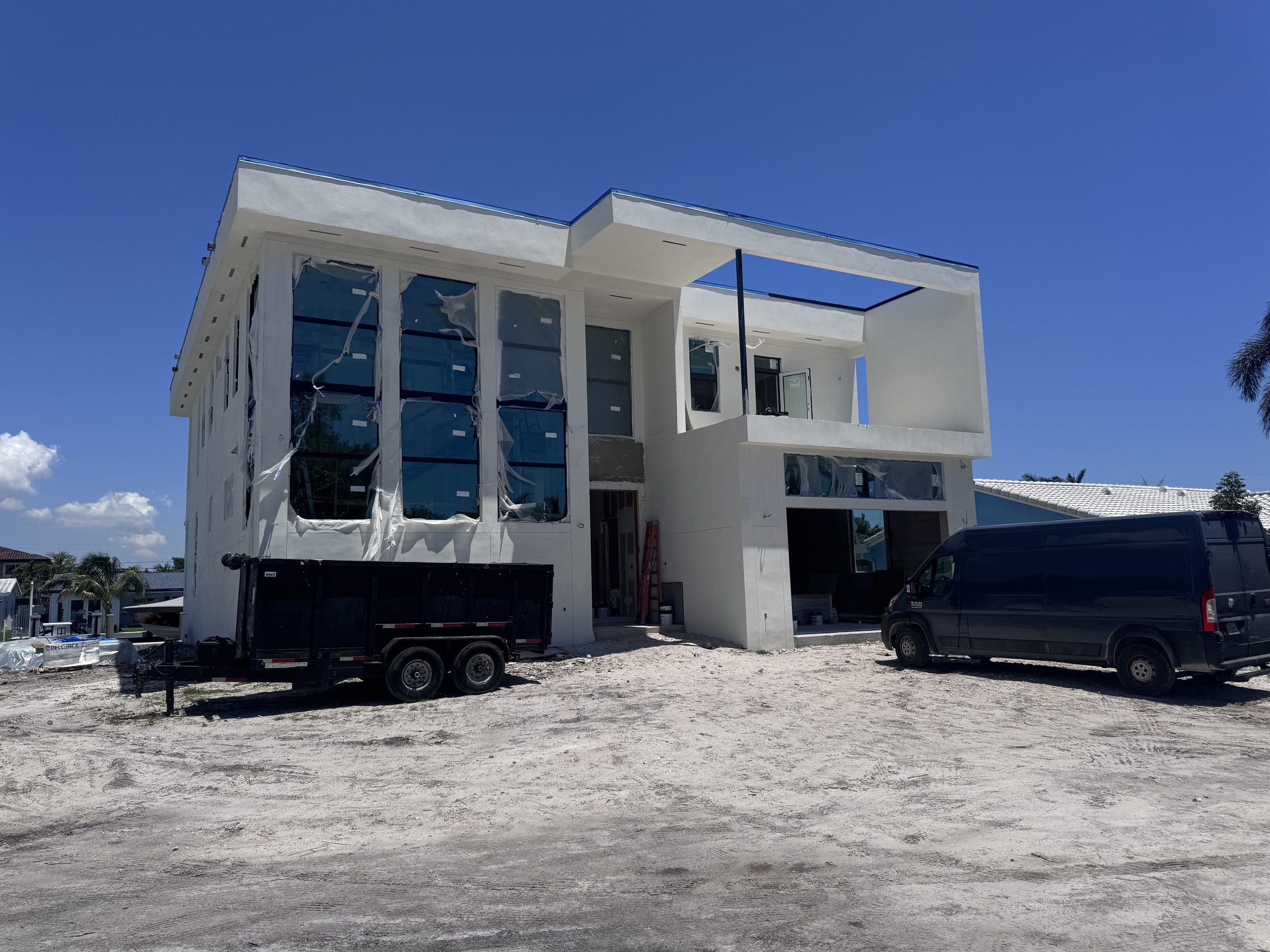
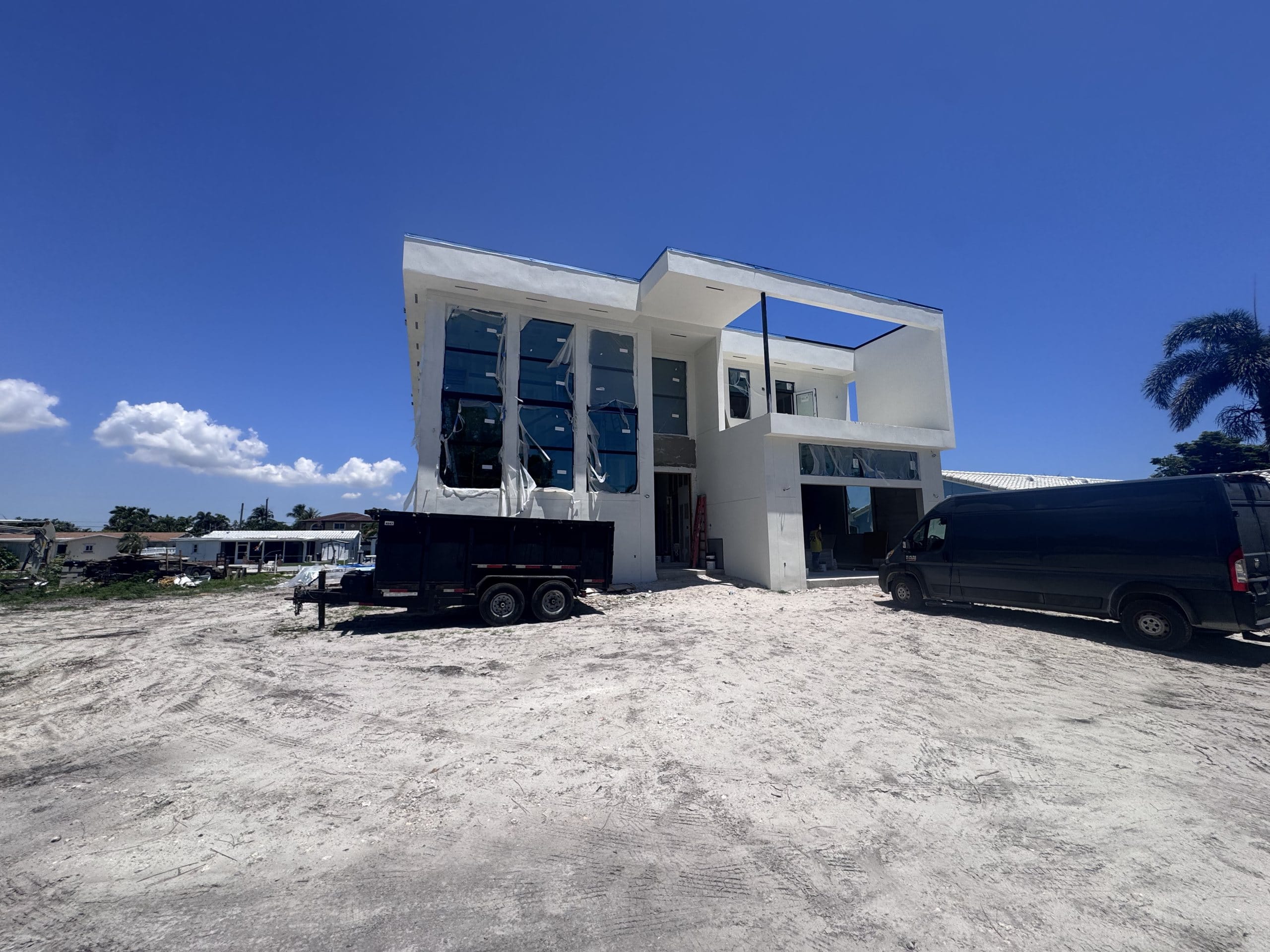
A new Elbaz Construction house set back on its graded lot – a custom, contractor-built project from the start of design.
Lot cost is the catch
Why the published prices are not an apples-to-apples comparison
Census reports a median $417,400 sales price for a house built for sale in 2025 (median size 2,194 sq ft), against a median $404,000 contract price for a contractor-built house. Read alone, that looks like custom costs less – but the built-for-sale price includes a finished lot, and the contractor-built figure typically does not, because the owner already owns or is buying the land separately. The NAHB’s national Cost of Constructing a Home study (2024 data) shows how much of a builder’s price is the lot:
Where a $665,298 built-for-sale price goes
NAHB, Cost of Constructing a Home (2024 data, national, 41 builders)
Construction costFinished lotProfit & overhead
Construction cost: $428,215Finished lot: $91,057Profit & overhead: $146,026
That works out to 64.4% construction, 13.7% finished lot and the remainder profit and overhead, on average, nationally – not a South Florida figure. A custom build’s contract typically covers only the construction-cost slice, because the lot is already accounted for separately. Comparing a custom contract price to a production sales price without adjusting for the lot overstates the production home’s savings. See our new home construction cost guide for the flood, wind, energy, impact-fee and connection-charge lines that apply to a ground-up build either way.
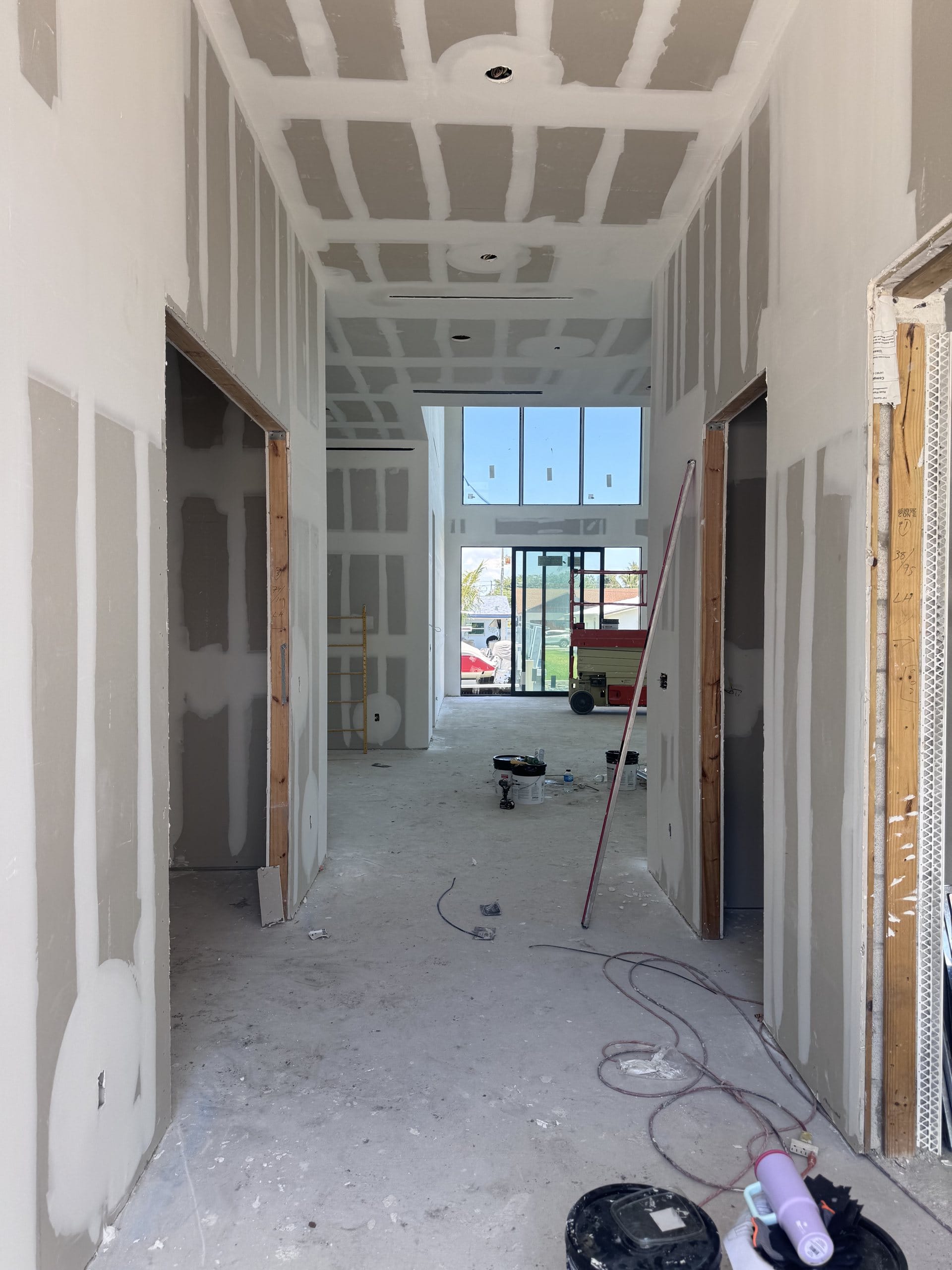
Rough-in plumbing and electrical inspected before drywall on a new Elbaz Construction house – the same inspection sequence applies to a custom or a production build.
The lot, not the label
What actually limits your choices
A custom lot you already control
The design starts from your plan, not a model list
Layout, systems and finishes are open until you lock the drawings
The applicable rules are the Florida Building Code and your local zoning code (setbacks, height, landscape)
A lot inside a planned subdivision
The builder’s model and option list set the starting point
A recorded declaration of covenants, under chapter 720, F.S., can bind the lot to the community’s governing documents
Those governing documents are the ones to read before assuming a change is allowed
The legal difference is not that one type of home is “more restricted” by the building code itself – the Florida Building Code and the local zoning rules (setbacks, height, landscaping; see Miami-Dade’s homeowner permit guidance) apply to both. The difference is whether the lot is also bound to a recorded declaration of covenants under chapter 720, Florida Statutes, which governs most planned subdivisions and can carry its own design standards on top of the code and zoning.
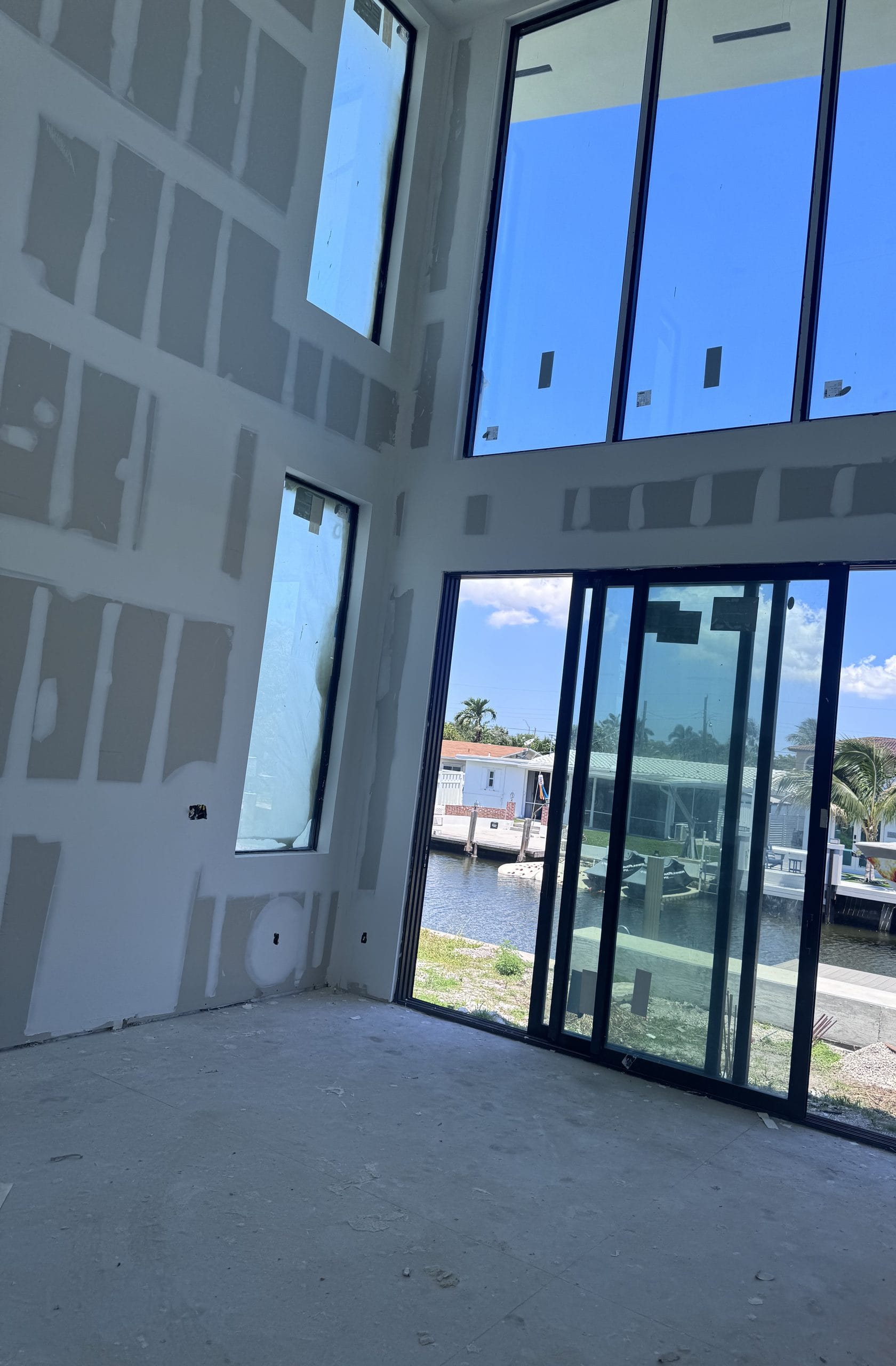
A multi-panel sliding glass wall and two-storey glazed corner, custom-specified on an Elbaz Construction house built on an owner-controlled lot.
Same code, same statutory clock
The permit process does not change by label
Florida’s statutory plan-review clock (section 553.792) gives the building department 30 business days to review a single-family permit application under 7,500 sq ft (60 business days at or above that size), with written notice of deficiencies within 5 business days or the application is deemed complete. None of that changes based on whether the house is a one-off custom design or a model the builder has permitted many times before; a repeat model can move faster through a builder’s own drafting and pricing, but not through a separate, faster government review.
Interactive checklist
Figuring out which one fits your project
0 of 5 done
Custom, on your lot
What we build
Elbaz Construction builds custom homes on a lot the owner already controls across Miami-Dade, Broward and Palm Beach – not production or spec homes in a builder-owned subdivision. We work from your plan or your architect’s drawings, through permitting and inspection, to a finished house built to the Florida Building Code and your local zoning requirements.
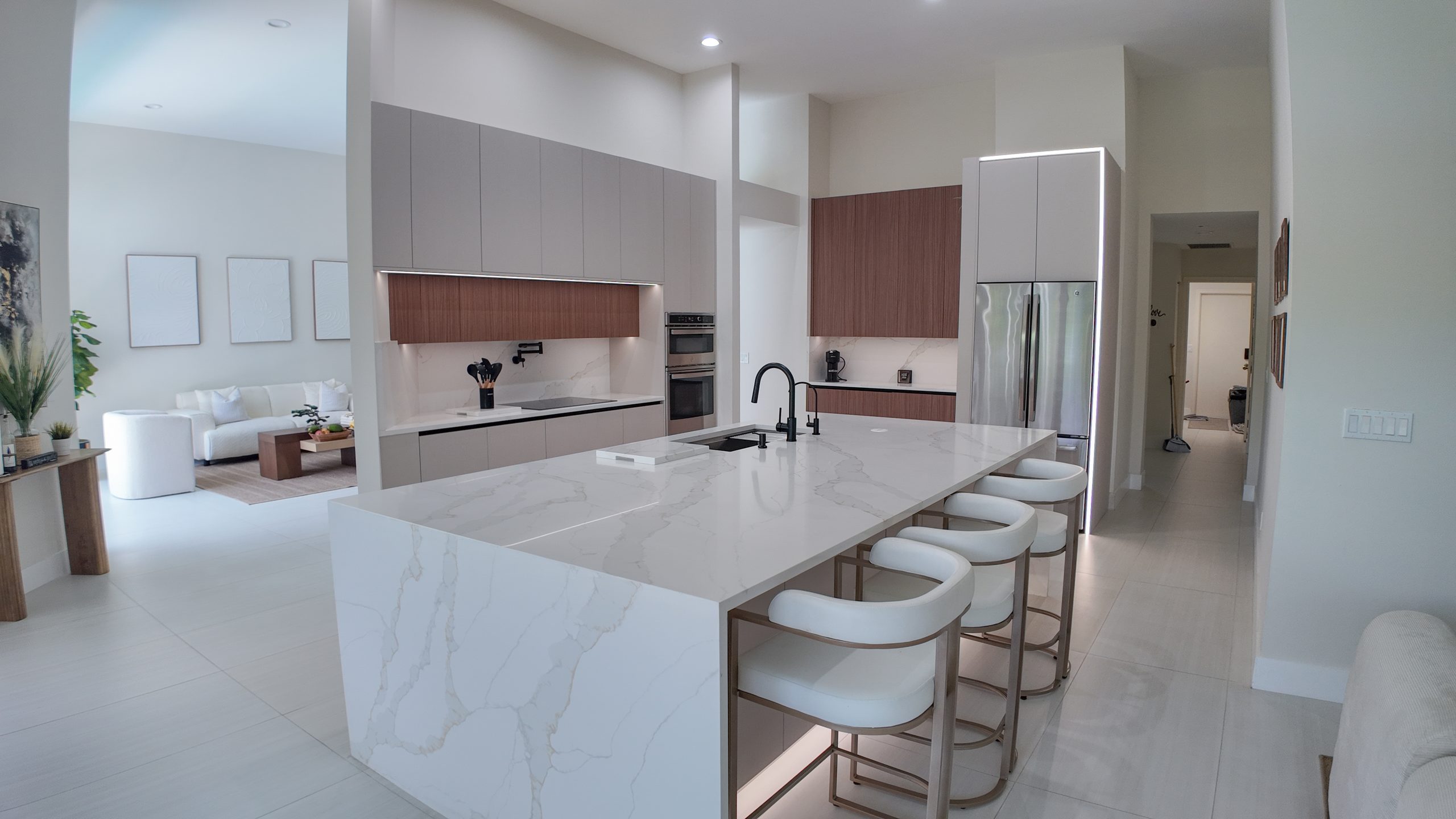
An open-plan kitchen and living space in a custom Elbaz Construction house, designed to the owner’s layout rather than a builder’s model.
Real Elbaz Construction projects, each built to an owner’s plan on the owner’s lot. Photos show the work only; none is presented as a particular home or location. Tap a photo to enlarge.
Asher was the best choice I have made. We love the outcome of the ADU . They showed up on time and did a great job, were friendly. No issues at all during the whole process. Very organized team . I would recommend them to everyone I know !
RRobert Bryan
”
Great experience! The team was professional, efficient, and delivered high-quality work on time. They communicated clearly throughout the project and exceeded our expectations. Highly recommend for any construction needs!
AAndrew
”
If you are planning to remodel your kitchen or bathroom or do any other construction project, call Sean from Elbaz Construction . He has a lot of experience and will recommend the best options/ suggestions to your project. He did high quality job !
KKameron Allison
”
Thank you Ashley ! We love the new bathrooms. Good with communication and very clear with explanations . I will definitely use them again in the future
AAndrew Tyupa
”
Asher has a lot of experience . We replaced our windows to energy efficient windows. He got down to business right away and did high quality work. His team is very professional! Thanks again
Jjessica berliner
”
I give them a five star rating not only for their excellent roofing skills and timelines, but also for their competitive pricing and the honesty and professionalism of the team !! We are very pleased with the outcome
ZZachary Gugliotta
Genuine Google reviews of Elbaz Construction, reproduced as written. They describe general work with us, not the specific topic of this article. Read all reviews on Google.
Questions
Quick answers on custom vs. production homes
Rules vary by address and scope. For your property, call 754-236-0675.
Census terms it built-for-sale (a builder designs and builds on its own lot, then sells the finished house) versus contractor-built (an owner who already controls the land hires a contractor to build to the owner’s plan). The difference is who directs the design and which lot it is built on, not which building code applies.
Not necessarily once you adjust for the lot. Census’s median built-for-sale price includes a finished lot; a custom contract price typically does not, because the owner already controls the land. Comparing the two figures directly overstates any production-home savings.
On average, yes. Census 2025 data shows a contractor-built (custom) house averaging about 9.0 months start-to-completion in the South region, versus about 5.5 months for a house built for sale; the gap is mainly in design and first-time permitting, not the government permit-review clock itself.
Only if the lot is bound to a recorded declaration of covenants under chapter 720, Florida Statutes – typical of a platted subdivision. A standalone lot outside such a declaration is subject to the Florida Building Code and local zoning, but not to a homeowners’ association’s governing documents.
Thanks — that came through.
Your details are with the Elbaz Construction team and we will come back to you,
usually the same or next working day. If it is urgent, call (754) 236-0675.
General information from U.S. Census Bureau, NAHB and Florida Statutes sources as of October 2026, not legal or financial advice. A specific lot’s governing documents, zoning and permit requirements control over any figure in this article.
Building on your own lot?
We build custom, from your plan
We design and build custom homes on owner-controlled lots across Miami-Dade, Broward and Palm Beach, permitted and inspected to the Florida Building Code.