Terrazzo restoration.
The best floor in
the house, already.

Under the carpet in most mid-century South Florida homes there is a poured terrazzo floor nobody could afford to install today. Restoring it is grinding, crack repair and polishing — not replacement — and it usually costs less than the flooring people put on top of it.

  • Licensed, bonded & insured · CBC1265280
  • 104 municipalities across 3 counties
  • Design-build: permitting & construction in-house

Miami-Dade · Broward & Palm Beach Counties

Scroll
Terrazzo restoration · South Florida

You almost certainly
already own one.

Poured-in-place terrazzo was the standard floor in Florida houses built from roughly the nineteen-fifties to the nineteen-seventies. Marble chips in a cement matrix, laid over the slab and divided into panels by brass or zinc strips. It does not wear out — it gets covered up, and then it gets damaged by what covered it.

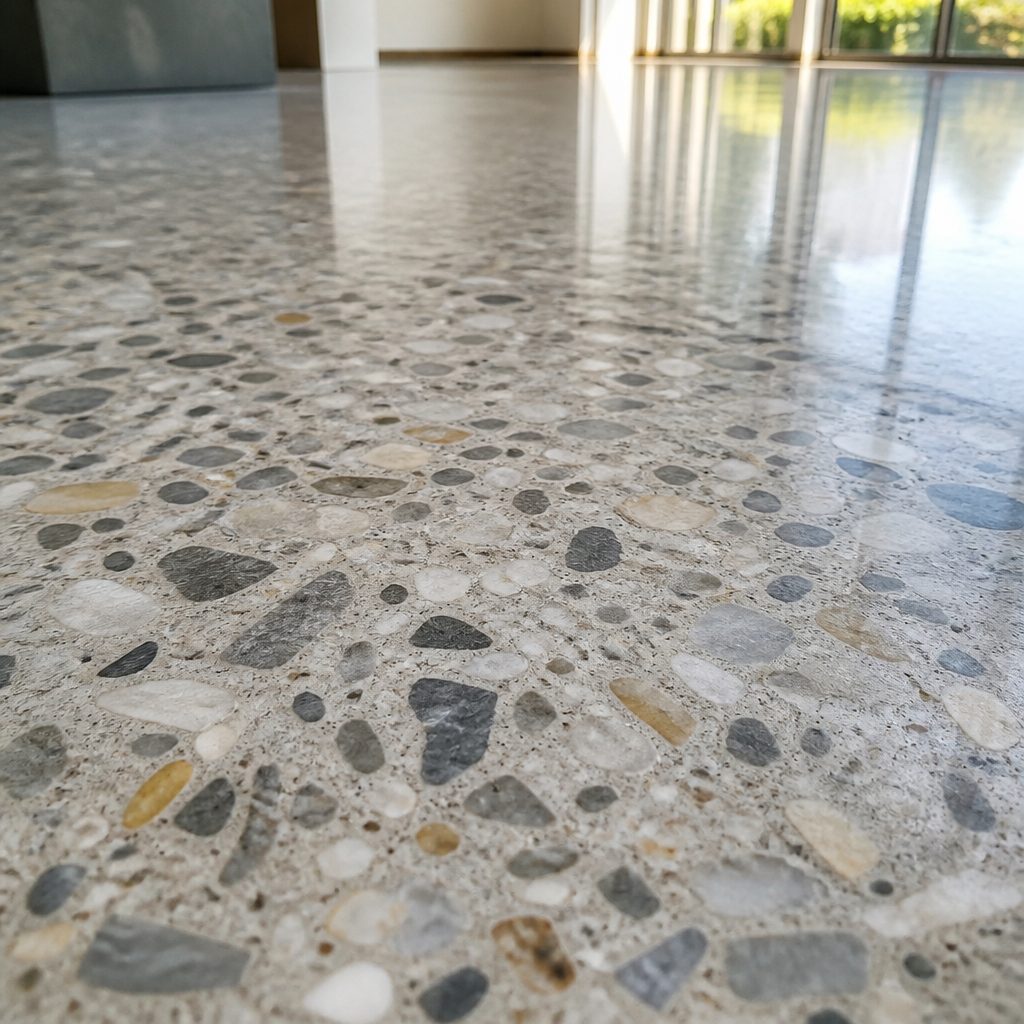
AI-generated illustration: macro of a polished terrazzo surface, marble and granite chips set in a pale matrix, ground flat and polished to a satin sheen
What we do

Assess, uncover, repair, grind, polish, seal

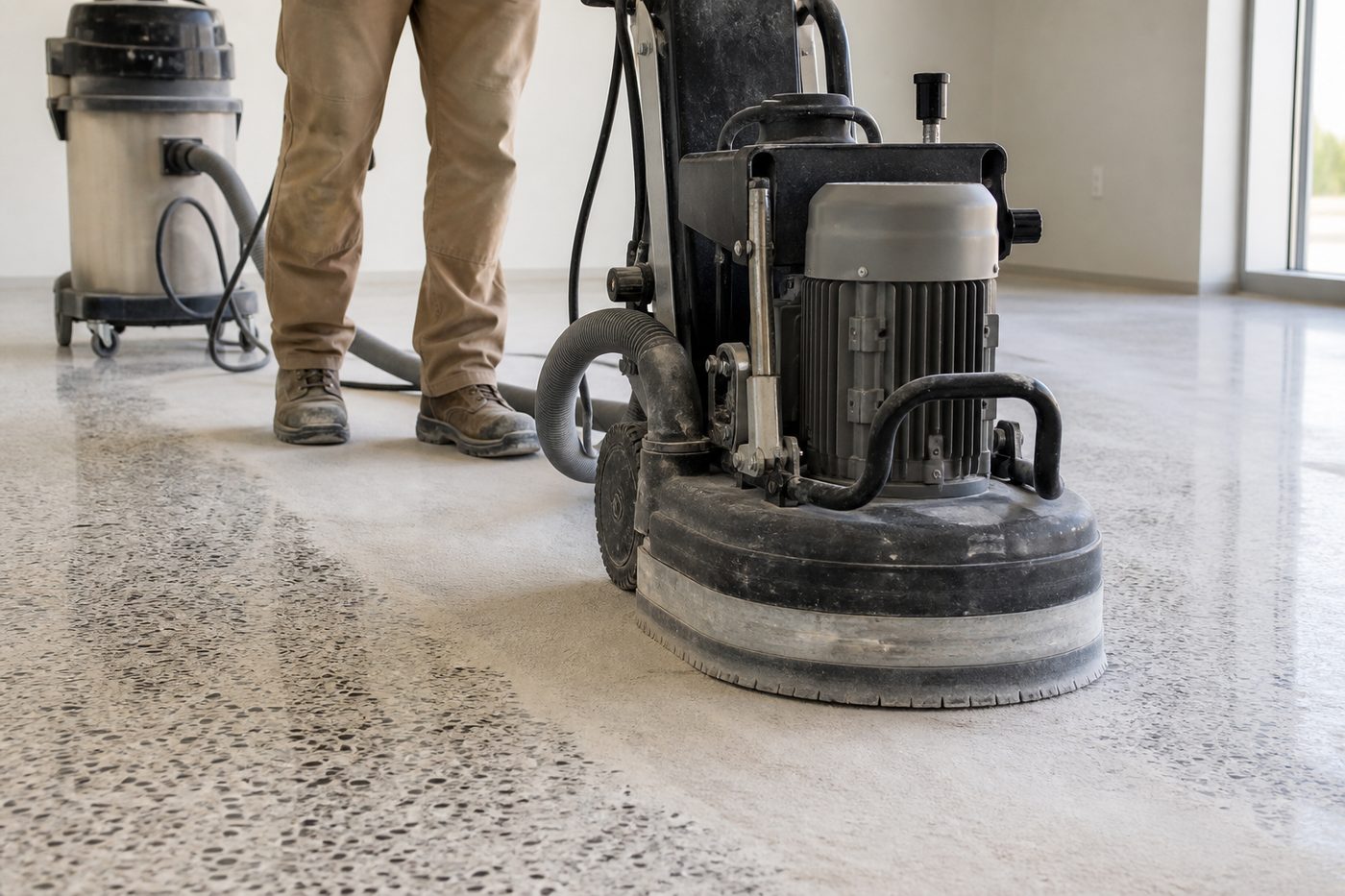
Establishing what is actually under the covering and how much material the floor has left, removing adhesive and residue, repairing cracks and holes, grinding through a diamond sequence from coarse to fine, densifying and polishing, then sealing with a penetrating impregnator rather than a coating.

Have your floor assessed

Who it suits

Owners of mid-century Florida houses

Usually the conversation starts as "we are pulling up the carpet and there is something underneath". What is underneath is frequently the original terrazzo, and frequently it is in better condition than it looks under forty years of adhesive.

  • Homes where carpet, vinyl or tile is being lifted
  • Floors that were polished once and have gone dull since
  • Renovations where matching a new floor to old terrazzo is the problem
Track record1,000+

Completed projects

  • Experience30+ combined years
  • Coverage104 cities across three counties
  • LicenceCBC1265280 · bonded & insured
Why here is different

The slab is never quite dry

A South Florida ground-bearing slab carries moisture upward year-round. That is why a topical coating on terrazzo tends to cloud, blister and peel, and why a penetrating impregnator that leaves the floor able to breathe is almost always the right answer here even though a coating looks better on day one.

What is included

Five things in every terrazzo scope

  • 01An assessment of remaining material thickness before anything is ground
  • 02Adhesive, paint and residue removal without gouging the surface
  • 03Crack and hole repair colour-matched to the existing aggregate
  • 04A full diamond sequence, coarse to fine, rather than a single polishing pass
  • 05A penetrating sealer suited to a slab that carries moisture
Four directions

Four things a terrazzo
floor might need.

Which one applies depends almost entirely on what has been done to the floor since it was laid, not on how old it is.

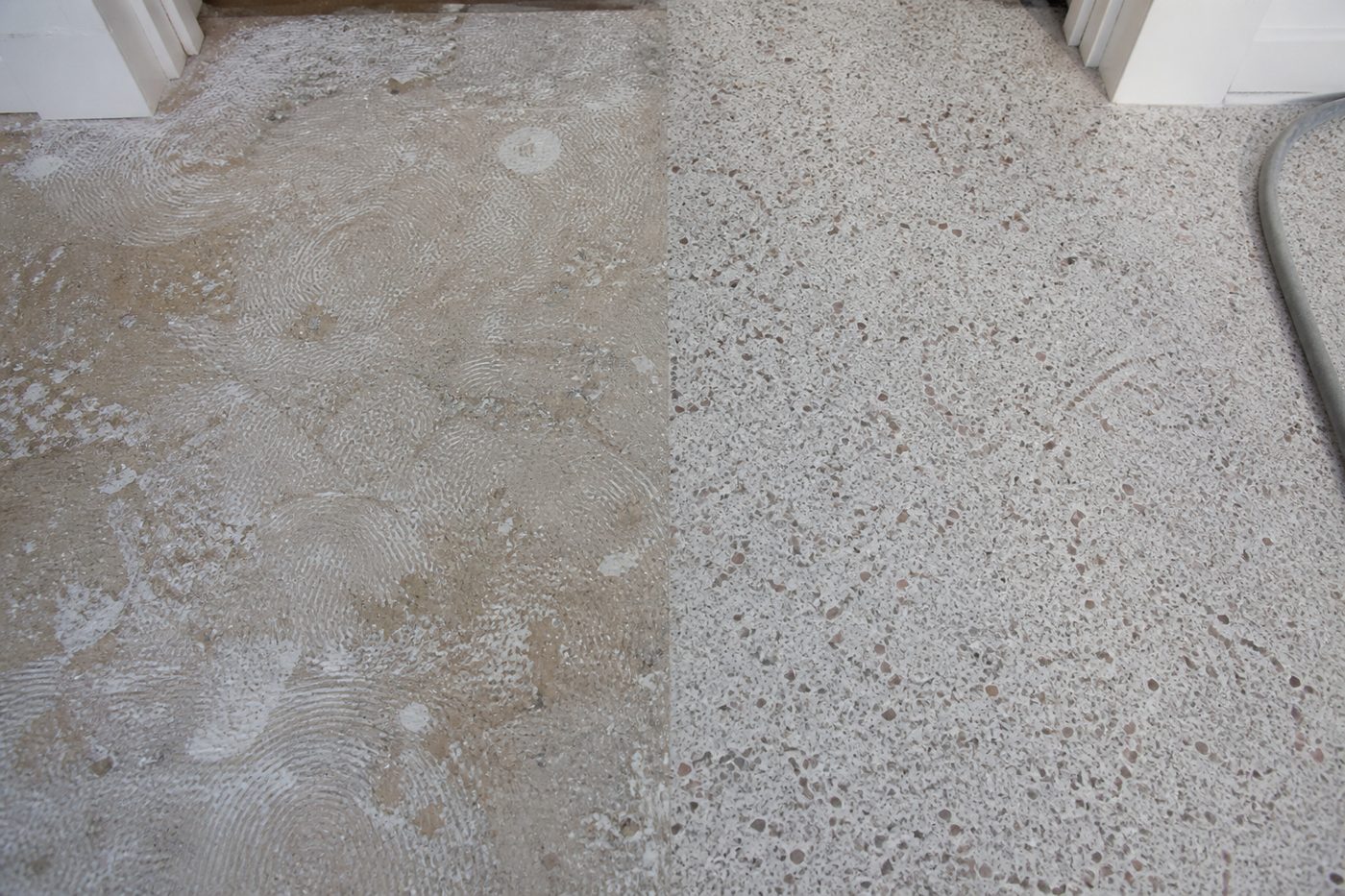
AI-generated illustration: terrazzo part-way through restoration, adhesive residue on one side and clean exposed aggregate on the other
Most requested

Full restoration after a covering

Carpet, vinyl or tile comes up and leaves adhesive, tack-strip holes and staining. The floor is stripped, repaired, ground through the full diamond sequence and polished back. This is the great majority of the work.

AI-generated illustration: a crack in a terrazzo floor routed out into a clean channel ready for filling
Option

Crack and damage repair

Cracks follow slab movement and usually reappear if simply filled. They are routed out, filled with a matched matrix and aggregate, then ground flat with the surrounding floor so the repair reads as part of the field.

AI-generated illustration: a terrazzo floor mid-restoration, showing the dull worn surface on one side and the ground and polished surface on the other
Option

Re-polish of a dull floor

A floor that was restored years ago and has lost its sheen often needs only the fine end of the sequence and a re-seal, not a full grind. Grinding removes material the floor cannot get back, so it is not done for cosmetic reasons alone.

Also

Coved skirtings

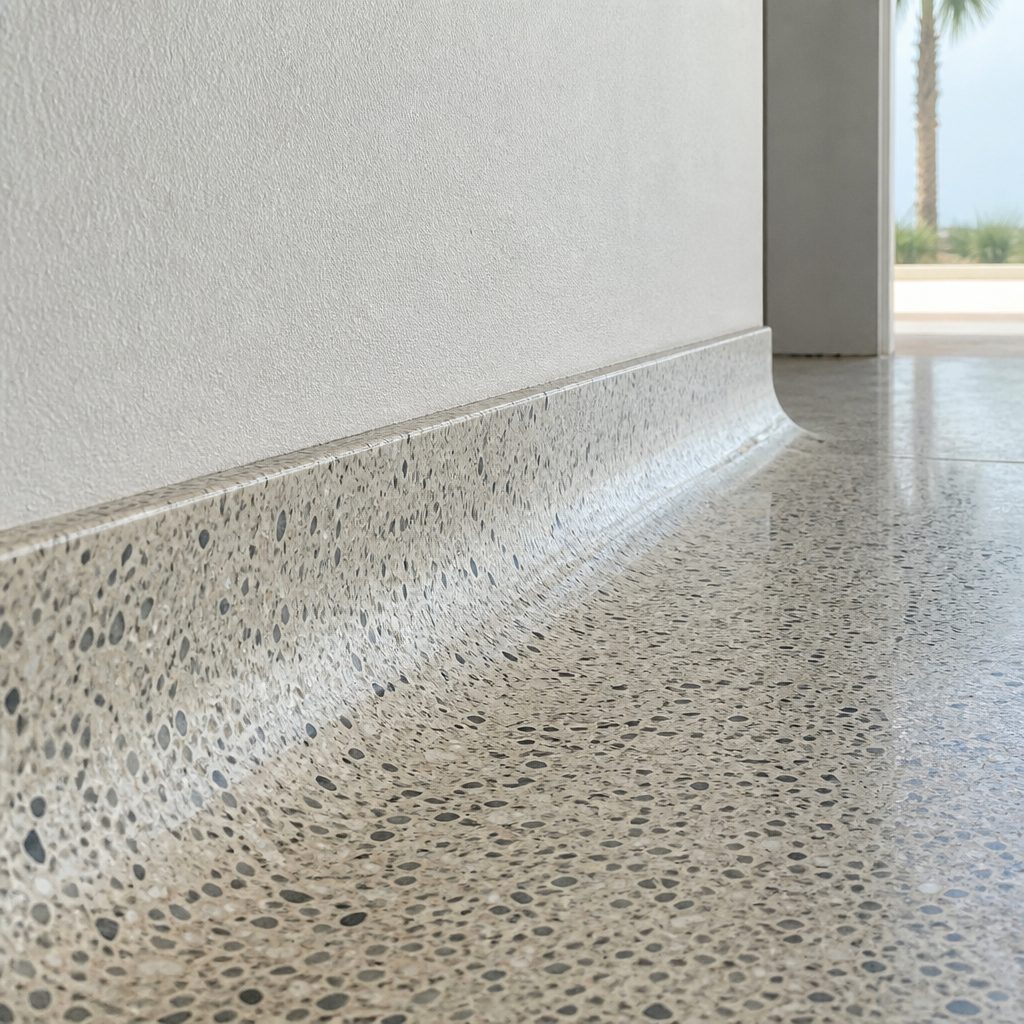
Many original floors turn up the wall as a coved terrazzo skirting. It is polished as part of the floor and is one of the details that makes a restoration read as original rather than resurfaced.

AI-generated illustration: a coved terrazzo skirting polished continuous with the floor at a wall junction
Also

Matching an extension

New terrazzo can be poured to meet old, but the aggregate, matrix colour and chip grade all have to be matched deliberately — and a divider strip at the junction is usually more honest than pretending it is continuous.

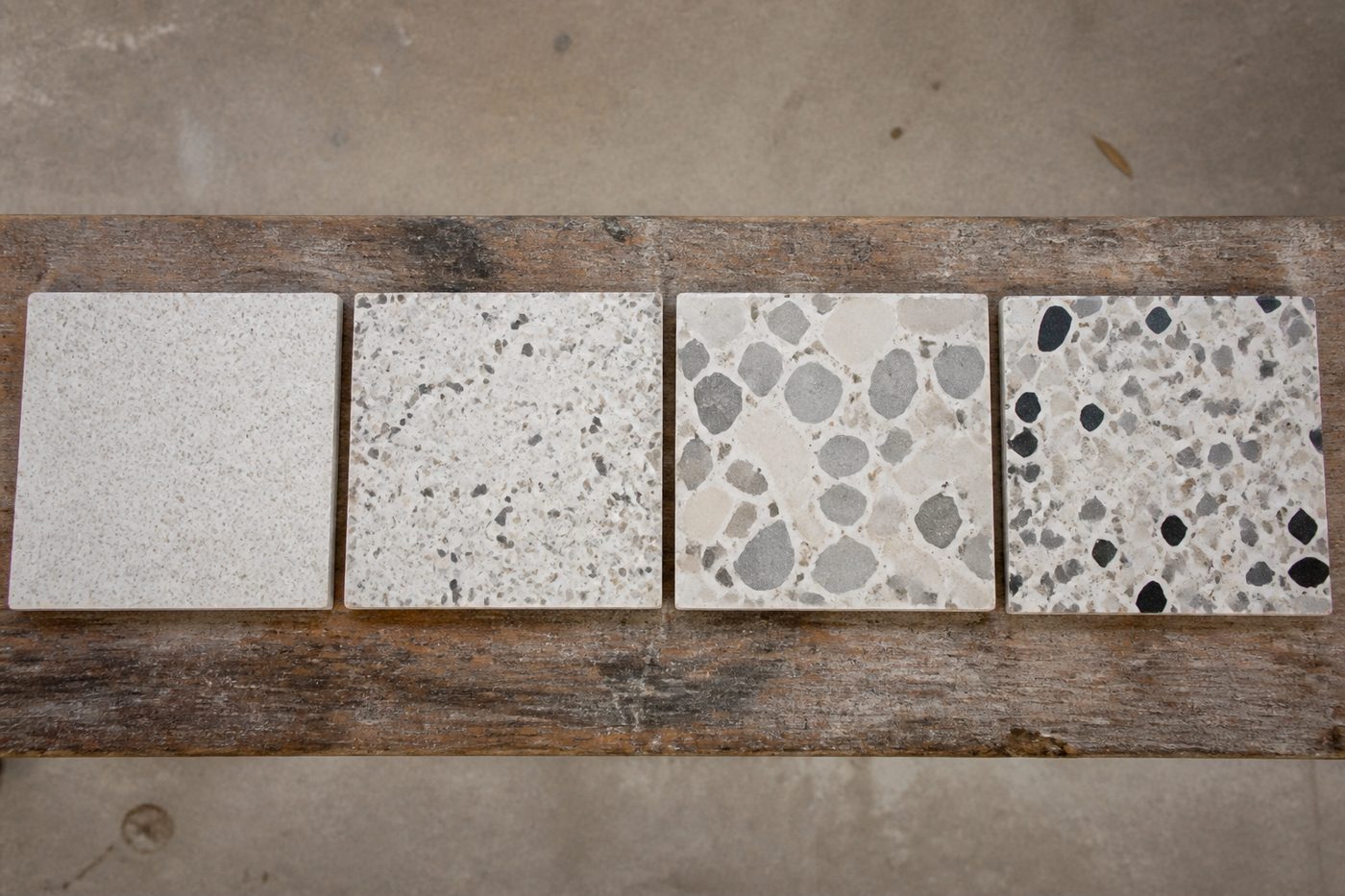
AI-generated illustration: four terrazzo samples side by side showing fine, medium, large and mixed aggregate grades
Also

Sealing, not coating

A penetrating impregnator protects without forming a film. Topical coatings look excellent briefly and then cloud or peel as the slab drives moisture up through them.

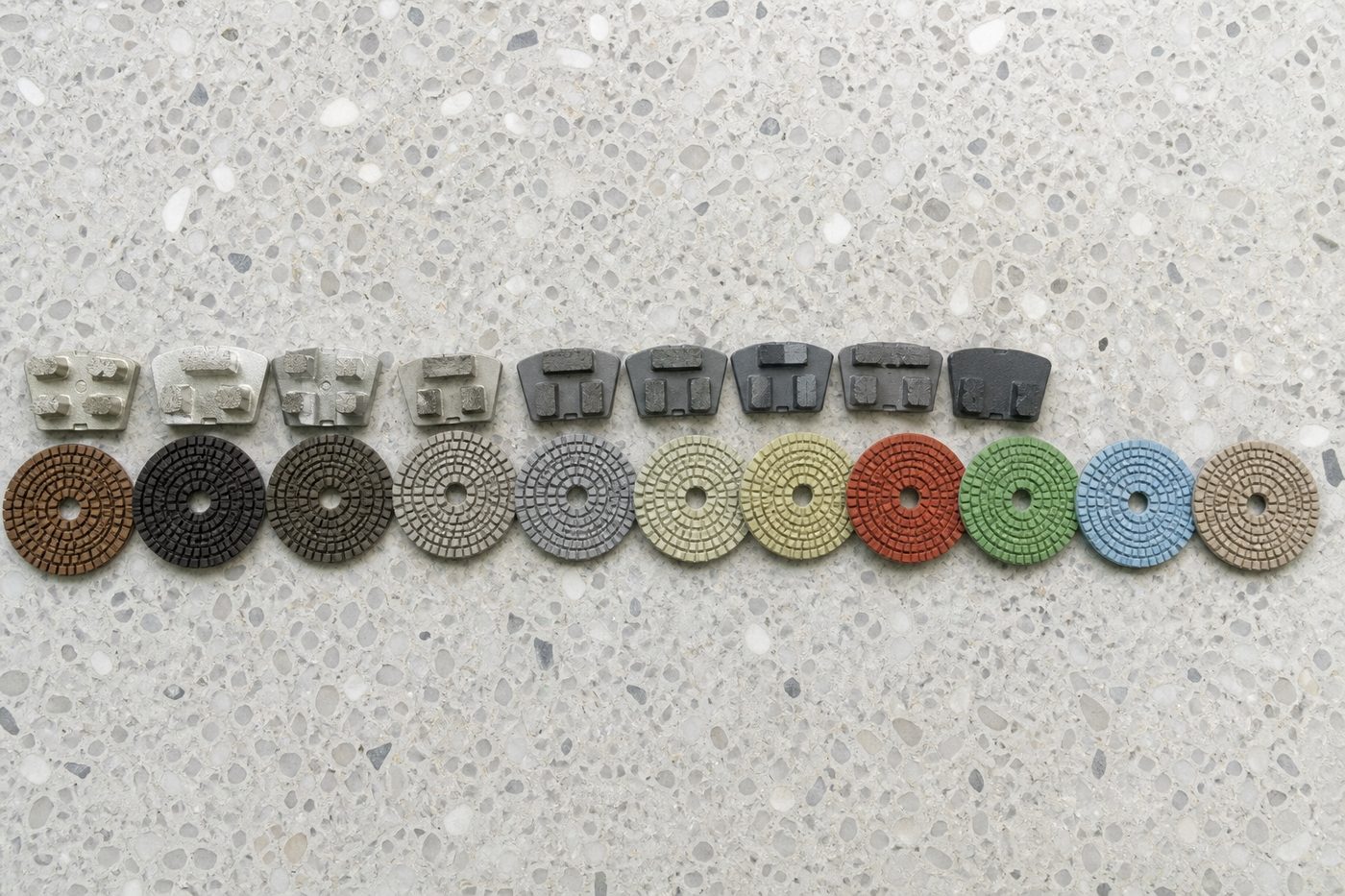
AI-generated illustration: diamond grinding segments and resin polishing pads laid out in grit sequence, coarse to fine
What the illustrations show

Read the material,
not the marketing.

Six things worth understanding about terrazzo before you decide what to do with yours.

01 · What it is

Chips in a matrix, ground flat

Marble, granite or glass aggregate set into a cement or epoxy matrix, poured in place and then ground down until the chips are cut through and the surface is flat. The pattern is not printed on it — it goes all the way through, which is why it can be restored at all.

Every image on this page is an AI-generated educational illustration. None of them is a photograph of an Elbaz Construction project, and none depicts a real client property.

02 · Why it survives

The wear layer is the whole slab

A laminate wears through its image layer and is finished. Terrazzo has the same material all the way down, so a surface that looks destroyed is usually a few millimetres of damage sitting on top of a floor that is otherwise intact.

AI-generated illustration: macro of a polished terrazzo surface, marble and granite chips set in a pale matrix, ground flat and polished to a satin sheen
03 · Materials and systems

What a floor typically contains

  • MatrixCement-based in most mid-century Florida homes; epoxy in modern work
  • AggregateMarble or granite chip, graded fine through large
  • DividersBrass or zinc strips defining panels and controlling cracking
  • SubstratePoured over a ground-bearing concrete slab
  • SkirtingFrequently coved up the wall in the original installation
  • FinishGround and polished, then sealed — not coated
04 · The real constraint

It can only be ground so many times

Every grind removes material, and the divider strips give you a datum for how much is left. That is why a floor is assessed before it is ground, and why a dull floor is re-polished rather than re-ground where that will do.

05 · The usual damage

Adhesive, not wear

Most of what looks like ruined terrazzo is carpet adhesive, tile thinset, paint and tack-strip holes. Those come off. Genuine structural cracking is the exception rather than the rule, and it is a slab question rather than a floor question.

06 · Sealing

Impregnator over coating, in this climate

A topical coating sits on the surface as a film. On a Florida slab that drives moisture upward, that film is what clouds and lifts. A penetrating impregnator protects from within and lets the floor breathe.

Behind the finish

Six stages between
carpet and shine.

A terrazzo restoration is a sequence, and skipping a stage shows in the finish. Select one to see what it does.

Assessment
Stripping
Repair
Grinding
Densifying
Sealing
Sealer options

Penetrating impregnator

Soaks in, no film, will not peel or cloud. The right default on a Florida ground-bearing slab.

Recommended here
Sealer options

Polished, minimal sealer

Very high mechanical polish with only light protection. Beautiful and less forgiving of spills.

Highest sheen
Sealer options

Topical coating

A film on the surface. Excellent on day one; on a slab driving moisture upward it tends to cloud, blister and eventually require stripping.

Rarely advised
About the imagery on this page

About the imagery on this page

  • The photographic-style images on this page are AI-generated educational illustrations, not photographs of Elbaz Construction projects. They are here to show what the material and the process look like, because we do not have cleared photography of this service and would rather illustrate it honestly than borrow someone else’s work.
  • Nothing on this page is presented as a completed Elbaz project. Every generated image is labelled in its caption, in its alt text and in the media library record.
  • No manufacturer imagery and no third-party stock photography is used on this page, and no product brand is named.
Selection reality

The assessment is the whole decision

Whether your floor should be fully ground, lightly re-polished or left alone depends on how much material it has left. That is measurable, it is measured before quoting, and it is the one number that decides everything else about the job.

Planning & practicalities

Little paperwork,
a lot of dust.

Floor restoration rarely needs a building permit, which does not mean it needs no planning. What follows is how the stage runs.

The sequence

Eight stages, and you always know which one you are in

  • 01Consultation — what is on the floor now and what is underneath it
  • 02Assessment — material thickness, crack pattern, matrix type
  • 03Test area — a small section taken through the full sequence
  • 04Proposal & scope — written, priced, exclusions stated
  • 05Protection — containment, dust extraction, adjoining rooms sealed
  • 06Strip, repair and grind through the diamond sequence
  • 07Densify, polish and seal
  • 08Handover — walked with you, with aftercare in writing
When a permit does apply

What can bring one into scope

Restoring a floor in place generally does not require a permit. These can:

  • Structural repair to the slab beneath the terrazzo
  • Removing or altering a wall as part of the wider works
  • Plumbing or electrical alterations done at the same time
  • Work in a designated historic district with its own controls
  • Condominium or HOA approval, which is separate from any permit
What we give you

Documentation on a restoration

  • AssessmentRemaining material and crack pattern, written down before work starts
  • Test areaA finished sample section you approve before the full floor is done
  • ScopeWhat is included, what is excluded and what is provisional
  • ProductsThe densifier and sealer used, so re-application matches
  • AftercareCleaning products to use, and specifically which ones not to
Coordination

Why the floor goes last

Restoration is scheduled after the messy trades and ideally before final decoration, so a finished floor is not being walked on by everyone still working in the room.

Containment

This is a dusty process

Grinding produces very fine dust. Extraction at the machine, sealed doorways and negative pressure keep it in the room being worked rather than through the whole house. It is worth asking any contractor exactly how they do this.

Please read

Conditions vary, genuinely

What your floor needs depends on its remaining thickness and its history. Nothing here is a guarantee about your specific floor. We assess it and tell you if the honest answer is that it should be left alone.

Cost, timeline & decisions

What actually moves
a terrazzo number.

Terrazzo is quoted by area, but the area is the least interesting part of the number. These are the twelve factors that decide it.

Factor

What is on it now

Carpet lifts off. Thinset and tile mortar do not. Removal is frequently the largest single labour item in the whole job.

Highest
Factor

Crack extent

Routing, filling and colour-matching cracks is slow handwork, and a floor that has moved may need the slab looked at before the floor is worth doing.

Highest
Factor

Remaining thickness

Decides whether a full grind is even available. A thin floor gets a lighter, more careful and sometimes more expensive treatment.

Highest
Factor

Area and layout

Open runs grind quickly; small rooms, closets and tight corners are edge work by hand.

Moderate
Factor

Edge and cove work

Coved skirtings and perimeters cannot be done by the big machine and take real time.

High
Factor

Aggregate hardness

Harder aggregate takes longer to cut and changes the diamond selection.

Moderate
Factor

Level of sheen

Each additional polishing step is another pass over the whole floor.

Moderate
Factor

Sealer choice

Impregnator or a higher-build system, and how often it will need renewing.

Low–mod
Factor

Containment

Dust control in an occupied house is more work than in an empty one.

Moderate
Factor

Occupied or empty

An empty house lets the whole floor be done in one continuous sequence.

Moderate
Factor

Furniture and fittings

Whether the room is cleared, and whether skirtings or doors have to come off.

Low–mod
Factor

Matching new to old

Pouring new terrazzo to meet original is a specialist match on aggregate, chip grade and matrix colour — and a divider strip at the junction is usually the honest answer.

High
On pricing

How we quote instead

After an assessment and a test area you get a written scope with a real number against the actual condition of your floor — including, where it applies, our view that the floor should be left alone or lightly polished rather than fully ground.

Request an estimate
Common questions

Before you cover it up.

Filter by what you are trying to work out. Every answer stays on the page.

Probably not. What you are looking at is almost always adhesive, tack-strip holes and staining sitting on top of an intact floor. Terrazzo is the same material all the way down, so the damage is usually a few millimetres deep on a floor that is otherwise fine.

An assessment answers it properly, and a small test area answers it visually.

Very, without proper containment — and manageable with it. Extraction at the machine, sealed doorways and negative pressure keep the dust in the room being worked. It is worth asking any contractor specifically how they contain it, because the difference between doing it and not doing it is the rest of your house.

Yes, but not indefinitely. Each grind removes material, and the divider strips give a useful datum for how much is left. That is why we measure before quoting, and why a floor that has simply gone dull gets re-polished rather than re-ground.

Usually. Cracks are routed out, filled with a matched matrix and aggregate and ground flat with the field, so they read as part of the floor rather than as a repair.

The question worth asking first is why it cracked. If the slab is still moving, the crack will come back — and that is a structural conversation, not a flooring one.

Neutral-pH cleaner and water, and that is genuinely most of it. What damages a restored terrazzo floor is acidic cleaners, vinegar and anything marketed for bathroom limescale — those etch the cement matrix. We leave you a written aftercare note that says which products to use and which to keep away from it.

Sealed, in almost every South Florida case. A topical coating forms a film and looks superb initially, but a ground-bearing slab here drives moisture upward and that film is what clouds, blisters and eventually has to be stripped off. A penetrating impregnator protects from within and lets the floor breathe.

Frequently, yes — and you end up with a floor of a quality that would be very expensive to install new. The variable is what has to come off first: lifting carpet is quick, and removing tile thinset is often the biggest labour item in the job.

New can be poured to meet old, and matching the aggregate, chip grade and matrix colour is a genuine specialist exercise. Our honest advice is usually to put a divider strip at the junction and let the two panels be two panels — a near-match that is not quite right draws more attention than a deliberate line.

It depends on area, what has to be removed first and how many polishing steps the finish needs. What we can tell you is that the sequence cannot be rushed by skipping grits — that shortcut shows as a permanent haze that no amount of polishing afterwards will lift.

If the house was built in Florida roughly between the nineteen-fifties and the nineteen-seventies, there is a good chance. Lift a corner of the covering in a closet or behind a door and look for stone chips in a solid matrix with thin brass or zinc strips running in lines. Those strips are the giveaway.

Yes. If the floor has been ground too many times already, or the slab beneath it is still moving, restoration is money spent on a problem that will return. We would rather say that at the assessment than halfway through.

Yes. We work with four financing partners — Service Finance, Synchrony, Ygrene and Renew Financial — so you can compare options before you finalise the scope. Terms and eligibility are set by each lender and differ by programme.

How it goes together

One floor, six
stages, in order.

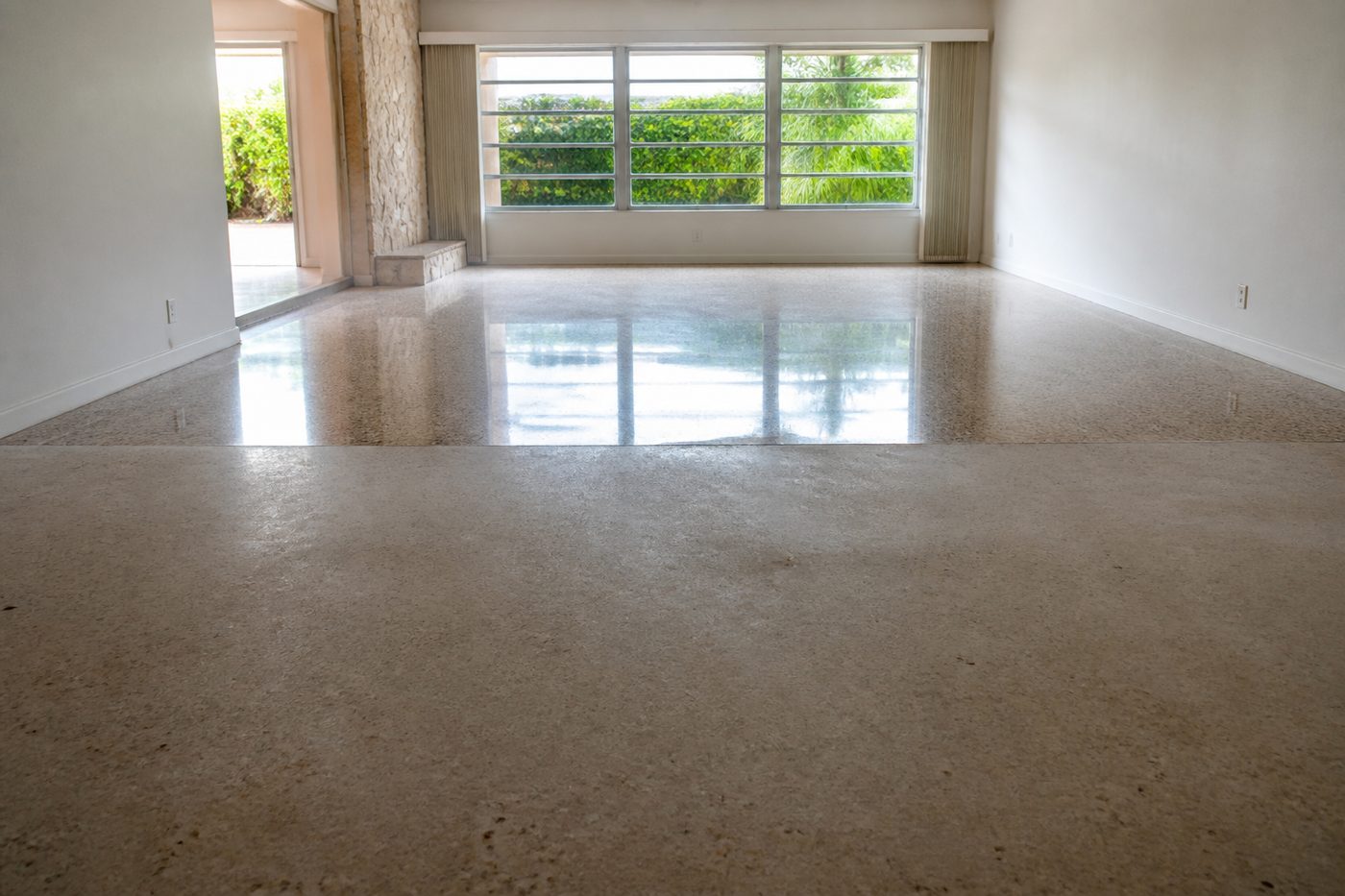
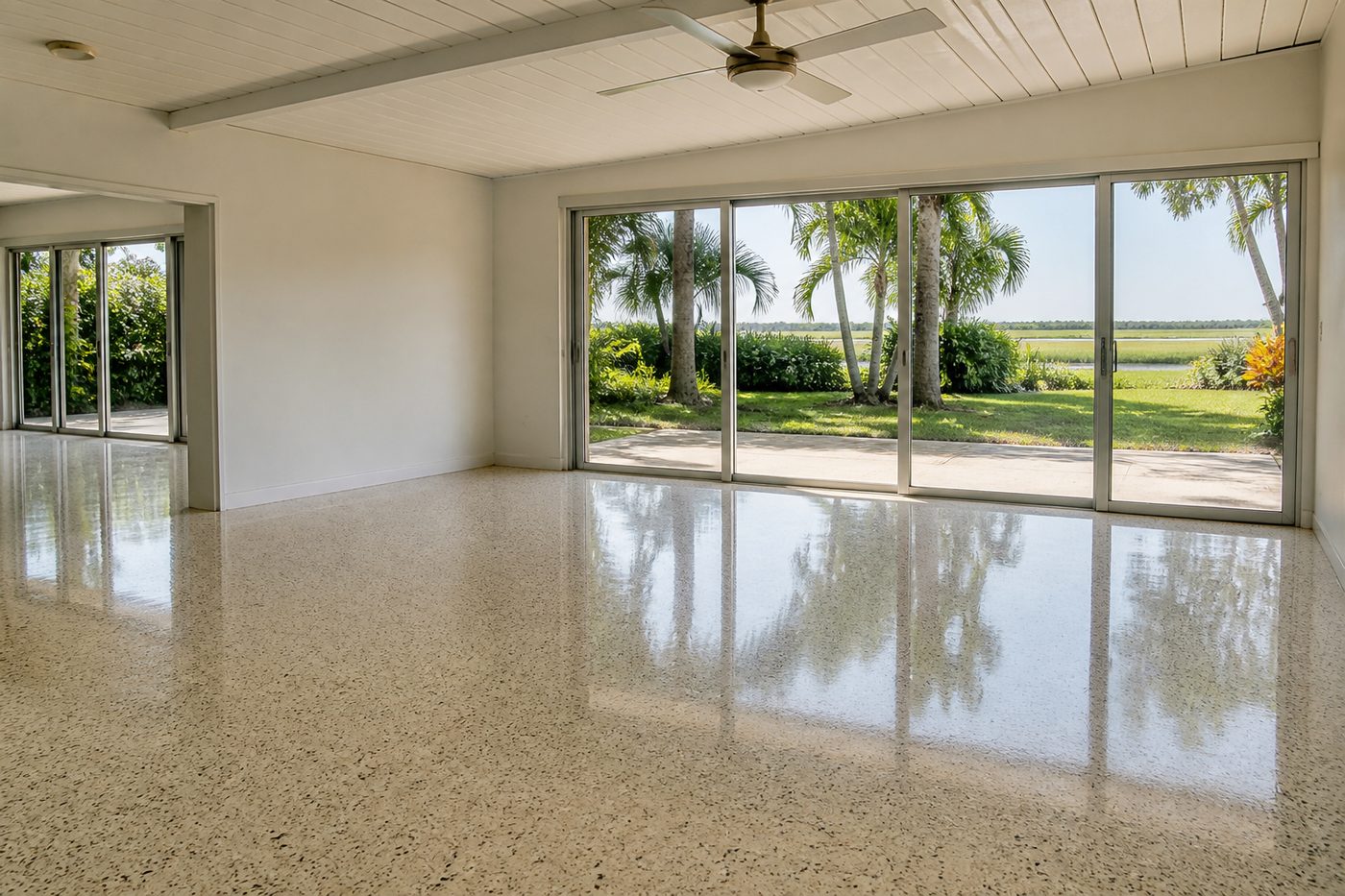
An illustration of a restored terrazzo floor. This is an AI-generated educational image, not a photograph of an Elbaz Construction project.

AI-generated illustration: a restored terrazzo floor in an empty sunlit room, reflecting daylight from a glazed wall
During the work

What the phases look like

Containment goes up, coverings and adhesive come off, cracks are routed and filled, then the diamond sequence runs coarse to fine. Densifier, final polish, sealer. The floor looks worse before it looks better, which is normal and worth expecting.

How to prepare

Four things worth doing early

  • Lift a corner of the covering somewhere hidden and look for divider strips
  • Clear the room completely if you possibly can
  • Ask for a test area before committing to the whole floor
  • Decide whether adjoining rooms are being done now or later
Quality control

What gets checked, and when

Remaining thickness before grinding starts. The scratch pattern after each grit, because each step exists only to remove the previous one. Repair colour against the field before the final polish. Sealer coverage while it is still wet.

Common mistakes

Four we are asked to fix

  • Grinding through adhesive instead of removing it first
  • Skipping grits, which leaves a haze polishing cannot lift
  • Filling cracks without routing them, so they reappear
  • A topical coating on a slab that drives moisture upward
Why Elbaz

Claims you can
check yourself.

Everything here is either a licence number, a figure Elbaz publishes company-wide, or a description of how we work. No awards, memberships or certifications are listed, because inventing them is the easiest lie in this industry to tell.

LicenceCBC1265280

Certified building contractor, bonded and insured. Verifiable with the State of Florida.

Completed projects1,000+

Across residential and commercial work in Miami-Dade, Broward and Palm Beach counties.

Experience30+

Combined years across the team, in this market and this climate.

Coverage104

Cities served across the three counties.

PermitsOur name

We file with your building department directly, and we close the permit at handover.

Product approvalVerified

Specified products are checked against their Notice of Acceptance or Florida Product Approval before ordering.

Financing4 lenders

Service Finance, Synchrony, Ygrene and Renew Financial. $0 down and 100% financing available on qualifying PACE work, subject to lender approval. Compare all four.

Honesty about imagery

We label illustrations as illustrations

We do not hold cleared photography of completed terrazzo work, so this page is illustrated rather than photographed — and every image says so, in its caption, in its alt text and in the media library. Borrowing another company’s job photos would have been easier and is not something we will do.

Accountability

One person, assessment to aftercare

A family-run, locally owned business. The same point of contact stays with your project through every stage, and you get the assessment in writing whether or not you proceed.

Google reviews

What clients said,
word for word.

Shown verbatim from the connected Google Business Profile — not rewritten, not combined, not re-attributed.

Featured · whole-project delivery
“Elbaz Construction provided excellent service and great customer service. also provide the right team to get the job done. Any project or style that’s needed it. Elbaz Construction is the place to call. Thank you!”
Jaee Rodriguez · Google
“If you are planning to remodel your kitchen or bathroom or do any other construction project, call Sean from Elbaz Construction . He has a lot of experience and will recommend the best options/ suggestions to your project. He did high quality job !”
Kameron Allison · Google
“We had a good time dealing with Asher and the crew, he went over and above all our expectations and made every effort to ensure that the end result was up to their high standards. Thank you !!”
Emmett Giffin · Google
“The team was amazing. Did a fabulous job with the landscaping, roofing and backyard renovation. The best contractors I have worked with! Will definitely use this company in the future.”
Derpy Day · Google

No review schema is emitted on this page. Aggregate ratings marked up on a business’s own service pages are self-serving under Google’s structured-data policy, so the rating above is presented as visible content only.

Start your project

Tell us what
is under there.

A photograph of a lifted corner is worth more than any description — if you can see stone chips and thin metal strips, send that. Roughly what area, and what is on it now.

What happens next

Three steps, no sales visit

  • 01We call you back and talk through the house age and what is covering the floor
  • 02We assess the floor, measure what is left and agree a test area
  • 03You get a written scope priced against the actual condition
What to expect

An honest read, including when to leave it

If the floor has already been ground too far, or the slab is still moving, we will tell you that at the assessment rather than after the machine is in the house.

Prefer to talk now(754) 236-0675

Sun–Fri 7am–7pm · Saturday closed. Licensed, bonded and insured · CBC1265280.

Preferred contact method

We use your details only to respond to this enquiry. No lists, no resale.

Thanks — that came through.

Your details are with the Elbaz Construction team and we will come back to you, usually the same or next working day. If it is urgent, call (754) 236-0675.

Have your terrazzo floor assessed

Ready when you are

Find out what
you actually have.

Remaining thickness and what is stuck to the surface decide the whole job, and both are knowable in an afternoon. Start with a conversation — no obligation, and no brochure.

AI-generated illustration: a restored terrazzo floor in an empty sunlit room, reflecting daylight from a glazed wall