


10 service categories · 100 service pages · Miami-Dade, Broward & Palm Beach
View all servicesThe journey
Six stages, kerb to kerb.
Almost every failed driveway in South Florida failed for one of four reasons: too little base, no edge restraint, water with nowhere to go, or joints that were never filled properly. This page walks the whole build in order so you can tell a real quote from a cheap one.
Use the stage markers to jump to what you care about. Nothing here is a sales pitch - it is the sequence we actually follow, and the parts that decide whether a driveway still looks flat in ten years.
Stage 01 · Discover
What your driveway actually has to do
Four jobs, and they pull in different directions. Which one dominates decides the base depth, the surface and the drainage.
Carry the vehicles
A driveway is a pavement, and pavements are designed from the bottom up. The pavers themselves are the wearing surface; the compacted base underneath is what actually carries the load and spreads it into the ground. Skimp there and no amount of expensive stone on top will save it.
- Base depth is set by what will park on it, not by what looks thick enough
- South Florida sand drains well but needs proper compaction in lifts
- A boat or RV pad wants more base than a two-car driveway
- Turning and braking loads are what rut a weak base first, not standing weight
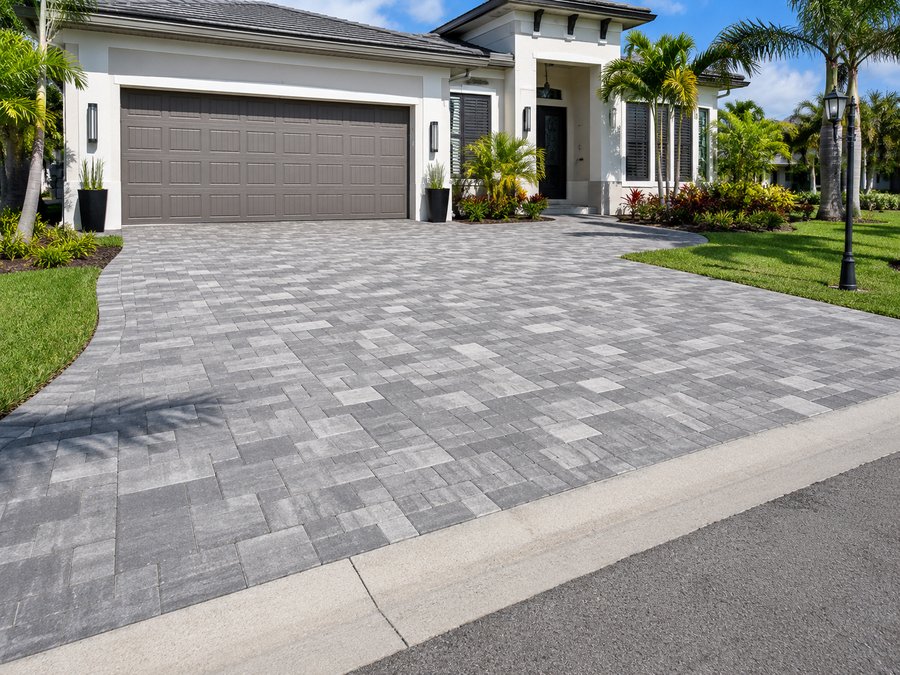
A completed Elbaz paver driveway in a running-bond pattern with a soldier-course border.
Move the water
Falls are decided before anything is laid. Water has to run away from the garage threshold and away from the house, and it has to leave the property the way the site already drains. Pavers are permeable at the joints, which helps, but they are not a substitute for a fall in the right direction.
- Fall is set away from the garage door and away from the slab
- Where the apron meets the street, the levels are dictated to us, not chosen
- Planted or open joints reduce run-off and break up a wide expanse visually
- Standing water at the low point is a base problem, not a cleaning problem
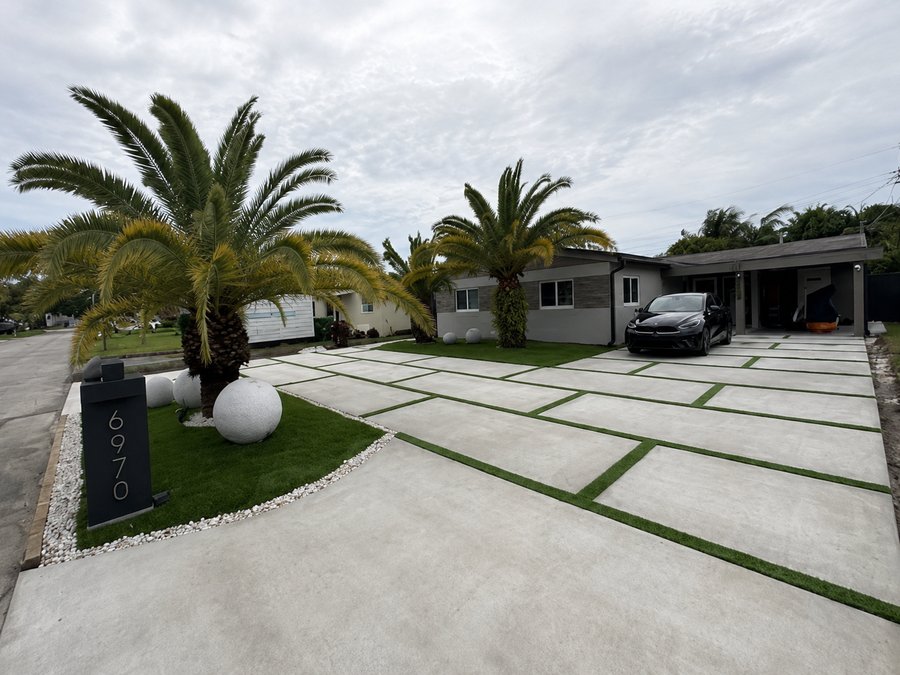
A completed Elbaz driveway in concrete panels with planted joints, which take some of the run-off.
Hold its edges
Interlocking pavement only interlocks if the perimeter is restrained. Without a proper edge the outer courses migrate outward under traffic, the joints open, sand escapes and the spread works its way inward. This is the single most common corner cut and the one you cannot see once the job is finished.
- Edge restraint is fixed into the base, not bedded in loose sand
- The soldier course is the visible part; the restraint behind it does the work
- Grass or planting beds beside the driveway make restraint more important, not less
- A driveway that is spreading at the edges cannot be fixed by re-sanding
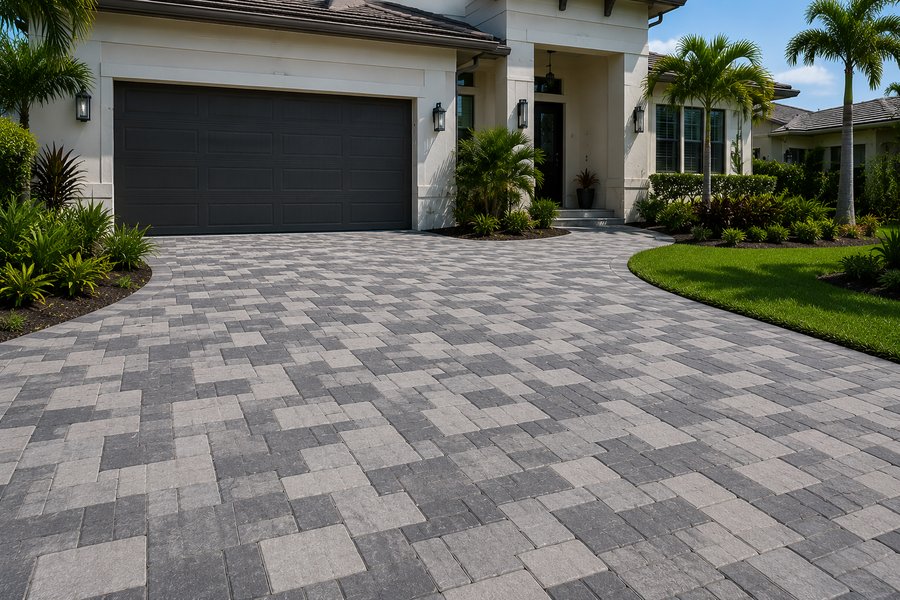
A completed Elbaz driveway: the perimeter soldier course is the visible half of the edge restraint.
Look like the house
A driveway is the largest single surface on most South Florida frontages, and it is seen from the street more often than from the house. Scale matters: a pattern that looks good on a sample board can read as noise across sixty feet of frontage, and a colour that matches the roof usually beats one that matches the front door.
- Match the roof and the trim before matching the front door
- Larger formats and calmer patterns suit wide frontages
- A border defines the shape and hides the cut edge against curves
- Bands of planting or turf break up a very wide run without losing parking
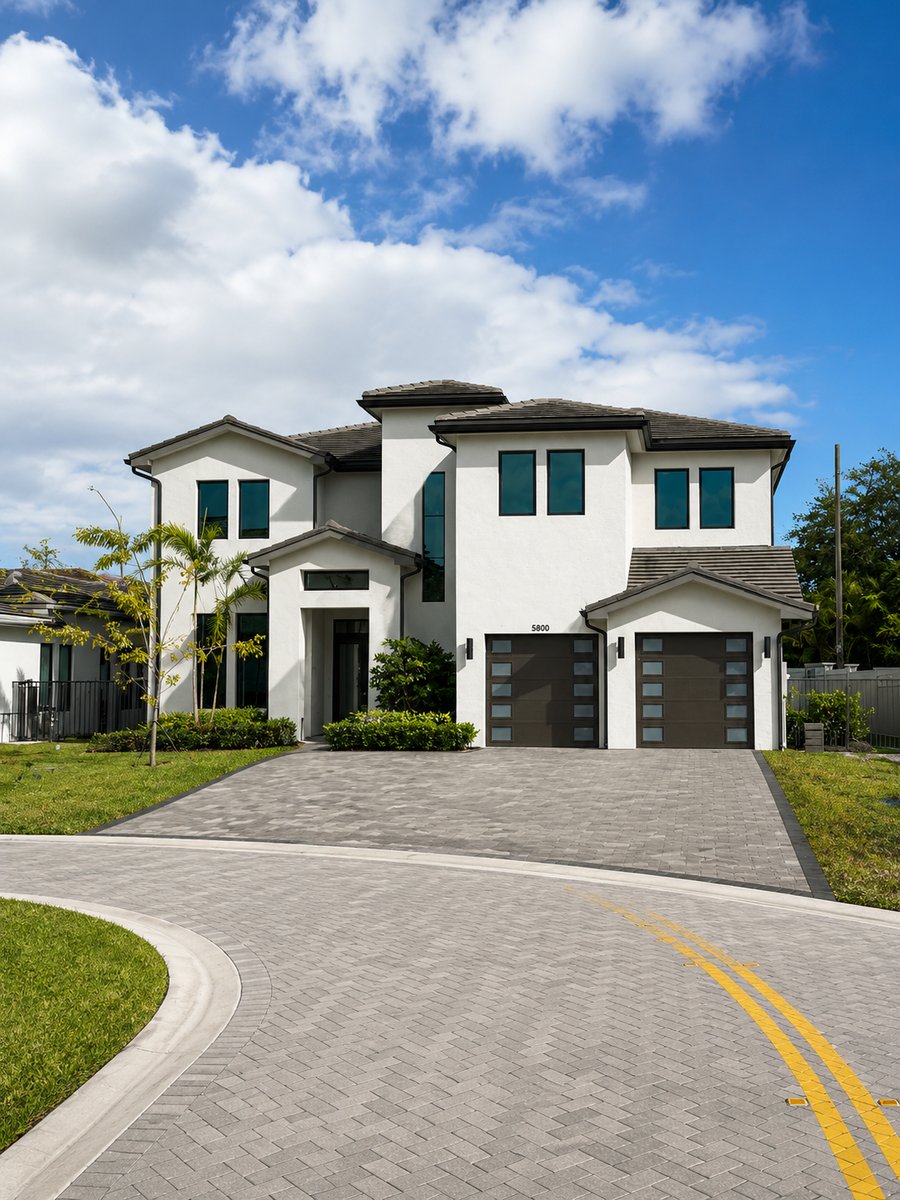
A completed Elbaz paver driveway read from the street, where most people actually see it.
Stage 02 · Design
The four choices that change the build
Everything else is taste. These four change the excavation depth, the drainage and what the finished surface will need from you.
Surface
Pavers are individually replaceable, forgiving of ground movement and permeable at the joints. Poured concrete is a single monolithic slab: fewer lines, less maintenance, but it cracks where it wants to unless the joints are cut where you want it to. Both are legitimate; they fail differently and they age differently.
- Pavers: liftable and re-layable, so a utility repair is invisible afterwards
- Concrete: fewer joints to maintain, but a crack is a repair, not a swap
- Concrete with planted joints splits the difference and drains better
- Mixing surfaces - concrete field with a paver border - is common and durable
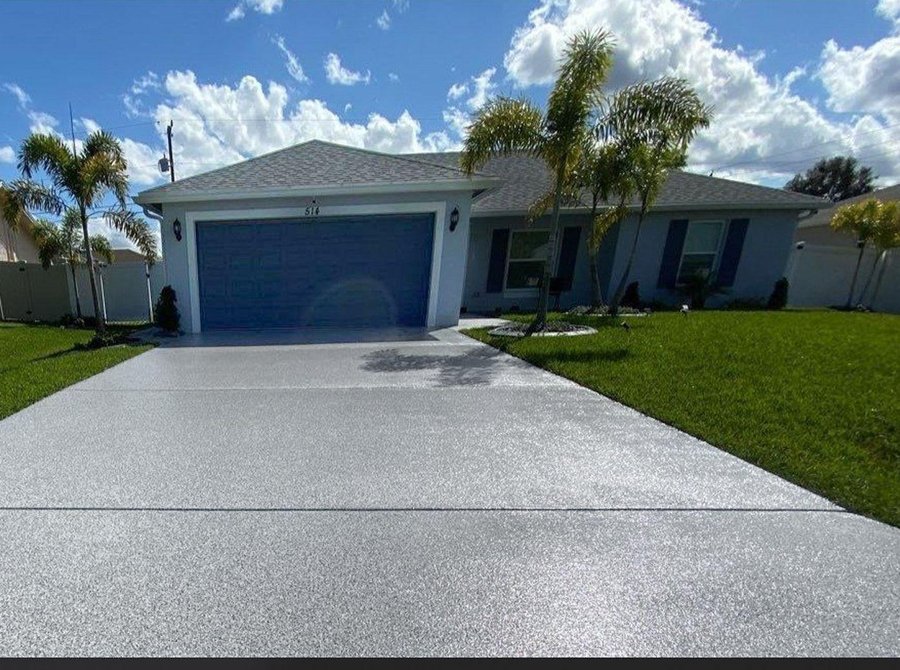
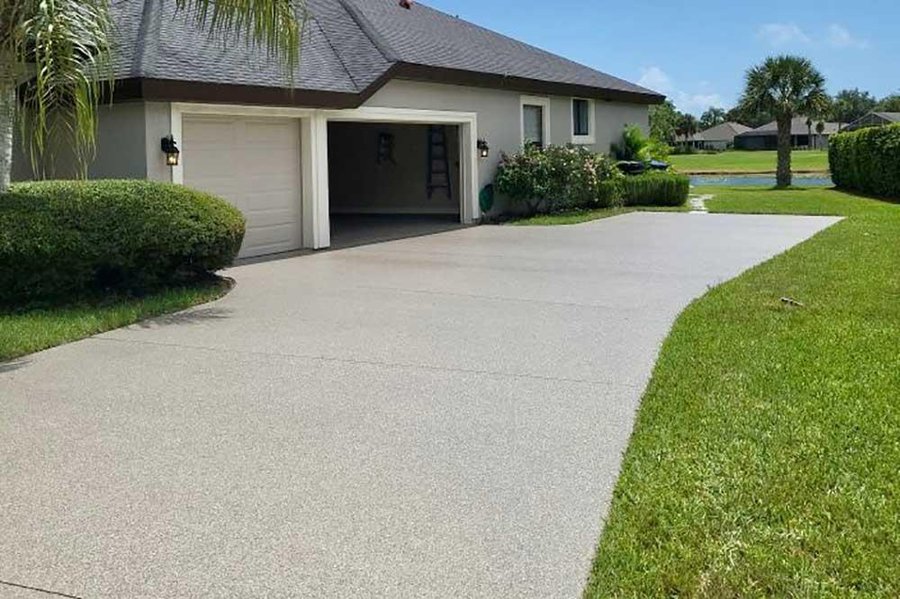
A completed Elbaz driveway in poured concrete with an exposed-aggregate finish.
Pattern
Pattern is structural as well as visual. Herringbone interlocks best under turning traffic because no continuous joint runs in the direction of travel; running bond and ashlar are calmer to look at and quicker to lay. On a driveway that gets a lot of wheel-turning, the pattern earns its keep.
- Herringbone resists creep best where cars turn and brake
- Running bond reads calmer across a wide frontage
- Ashlar mixes several sizes and hides slight colour variation between pallets
- The border pattern is what makes the cut edge look deliberate
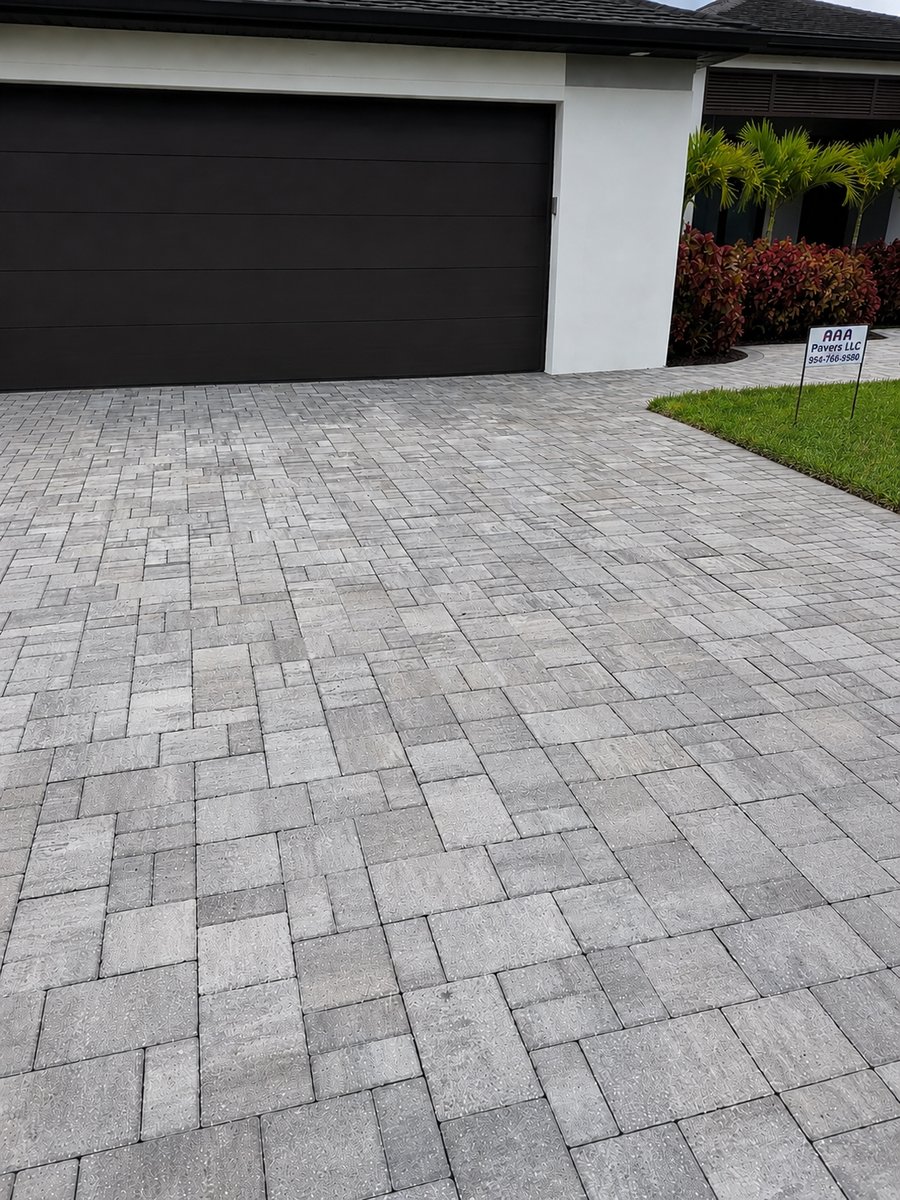
A completed Elbaz driveway: a running-bond field in a large-format paver.
Border and bands
A contrasting soldier course around the perimeter gives the driveway a drawn edge and makes every cut land against a straight line instead of against grass. Bands across the width break a long run into panels, which reads better from the street and gives planting or turf somewhere to sit.
- A border makes curves and radii look intentional rather than trimmed
- Bands shorten the visual run of a long driveway
- Planted bands take some run-off and reduce the heat of a large paved area
- Contrast in tone reads better than contrast in colour
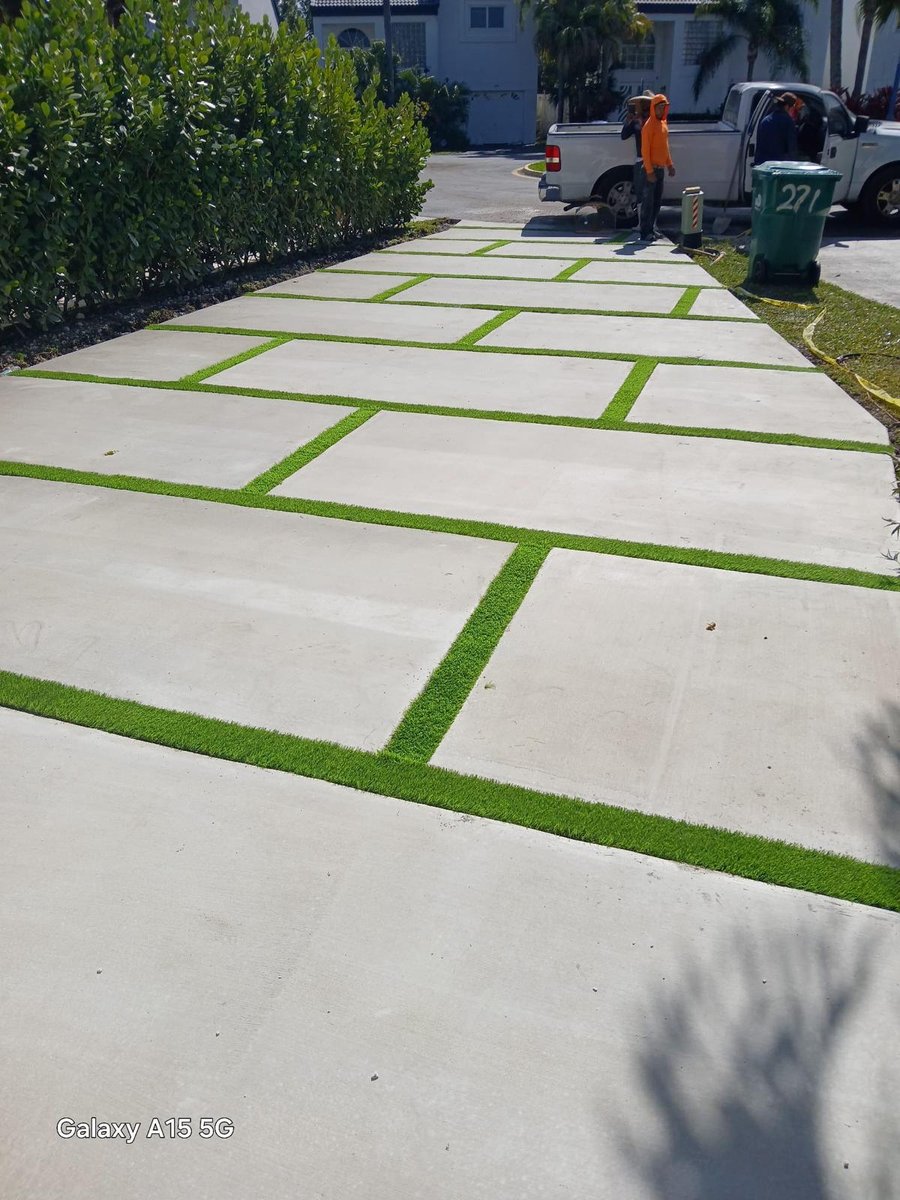
A completed Elbaz driveway: concrete panels separated by planted bands.
Joints and sand
Joint sand is what locks the field together and keeps water and weeds out. Polymeric sand sets slightly and resists washout in heavy rain, which matters here. It is not permanent - it is a consumable that gets topped up - and any quote that treats the joints as an afterthought is quoting a different job.
- Polymeric joint sand resists washout better in heavy afternoon rain
- Joints are filled and compacted in passes, not brushed once and left
- Open or planted joints are a deliberate drainage choice, not unfinished work
- Topping up joint sand periodically is normal driveway maintenance
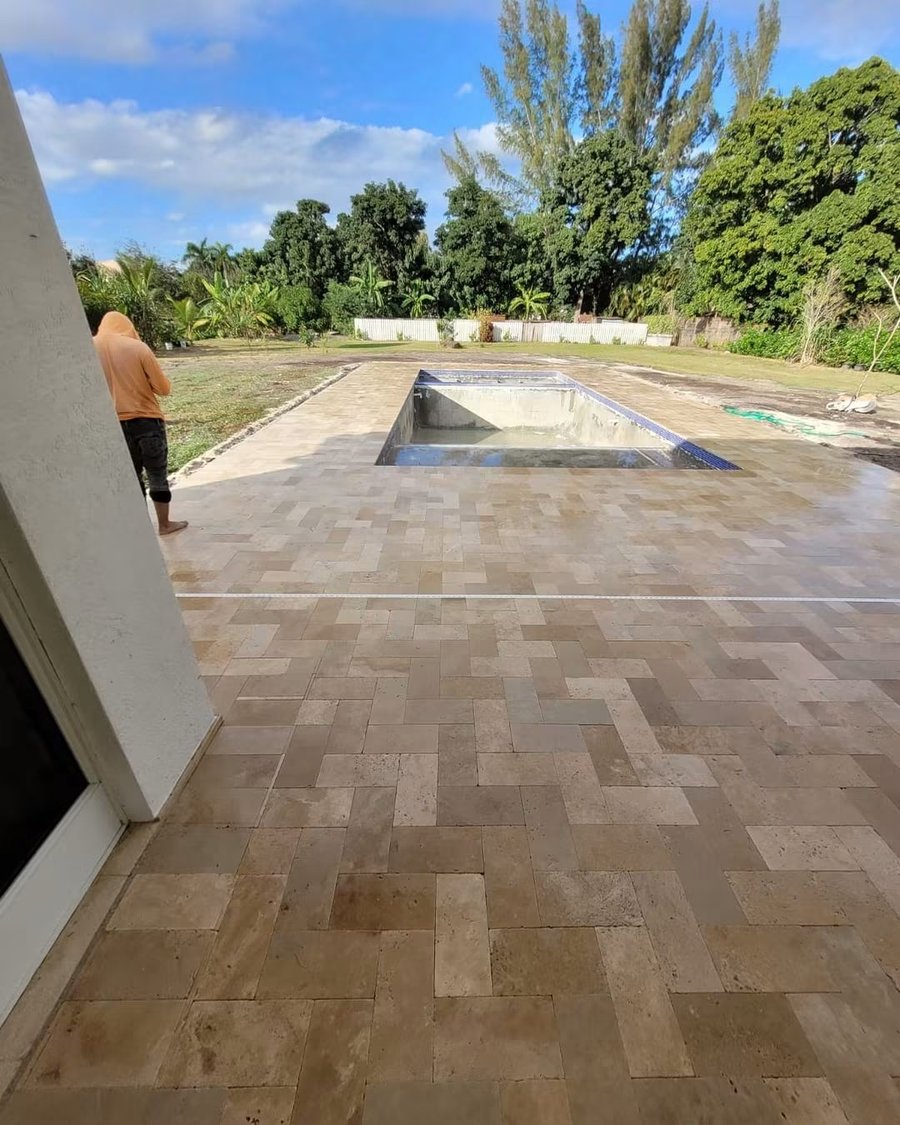
Elbaz work in progress: large-format units being laid out on a prepared bed.
Every photograph in this section is real Elbaz work. They come from several different completed driveways and are shown as examples of each option built, not as one project.
Project gallery 01
Four surfaces, all built by us
A tour through the surfaces we install, using photographs of completed Elbaz driveways. These are different properties, not one project - each frame says what it is.
Project 01, guided tour
Large-format pavers
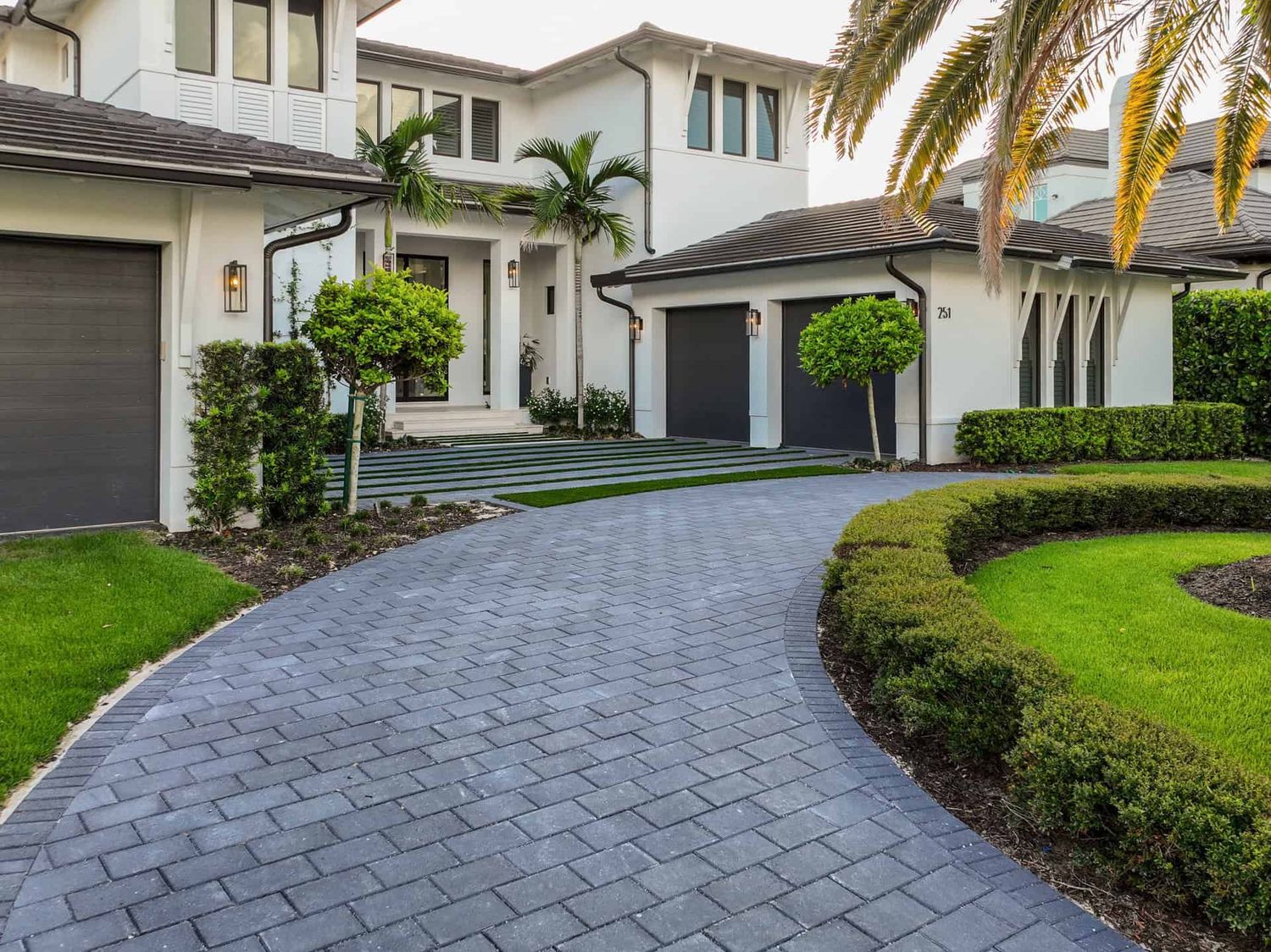
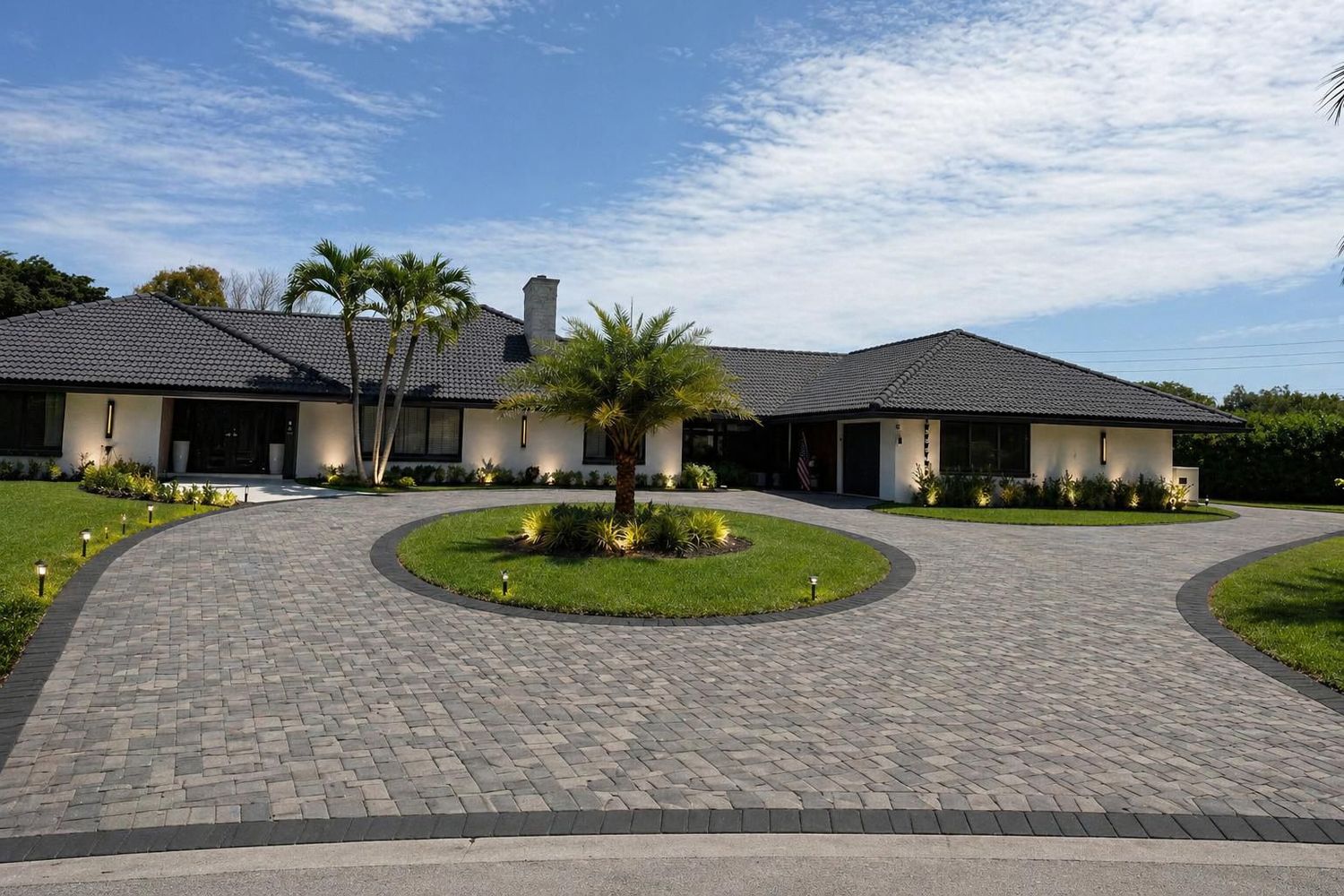
A grey large-format paver field with a contrasting soldier-course border, laid to a modern stucco frontage.
What these show
Ten frames from several completed Elbaz driveways and paved areas across South Florida. They are grouped by surface type rather than by property, and each caption says which is which.
Surfaces
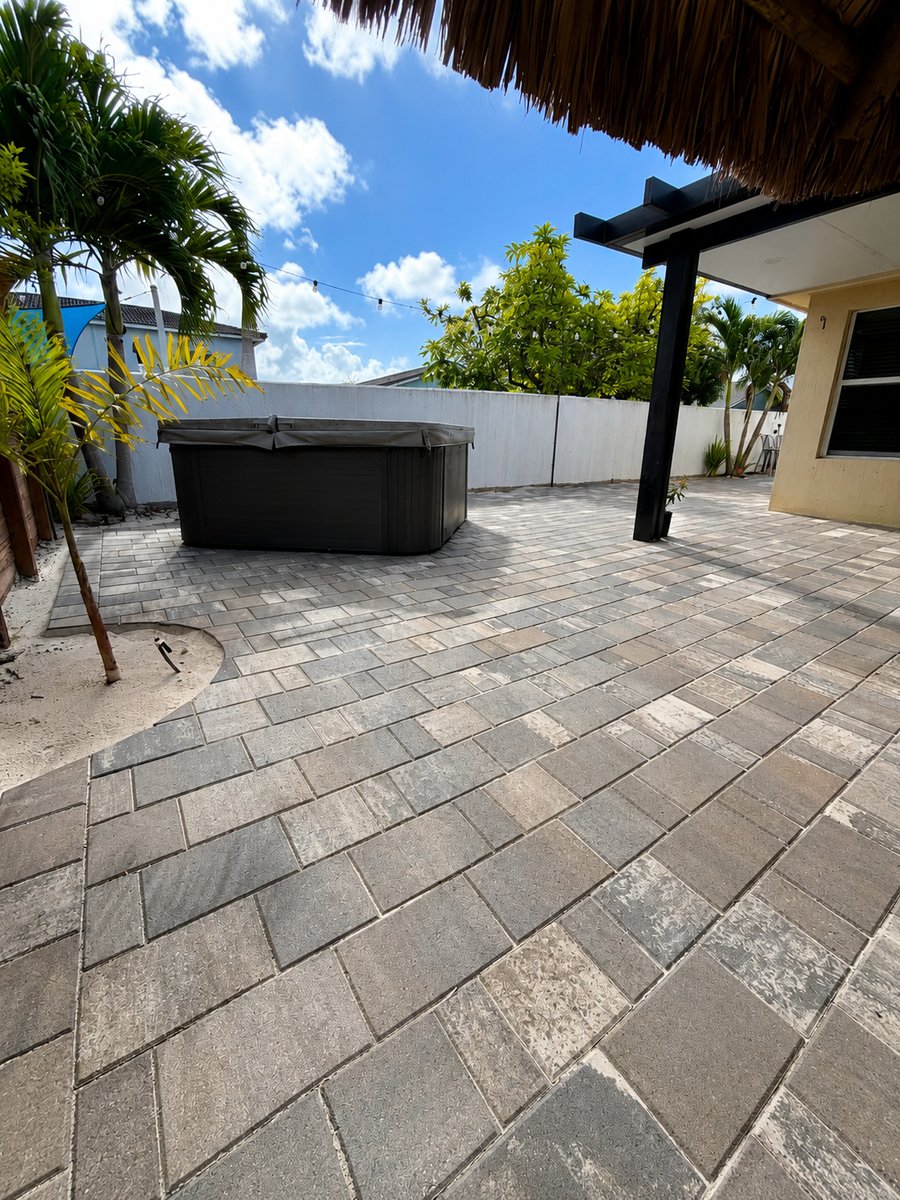
Large-format interlocking concrete pavers in running bond and ashlar, poured concrete with broom and exposed-aggregate finishes, poured panels with planted joints, and warm-toned tumbled units.
Details visible
Contrasting soldier-course borders, cut edges landing against a border rather than against grass, planted bands between concrete panels, and the transition where the apron meets the street.
What is not claimed
No cost, timeline, address or client appears anywhere on this page. Where a frame shows work in progress it is captioned as such rather than presented as a finished result.
Stage 03 · Plan
Levels, drainage and who has to say yes
A driveway replacement is usually simpler to permit than a structure, but it is rarely nothing - and in an HOA community the board often matters more than the building department.
Levels before opinions
We look at where the water goes now, where the garage threshold sits, how the apron meets the street and what the existing base is made of. Everything after this depends on it.
Agreeing the actual area
Field area, border, any bands, the apron, and whether the walkway and entry are in scope. Widening or reshaping is a different conversation from replacing like for like.
Where the water is going to go
Falls are set away from the garage and the house and toward wherever the site already drains. If the existing driveway ponds, that gets designed out rather than repeated.
Whether you are adding hard surface
Some jurisdictions care about how much of a lot is impervious. Replacing like for like usually does not change it; widening can. Permeable joints and planted bands can help.
The approval that catches people out
Many South Florida communities have their own rules on driveway colour, material and pattern, and boards meet on their own schedule. This is frequently the longest lead time in the job.
The strip that is not yours
The apron between the property line and the street usually belongs to the municipality or county. Work there is permitted separately in many jurisdictions.
Filed where it is required
Where a permit applies we prepare and file it. A clear scope with levels and materials draws fewer comments than a vague one.
Around the weather and your cars
This is outdoor work with wet trades. We sequence it so you are not without vehicle access longer than necessary, and so fresh work is not rained on before it can take it.
Where the jurisdiction requires it
Where the work is permitted there may be an inspection of the apron or the finished surface. Your building department sets the list.
Paperwork signed off
Any permit is closed out rather than left open. An open permit follows the property and turns up when it is sold.
Requirements differ across Miami-Dade, Broward and Palm Beach and between the municipalities inside them, and a driveway that touches the right-of-way or changes impervious area is treated differently from a like-for-like replacement. Nothing here is a guaranteed timeline or an assurance of approval - we confirm what your address actually requires before anything starts.
Stage 04 · Build
What happens on the driveway
In order, with the check that closes each phase. Vehicle access is interrupted for most of it, which is the part worth planning around.
Protection
Before anything is broken out
Landscaping, irrigation heads and the garage threshold are protected, and the route for machinery is agreed. Irrigation lines under a driveway are common and are located before excavation, not discovered during it.
Quality check · Irrigation and utilities located first
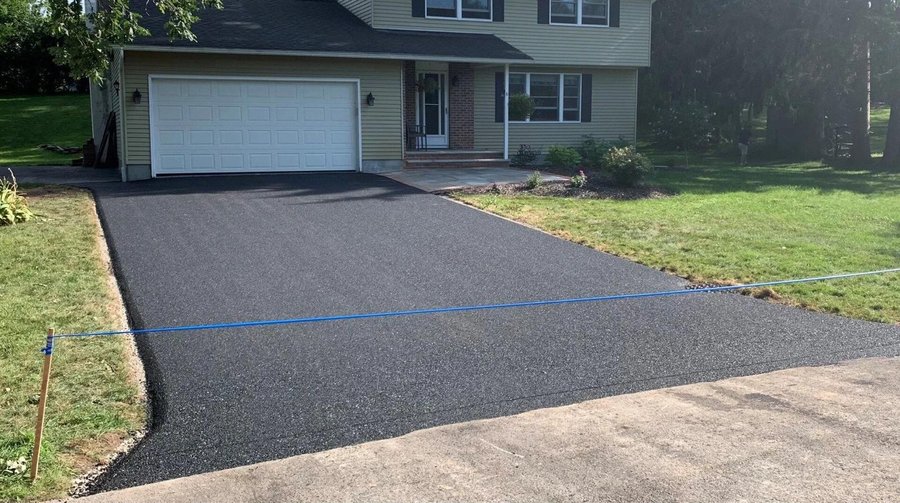
Demolition
The old surface comes out
The existing driveway is broken out and removed. This is the loud, dusty day, and it is when the existing base finally becomes visible.
Quality check · We photograph what the old base actually was
Excavation
Digging to the depth the design needs
Excavation goes to whatever depth the base build-up and the finished level require. Finished level is fixed at both ends - the garage threshold and the street - so the depth is dictated, not chosen.
Quality check · Depth checked against finished levels at both ends
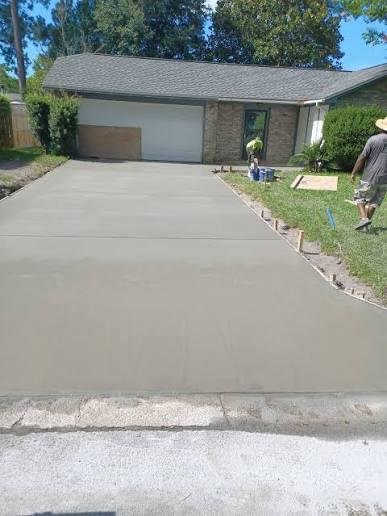
Subgrade
Compacting what you are building on
The exposed subgrade is graded and compacted. Soft spots are dug out and replaced rather than bridged over, because a soft spot telegraphs to the surface eventually.
Quality check · Subgrade compacted before any base goes down
Base
The layer that carries the cars
Crushed base material is placed and compacted in lifts to the design depth. Compacting in lifts is the whole point - a single deep layer compacts at the top and stays loose underneath.
Quality check · Base compacted in lifts, levels checked
Edge restraint
Locking the perimeter
Edge restraint is fixed into the compacted base around the whole perimeter. This is the step that stops the field spreading, and it is invisible once the border course is laid.
Quality check · Restraint fixed to base around the full perimeter
Bedding and laying
Screed, then units
A bedding layer is screeded to a consistent depth and the units are laid to the agreed pattern, working off string lines so the courses stay true across the full run.
Quality check · Pattern and alignment agreed before the field is committed
Cutting
The edges and the border
Cuts are made against the border and around any obstacles. Good cutting is what separates a driveway that looks drawn from one that looks trimmed.
Quality check · Cuts land against the border, not against grass
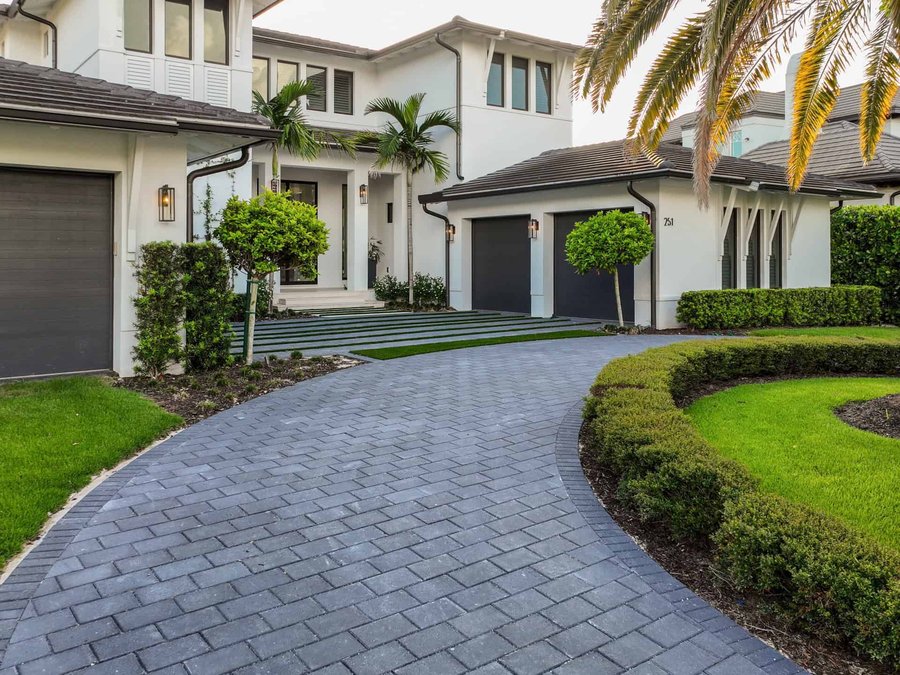
Compaction and joints
Locking it together
The field is compacted, joint sand is swept in and compacted in passes until the joints are full, then the surface is cleaned down. Polymeric sand is activated per its own instructions.
Quality check · Joints filled in passes, not once over
Handover
Walk it together
We walk the finished driveway with you, agree anything outstanding, and tell you when it can take vehicles and when it can take a full load.
Quality check · Agreed access date before you drive on it
Stage 05 · Inspect
The three decisions people find hardest
Balanced both ways. None of these has a universally right answer - it depends on your ground, your frontage and how much maintenance you actually want.
Interlocking pavers
Many units, individually replaceable
- How
- Units laid on a screeded bed over a compacted base, restrained at the perimeter and locked with joint sand.
- Benefits
- Any area can be lifted and re-laid invisibly, so a utility repair leaves no scar. Permeable at the joints. Ground movement shows as a settled area, not a crack.
- Limits
- More perimeter detail to get right, joints need topping up, and a weak base shows as rutting rather than as a single crack.
- Upkeep
- Occasional joint-sand top-up; individual units replaceable if stained or chipped.
- In South Florida
- Permeable joints and liftability both help where afternoon storms and buried irrigation are facts of life.
Poured concrete
One slab, cut where you choose
- How
- A reinforced slab poured over a compacted base, with control joints cut to decide where it cracks.
- Benefits
- Fewest joints to maintain, a very calm surface across a wide frontage, and no units to shift.
- Limits
- It will crack somewhere; control joints decide where. A repair is a patch or a section replacement, and colour-matching cured concrete is difficult.
- Upkeep
- Very little day to day; joint sealant is a consumable.
- In South Florida
- Works well, but it is impervious - relevant where a jurisdiction counts impervious area.
Which oneIf a utility might ever be dug up under it, or you want permeability and invisible repairs, pavers. If you want the calmest possible surface with the least routine attention and you can accept where the control joints fall, concrete.
Herringbone
Interlocks against turning traffic
- How
- Units laid at 45 or 90 degrees so no continuous joint runs in the direction of travel.
- Benefits
- The strongest interlock under braking and turning, which is exactly what a driveway gets.
- Limits
- More cuts at every edge, so more labour and more waste. Busier to look at across a wide area.
- Upkeep
- No difference once laid.
- In South Florida
- Worth it on steep or heavily-turned driveways and where a boat or larger vehicle parks.
Running bond or ashlar
Calmer, quicker, still sound
- How
- Courses offset in one direction, or several unit sizes combined in a repeating ashlar layout.
- Benefits
- Reads much calmer across a wide frontage, fewer cuts, quicker to lay, and hides slight pallet-to-pallet colour variation.
- Limits
- Less interlock than herringbone under heavy turning; relies more on the edge restraint doing its job.
- Upkeep
- No difference once laid.
- In South Florida
- The usual choice on wide, flat frontages where the look matters more than maximum interlock.
Which oneHerringbone where the driveway is turned on hard, is steep, or carries something heavy. Running bond or ashlar where the frontage is wide and flat and you want it to read calmly from the street.
Surface-only replacement
Keep the existing base
- How
- The existing surface comes off and a new one goes on the base that is already there, after it is assessed and made good.
- Benefits
- Less excavation, less disruption, less material, and a shorter job.
- Limits
- Only honest if the existing base is genuinely sound and at the right depth. It also raises or holds the finished level, which has to still work at the garage and the street.
- Upkeep
- Same as any driveway of that surface.
- In South Florida
- Viable more often than people expect - but it is a decision made after the old surface is off, not before.
Full rebuild
New base as well as new surface
- How
- Everything comes out down to subgrade; the subgrade is compacted and a new base is built in lifts.
- Benefits
- Drainage and levels can be corrected, soft spots removed, and the base depth matched to what will actually park there.
- Limits
- More excavation, more spoil to remove, more days without vehicle access, higher cost.
- Upkeep
- Same as any driveway of that surface.
- In South Florida
- The right answer where the driveway ponds, has rutted, or is being widened or re-shaped.
Which oneIf the existing driveway drains properly and has not rutted, a surface replacement can be genuinely good value. If it ponds, has settled in wheel tracks, or you are changing its shape, rebuild the base - anything else repeats the fault.
What moves the cost and the calendar
Tick whatever applies. This will not produce a price - no honest one exists before somebody has seen your levels and your ground - but it will show which parts of your driveway carry the cost and the time.
What this points to
We do not publish figures for driveways, because the same square footage can differ several-fold depending on what is under the old surface and how much the levels have to change. You get a real, itemised number after a site visit, in writing.
Stage 06 · Live
What the work looks like from your front door
Real footage and photographs from Elbaz driveway work. Driveways are the one renovation your neighbours watch as closely as you do, so it is worth knowing what the week actually looks like.
Vehicle access
You will be without the driveway for most of the build. Tell us at the site visit how many vehicles need somewhere to go and we will sequence around it - including splitting the driveway into halves where that is genuinely necessary.
Noise
Breaking out the old surface is the loud part and it is front-loaded. Compaction is intermittent after that. Saw cutting is loud but brief.
Dust
Breaking out concrete and cutting units both produce dust. Cutting is done wet or with extraction, and the site is cleaned down at the end of each day.
Machinery
There will be a compactor and, on a rebuild, an excavator and a truck for spoil. We agree the machinery route before anything arrives so landscaping is not the casualty.
Irrigation
Buried irrigation under a driveway is common in South Florida. Lines are located before excavation and either protected or re-routed - not discovered by breaking one.
Weather
This is outdoor work with wet trades. Heavy rain moves the programme, and we would rather lose a day than lay onto a base that has just been soaked.
Your neighbours
Spoil, deliveries and a compactor affect the street. We keep the frontage tidy and the road clear, and work within any community hours.
When you can drive on it
Not the moment it looks finished. We tell you at handover when it can take a car and when it can take a full load - concrete and polymeric sand both need their own curing time.
Why the boring parts are the ones that matter
Only claims we can stand behind. Everything below is either public record or visible in the driveways on this page.
Licensed, bonded and insured
Elbaz Construction is a licensed general contractor, CBC1265280. Driveway work that touches the right-of-way or changes drainage is permitted work, and permits are pulled in the company's name.
Base before surface
The base is where a driveway is won or lost. It is built to the depth the loading needs and compacted in lifts, because a single deep layer compacts at the top and stays loose underneath.
Edge restraint as its own step
Perimeter restraint is fixed into the compacted base around the whole driveway. It is invisible once the border is laid, which is exactly why it is the most common corner cut.
Drainage designed, not inherited
If the existing driveway ponds, that gets designed out rather than repeated. Falls are set away from the garage threshold and the slab.
Utilities located first
Buried irrigation and services are located before excavation begins.
Design and permitting in-house
Drawings, any permit application and the construction are handled by the same company, so nothing waits on a hand-off.
Local knowledge
We work across Miami-Dade, Broward and Palm Beach - 104 municipalities - and the differences between their rules on aprons and impervious area are a working detail rather than a surprise.
One point of contact
You speak to the same person from the site visit to the walkthrough, and any permit is closed out rather than left open.
Questions, by stage
Filter to the part of the job you are thinking about.
How do I know if my driveway needs replacing or just cleaning?Before starting
Ponding water, ruts in the wheel tracks, units that rock underfoot, or edges that have spread outward are all base or restraint problems and cleaning will not touch them. Staining, faded colour and weedy joints are surface problems and often are just cleaning and re-sanding. We will tell you which you have.
Can you re-use my existing base?Before starting
Sometimes, and it is a genuinely good saving when it is true. But it is only honest to decide after the old surface is off and the base can be assessed and its depth measured. We will not promise it in advance.
How long will I be without the driveway?Before starting
For most of the build. We do not publish a number of days because it depends on the area, whether the base is being rebuilt, and the weather - all of which we can be specific about after a site visit. Where access genuinely cannot be lost, the driveway can be phased in halves.
Which paver pattern is strongest?Design
Herringbone. Because no continuous joint runs in the direction of travel, it interlocks best against braking and turning. Running bond and ashlar are calmer to look at and quicker to lay, and are perfectly sound behind a properly restrained edge.
Do I need a border?Design
Not structurally - the edge restraint behind it does the structural work. But a contrasting soldier course gives the driveway a drawn edge and means every cut lands against a straight line instead of against grass, which is most of the difference between a driveway that looks designed and one that looks trimmed.
What colour should I choose?Design
Match the roof and the trim before the front door. A driveway is seen from the street far more than from the house, and roof and trim are what it sits against in that view. Bear in mind that a large expanse of a very light colour shows tyre marks and a very dark one holds heat.
Can I have grass or planting in the driveway?Design
Yes - concrete panels or paver bands with planted joints are common here. They break up a wide expanse, reduce run-off and reduce the heat of a large paved area. They do need the planting maintained, and they are not ideal where a vehicle is turned hard in one spot.
Will a new driveway fix water getting into my garage?Planning
Often, yes - if the cause is the fall running the wrong way, that is designed out. If the water is arriving from somewhere else on the site, the driveway alone will not fix it, and we would rather say so at the site visit than after.
Can you widen my driveway?Planning
Usually. It changes the drainage, may change the impervious area your jurisdiction counts, and can affect where the apron meets the street - so it is a design conversation rather than just more square footage.
Does a driveway need a permit in South Florida?Permits & HOA
It depends on the jurisdiction and the scope. A like-for-like replacement is treated differently from widening, re-grading or work in the right-of-way, and rules differ across the three counties and between municipalities. We confirm what your specific address requires before anything starts.
What is the apron and why is it treated separately?Permits & HOA
The apron is the section between your property line and the street. It usually sits in the public right-of-way, which means it belongs to the municipality or county rather than to you, and work there is often permitted separately.
My HOA has rules about driveways. What do they need?Permits & HOA
Most commonly the material, colour and pattern, sometimes with a sample. Boards meet on their own schedule, and in our experience the association approval - not the building department - is the longest lead time on a driveway. It is worth starting early with the colour chosen.
What happens if you find irrigation lines?Construction
We expect to - buried irrigation under South Florida driveways is normal. Lines are located before excavation and either protected or re-routed as part of the work, rather than discovered by breaking one.
Will your machinery damage my landscaping?Construction
The route in is agreed before anything arrives, and the areas alongside it are protected. Some marking of grass along the access route is realistic on a rebuild; we make it good.
What happens if it rains?Construction
The programme moves. We would rather lose a day than lay onto a base that has just been soaked, or compact joint sand that cannot dry. Rain during a South Florida summer is scheduled around, not fought.
Why don't you publish a price per square foot?Cost
Because the same square footage can differ several-fold depending on what is under the old surface, how much the levels have to change, and whether the apron is in scope. A published rate would be a guess. You get a real, itemised figure in writing after a site visit.
What makes a driveway more expensive?Cost
In rough order: rebuilding the base, correcting drainage, widening, complex patterns and borders, curves, right-of-way work, and keeping vehicle access throughout. The selector above lets you see which of those apply to you.
When can I drive on it?Completion
Not as soon as it looks finished. Poured concrete and polymeric joint sand each need their own curing time, and driving early is a real way to shorten the life of both. We give you the date at handover.
Will the pavers settle?Completion
A little initial settlement as the field beds in is normal and is why the joints get topped up. What is not normal is settlement in the wheel tracks or at the edges - that is a base or restraint problem and it is ours to put right.
How do I look after a paver driveway?Maintenance
Rinse it down periodically, top up joint sand when the joints start to look low, and deal with oil drips promptly rather than letting them soak in. Weeds in joints are usually a sign the sand needs topping up.
Should I seal it?Maintenance
Sealing is optional. It deepens the colour and makes stains easier to lift, and it needs redoing periodically. An unsealed paver driveway is not a neglected one - it is a choice, and we will tell you honestly what sealing will and will not do for the surface you have chosen.
One paver is stained or chipped. What now?Maintenance
That is the advantage of a paver driveway - a single unit can be lifted and swapped. It is worth keeping a small number of spares from the original pallets for exactly this reason, and we will leave you some.
Nothing in that stage yet — try “All”.
Start with the levels, not a price per foot.
Every honest driveway number comes after somebody has looked at where your water goes and what is under the surface you already have. That visit is the next step.

