


10 service categories · 100 service pages · Miami-Dade, Broward & Palm Beach
View all services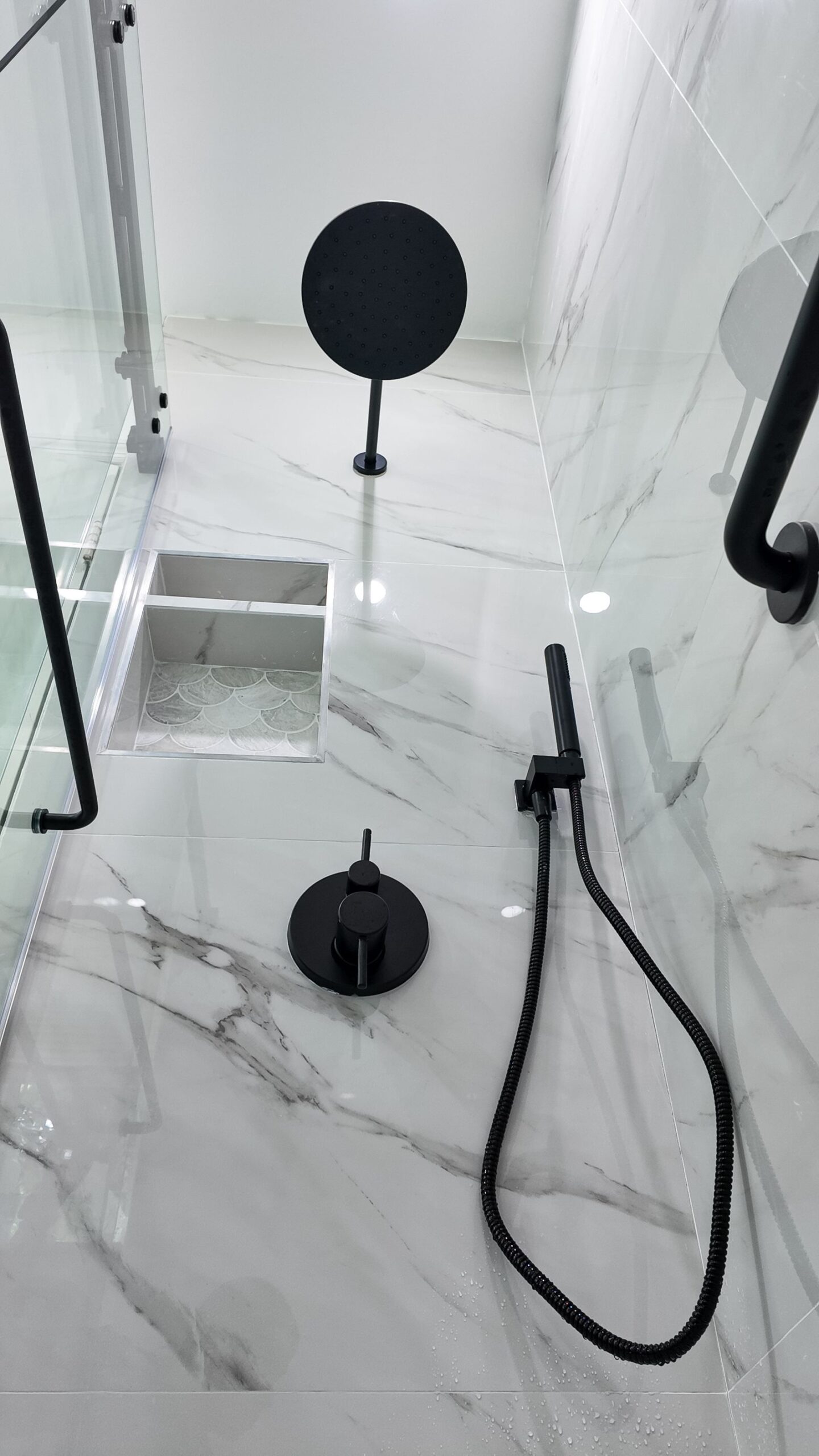
Tile fails from
underneath.
So start there.
Almost every tile floor that cracks, drums or lifts was set on a substrate that was not ready. The tile is the last decision on this job, not the first — and it is the cheapest thing to change.
- Licensed, bonded & insured · CBC1265280
- 104 municipalities across 3 counties
- Design-build: permitting & construction in-house
Miami-Dade · Broward & Palm Beach Counties
ScrollThe service, defined
A tile floor is a system with a tile on top.
Tile flooring installation covers the whole assembly: assessing and preparing the substrate, correcting level, waterproofing where the floor is going to get wet, setting the tile in the right mortar with full coverage, forming movement joints where the floor needs to move, and grouting and sealing to finish.
It serves owners replacing worn floors, anyone tiling a bathroom or wet room, and projects where large-format porcelain or natural stone is going down over slab — which is most floors in this region. The failures people live with, from hollow-sounding tiles to cracked grout lines to a shower that seeps into the next room, all originate in the layers nobody sees.
Three local realities drive the detailing. Slab-on-grade construction means moisture can come up through the floor, so a moisture assessment matters before anything is bonded down. Concrete moves in this heat, which makes movement joints a structural detail rather than an aesthetic one. And outdoors, tile has to survive full sun, driving rain and salt air — where the setting materials and the joint design matter more than the tile does.
What is included
- Scope
- Substrate survey, preparation and levelling, waterproofing, uncoupling where required, setting, movement joints, grouting, sealing, trims and thresholds
- Delivered by
- One licensed general contractor — CBC1265280
- Region
- Miami-Dade, Broward and Palm Beach counties
- Common formats
- Large-format porcelain · natural stone and travertine · mosaic and feature tile · wood-look plank tile · exterior terrace and pool-deck paving
- Typical areas
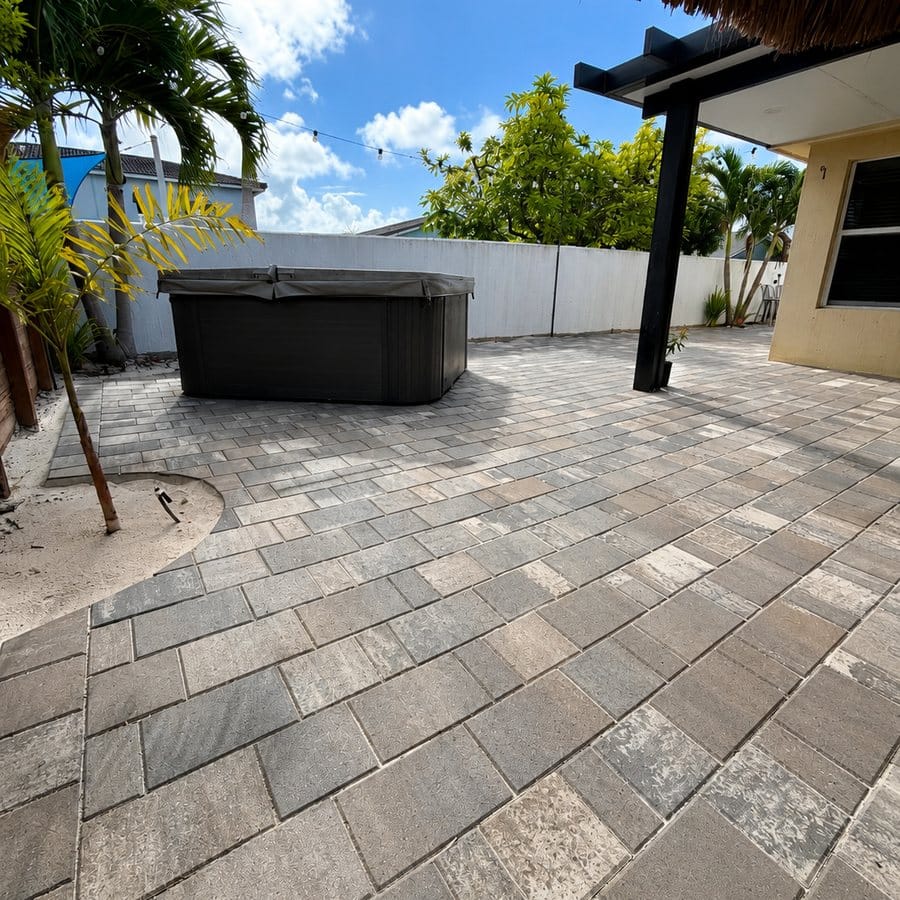
- Bathrooms and wet rooms · kitchens and living areas · hallways and stairs · terraces, pool decks and covered outdoor rooms
Scope index
Everything a tile floor actually contains.
Eleven items, four phases. Items two through six are entirely invisible once the tile is down, and they decide whether the floor lasts.
Substrate survey
What is under the floor, how flat it is, whether it is cracked, and whether it is giving off moisture. On a slab, a moisture reading is worth taking before anything is bonded to it.
Demolition and removal
Old flooring and adhesive removed back to a sound substrate. Setting new tile over a failing floor buys a year and costs the whole job again.
Levelling and flatness
Large-format tile is unforgiving: a substrate that is out of flat produces lippage at every edge. Self-levelling compound or a screed corrects it before setting.
Moisture and crack control
Where the slab is damp or has moving cracks, a membrane or uncoupling layer goes down so the movement below does not telegraph into the tile above.
Waterproofing
In showers, wet rooms and anywhere with a floor drain, a bonded waterproofing system with sealed corners and penetrations. This is the layer that stops a bathroom becoming a ceiling repair downstairs.
Setting out
Where the first tile goes, which is the decision that governs every cut in the room — including the ones people see from the doorway and the ones that land badly at a threshold.
Setting
Correct mortar for the tile and substrate, notched and back-buttered for full coverage. Voids under a tile are where cracks start, and large-format tile is the least forgiving of all.
Movement joints
Soft joints at perimeters, at changes of plane and at intervals across a large field. Tiling a room hard against every wall guarantees cracked grout later.
Grouting
Grout selected for the joint width and the exposure, packed properly and cleaned before it cures. Epoxy grout in wet and heavy-use areas where it earns its cost.
Sealing and trims
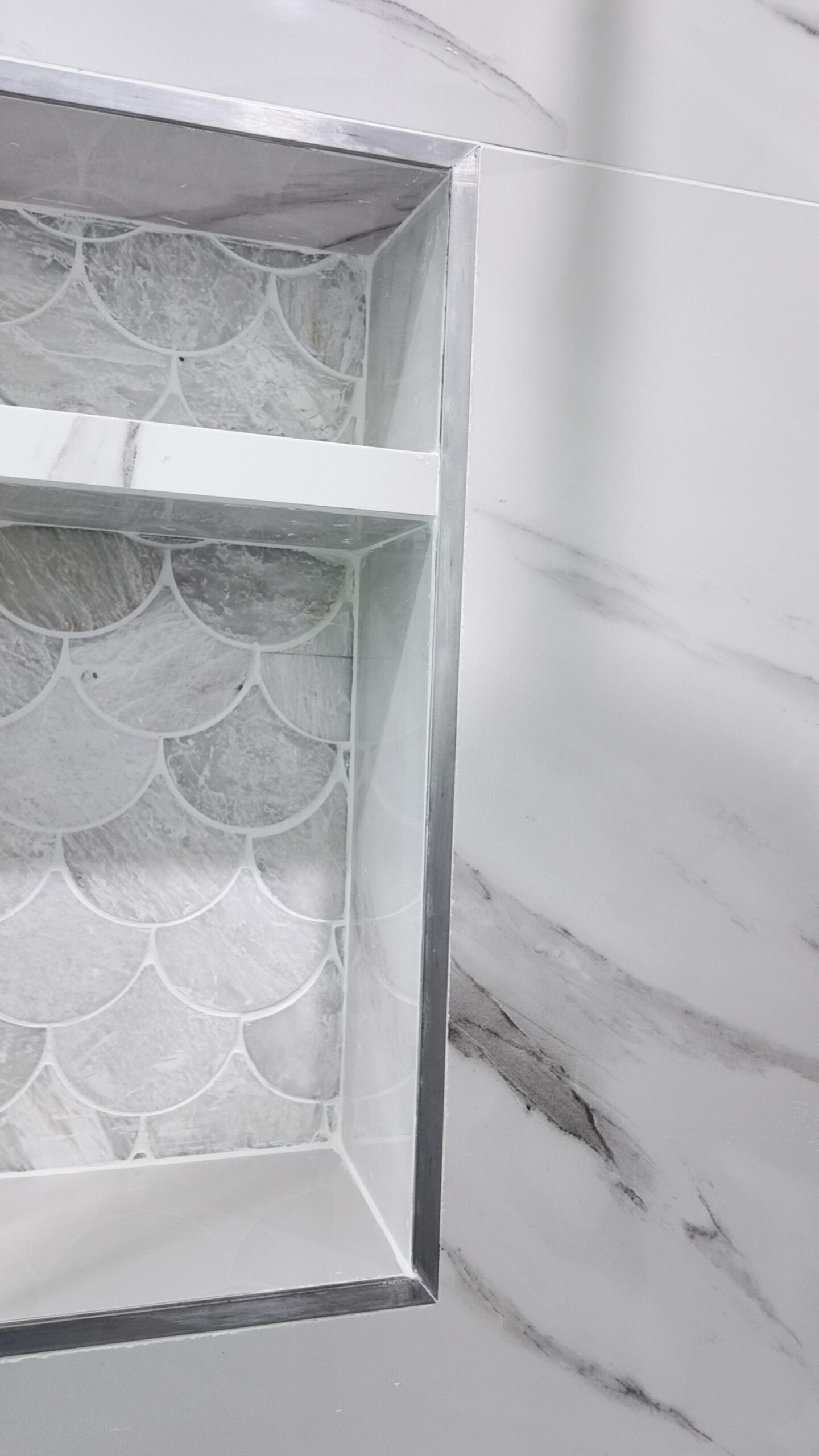
Natural stone sealed, edges trimmed and thresholds formed where the tile meets another material.
Clean and handover
Haze removed, joints checked, and the leftover tile from the same batch left with you for future repairs.
Specification
Bathroom Tile Installation
Recorded from the photography only. Tile brand, format dimensions, membrane manufacturer, cost, schedule, address and client are not documented in the source material and are not stated.
- Project type
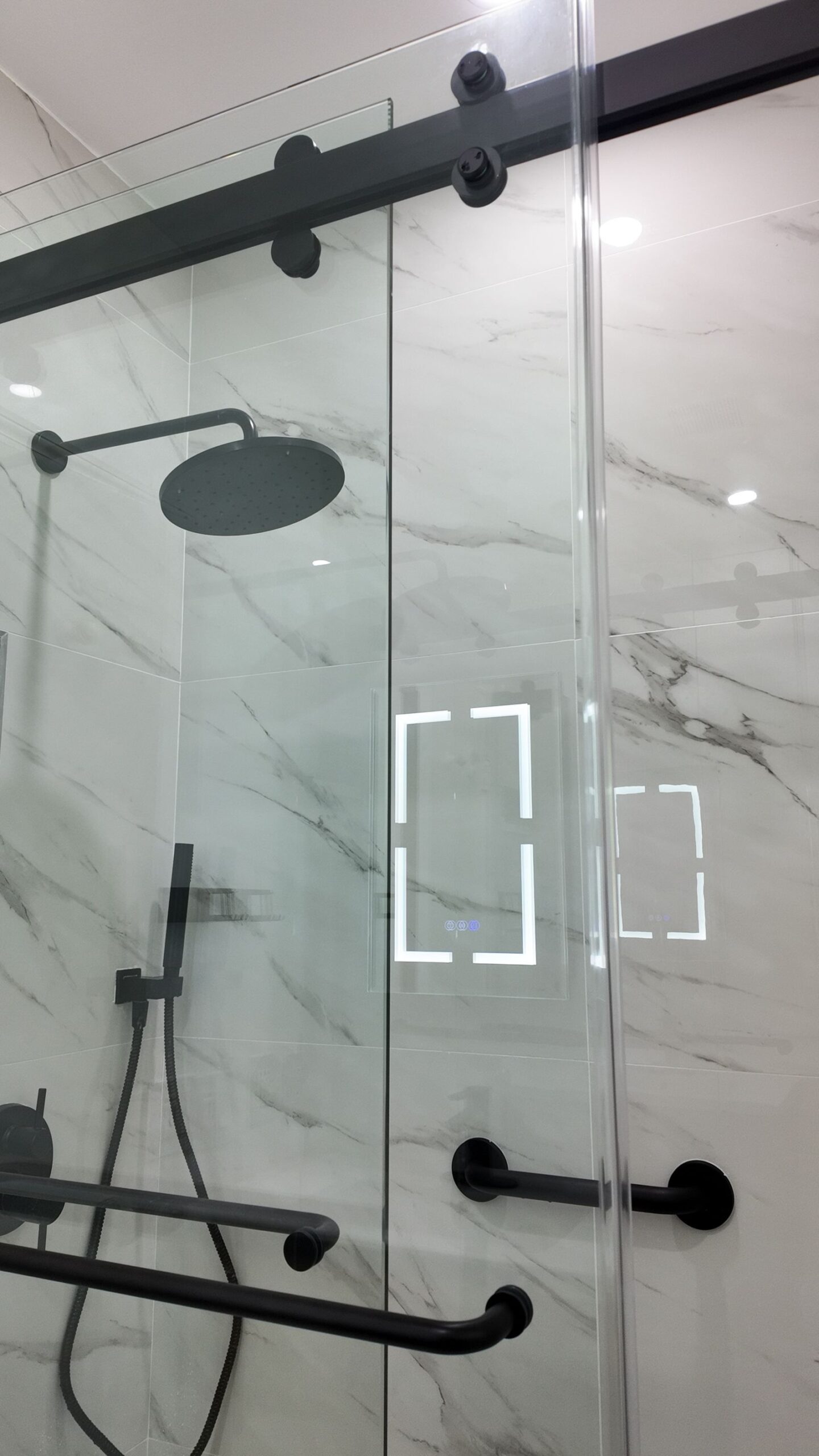
- Floor and wall tile installation within completed bathroom remodels
- Wet-area treatment
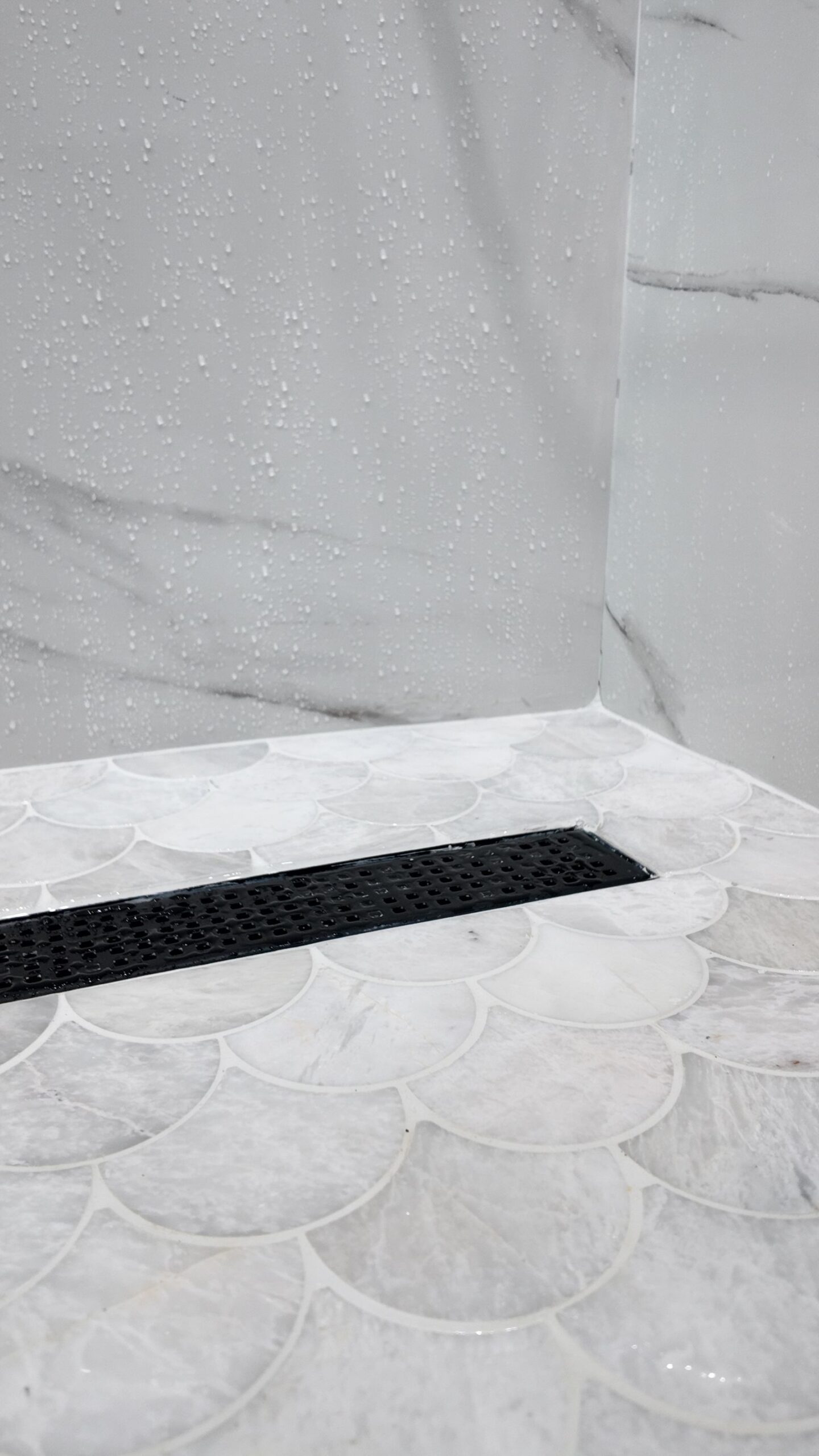
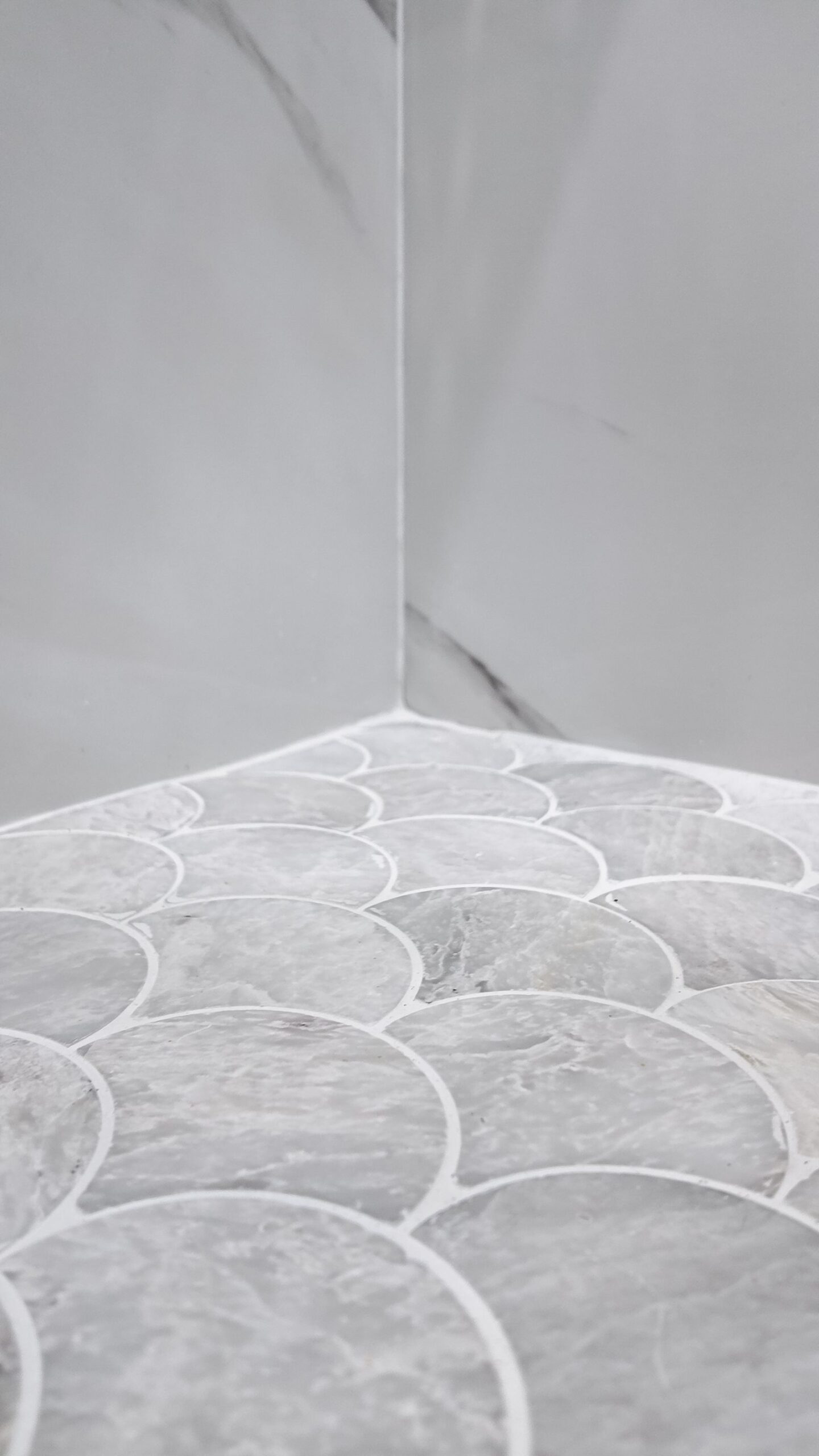
- Tile carried from the room floor into the shower enclosure, which requires the waterproofing to be continuous beneath it
- Junction detail
- Wall tile meeting floor tile at a controlled line rather than a mitred guess
- Cut quality
- Cuts held square around fittings, penetrations and enclosure framing
- Visible materials
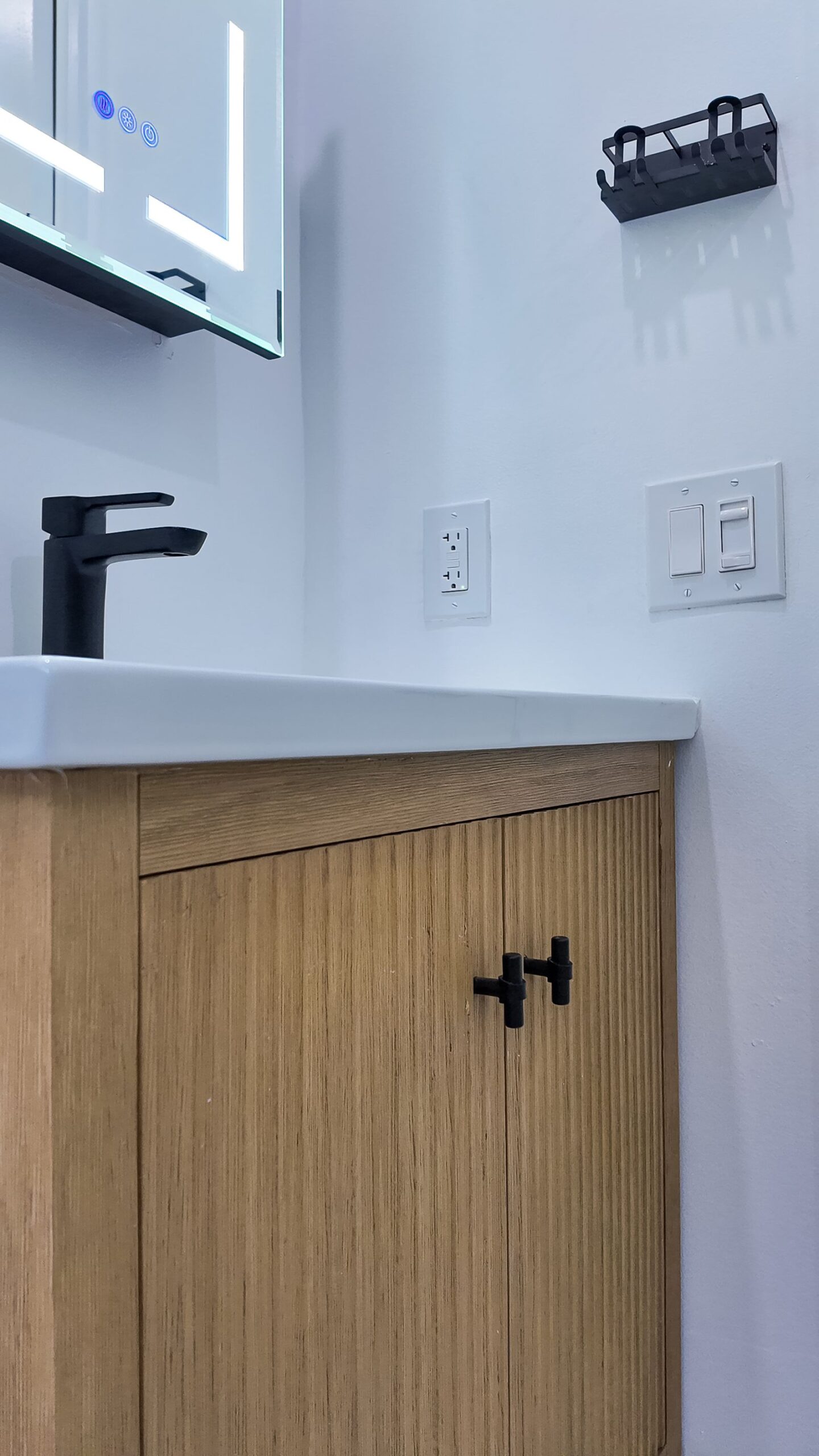
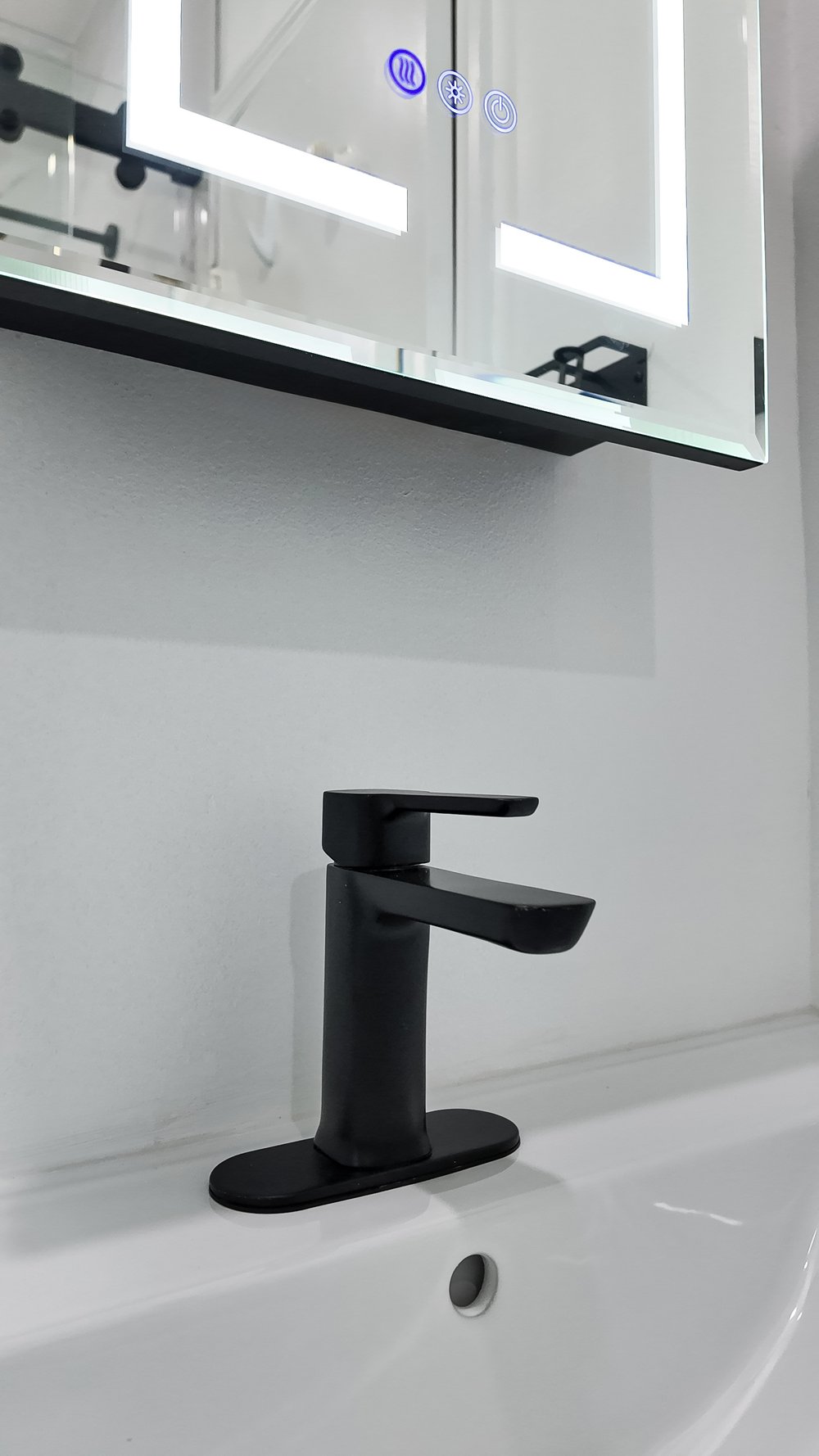
- Ceramic and porcelain floor and wall tile · grouted joints · glazed enclosure · chrome and matt-black fittings
- Threshold
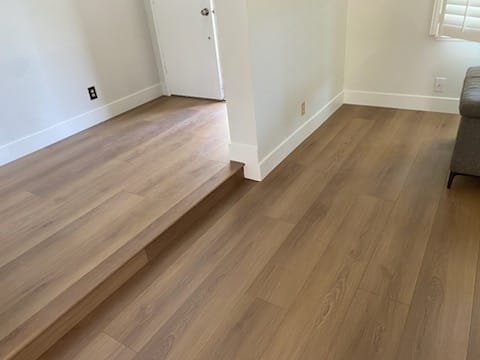
- Tile meeting adjacent flooring at a formed threshold, visible in the flooring frame in this set
- Stage documented
- Complete
Design and material language
Five decisions that decide whether tile lasts.
The specification choices that matter, and what the cheaper option actually costs you.
Porcelain
The default, and usually right
Used on Elbaz tile installations. Dense, low-absorption and hard-wearing, in formats from mosaic to very large panels, including convincing wood-look and stone-look ranges. Suitable indoors, in wet areas and outdoors when a slip-rated finish is specified.
Other options. Ceramic costs less and is fine for walls and light-traffic floors, but it is softer and absorbs more water, which matters outdoors and in wet rooms.
Natural stone
Travertine, marble and limestone
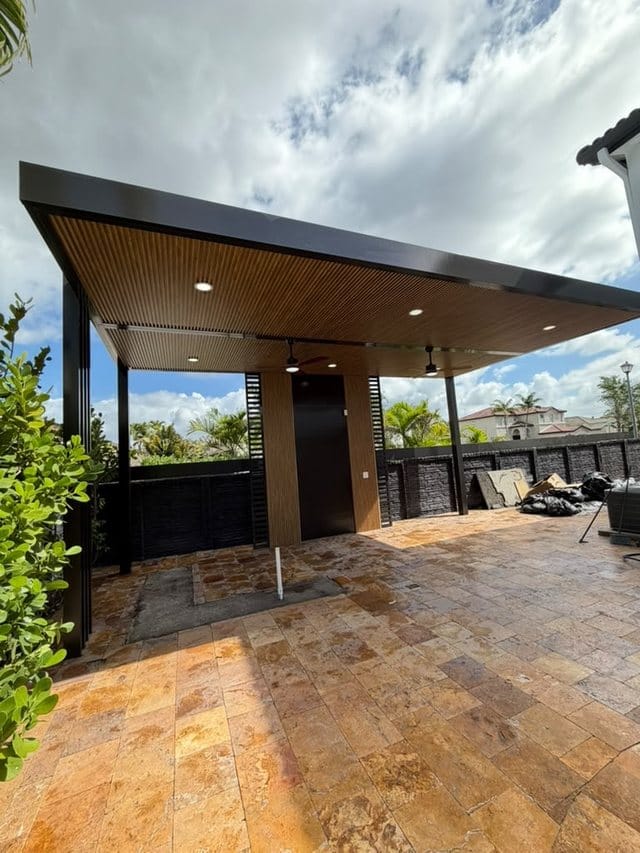
Used on Elbaz tile installations. Genuinely different underfoot and no two pieces alike — travertine in particular stays comparatively cool for pool decks and terraces, which is why it is everywhere in this region.
Other options. It is porous, needs sealing, and can be etched by acids and marked by spills. Stone-look porcelain gets close to the appearance with none of the maintenance; stone is chosen when the material itself is the point.
The setting layer
Mortar, membrane or uncoupling
Used on Elbaz tile installations. Large-format tile needs a mortar rated for it, notched correctly and back-buttered for full coverage. Over a slab with movement or moisture, an uncoupling membrane isolates the tile from what the substrate is doing.
Other options. Bonding straight to a questionable slab saves a real amount on day one. It is also the single most common reason a floor is lifted and redone within a few years.
Grout
Cement or epoxy
Used on Elbaz tile installations. Cement grout is standard, available in every colour and easily repaired. Epoxy grout is near-impervious and stain-resistant, which earns its extra cost and difficulty in showers, kitchens and heavy-use commercial floors.
Other options. Very narrow joints look sharp and leave nowhere for dimensional variation to go. Joint width is a technical decision that people usually treat as an aesthetic one.
Movement joints
The detail everyone skips
Used on Elbaz tile installations. Soft, flexible joints at perimeters, at plane changes and at intervals through a large field, so thermal and structural movement is absorbed somewhere other than the tile.
Other options. Omitting them looks better on handover day and is why long runs and sun-exposed floors crack along a line months later. On a South Florida terrace this is not optional.
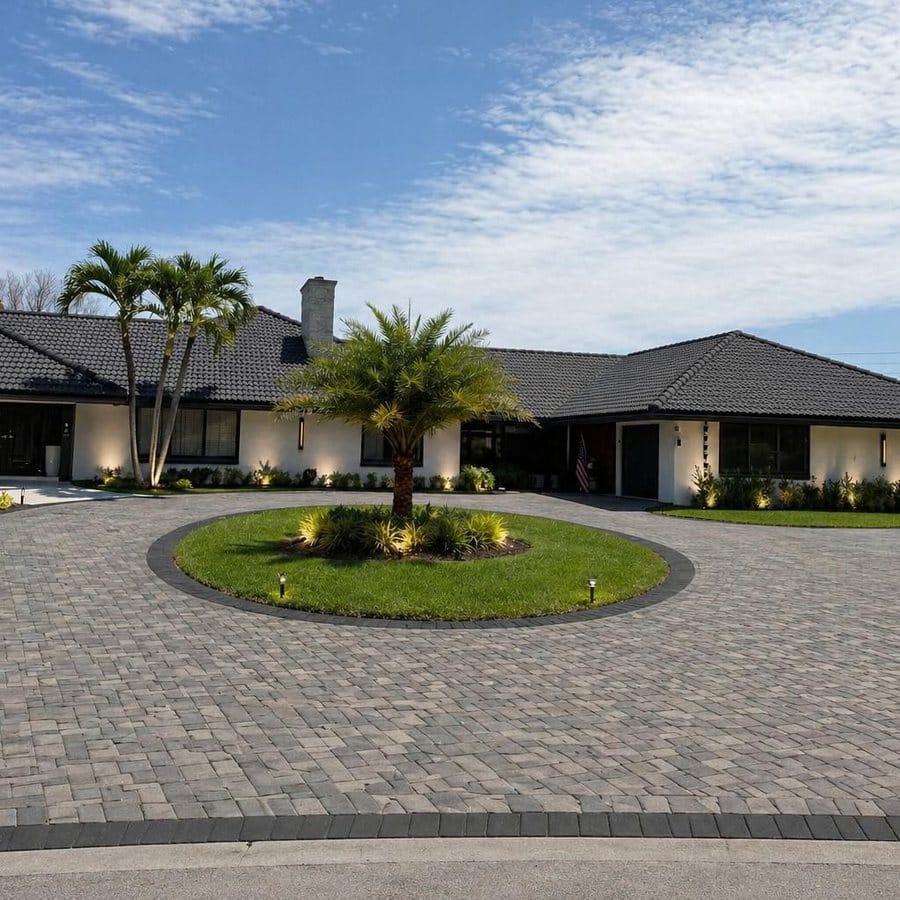
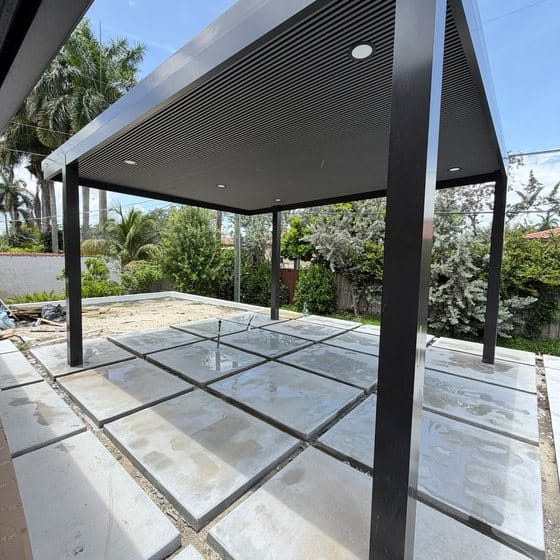
On what is shown. Every photograph on this page is a real Elbaz Construction installation. The alternative options described below are named for comparison only and are not claimed to be what is pictured.
Technical brief
Where tile work meets the building code.
Replacing a floor finish is usually not permitted work on its own. What sits around it — waterproofing, drains, weight, exterior exposure — frequently is.
Finish replacement alone
Swapping one floor finish for another in the same location generally does not require a permit. The moment plumbing, drainage or structure is touched, that changes.
Wet areas and shower pans
Where a shower pan, drain or waterproofing is rebuilt, plumbing permits and inspections normally apply — and a shower pan is often required to be water-tested before tiling over it.
Slip resistance outdoors
Around pools and on terraces, the slip rating of the surface is a real safety specification, not marketing. It is worth checking before ordering.
Exterior exposure
Outdoor tile has to handle full sun, driving rain and salt air. Setting materials, drainage falls and joint design all differ from an interior floor.
Weight in condominiums
Stone and thick-bed installations add load. Some associations set limits and require engineering sign-off before the material goes up the elevator.
Acoustic requirements
Many condominium documents require an impact-sound underlayment beneath hard flooring, with a minimum rating. It is easy to comply with and expensive to be told about afterwards.
Association approval and access
Written approval, contractor insurance naming the association, working hours, elevator booking and protection of common areas.
Contractor licensing
Whoever holds the work should be licensed and insured. It is checkable in a couple of minutes and worth checking.
Disclaimer. Requirements are set by your municipality and, in a condominium, by the association. Nothing here is a legal opinion; confirm your own requirements before work starts.
Performance and quality
What we hold ourselves to.
No coverage percentage, flatness tolerance or membrane brand is claimed on this page. Those are specified per project against the tile chosen and the substrate found.
- Substrate assessed first
- Flatness, soundness and moisture checked before any tile is ordered.
- Preparation not skipped
- Levelling, isolation and waterproofing done as specified, even though none of it is visible after.
- Waterproofing sealed throughout
- Corners, junctions and penetrations sealed, not just the open field.
- Full mortar coverage
- Back-buttered where the format calls for it, so there are no voids at edges and corners.
- Movement joints formed
- Perimeters and field joints built in rather than grouted over.
- Set out from the visible line
- Layout planned so cuts land where they are least seen and thresholds work.
- Grout cleaned before cure
- Haze removed while it can still be removed without aggression.
- Spare tile left on site
- Material from the same batch kept for future repairs, because dye lots do not repeat.
Cost and timeline
The twelve things a real number is built from.
We do not publish per-square-foot prices. The tile is often the smaller half of the cost and the preparation is the variable half — and the preparation is unknown until the old floor comes up.
| # | Variable | Why it moves the number |
|---|---|---|
| 01 | Area and layout complexity | Open rectangles are quick. Rooms with many corners, niches and fittings are not. |
| 02 | Condition of the substrate | How much levelling, repair and crack treatment is needed once the old floor is off. |
| 03 | Demolition and disposal | What is coming up, how well bonded it is, and how far it has to be carried. |
| 04 | Tile format | Very large panels need more labour, more people and more care than a standard field tile. |
| 05 | Material selected | Ceramic, porcelain and natural stone occupy completely different price bands at identical area. |
| 06 | Pattern | Herringbone, diagonal and mixed-format layouts add labour and waste against a straight lay. |
| 07 | Waterproofing scope | Wet areas, shower pans and floor drains add materials, labour and often an inspection. |
| 08 | Uncoupling or isolation | Whether the slab condition requires a membrane beneath the tile. |
| 09 | Grout choice | Epoxy costs more in material and labour and lasts better where it matters. |
| 10 | Exterior work | Falls, drainage and exposure-rated setting materials on terraces and decks. |
| 11 | Trims and thresholds | Edges, transitions to other materials and stair nosings. |
| 12 | Access and occupancy | Occupied homes and condominium elevator access both extend the programme. |
Four things worth looking for.
These frames are real Elbaz Construction installations in South Florida. The catch-all folder in the source archive was excluded — it contains confirmed cross-client material from another market.
Observations
- 01
- The joints line up
Grout lines running true across a room, and continuing across a threshold rather than restarting. That is set-out done before the first tile, not corrected after. - 02
- Cuts land where they belong
Full tiles in the sightline from the door and cuts pushed to the edges. Where cuts are unavoidable at a fitting, they are square and consistent. - 03
- The perimeter is not grouted hard
A soft joint where the field meets the wall. It reads as a fine sealant line and it is the reason the floor is not cracked along a wall two summers later. - 04
- The transitions are deliberate
Where tile meets another material, a formed threshold at a considered height rather than a strip covering a mistake.
Credentials and delivery
Six verifiable reasons, and no badges.
Nothing here is an award or a membership we cannot substantiate. The licence number is public and checkable.
Licensed general contractor
CBC1265280 — certified building contractor, bonded and insured, holding the work rather than brokering it to a crew we have not met.
Substrate assessed before quoting
We look at what is under the floor before pricing what goes on top, so the number survives the demolition.
Wet-area detailing taken seriously
Continuous waterproofing, sealed penetrations and correct falls — the parts that stop a bathroom becoming a ceiling repair.
Interior and exterior experience
Bathroom tile and travertine terraces are different disciplines, and this archive shows both.
Movement designed in
Perimeter and field joints planned rather than remembered, which matters more in this climate than most.
One contractor for the whole floor
Demolition, preparation, waterproofing, setting and finish under one licence, so nobody is blaming the previous trade.
Start here
Start under the floor.
Tell us the area and what is down there now. We will tell you what the substrate needs before we talk about tile.
What happens next
- 01
- We call or email within one business day, Sunday to Friday.
- 02
- A survey: area, substrate condition, moisture, thresholds and exposure.
- 03
- A written scope separating preparation from tile, with a fixed proposal.
- Useful to have
- Rough area, what the existing floor is, and your association’s flooring rules if you are in a condominium.
Get the substrate right.
The tile is the easy part.
Substrate preparation, waterproofing, movement joints and setting for interior and exterior tile across Miami-Dade, Broward and Palm Beach, under one licensed general contractor.

