


Reference imagery
What careful period
work looks like.
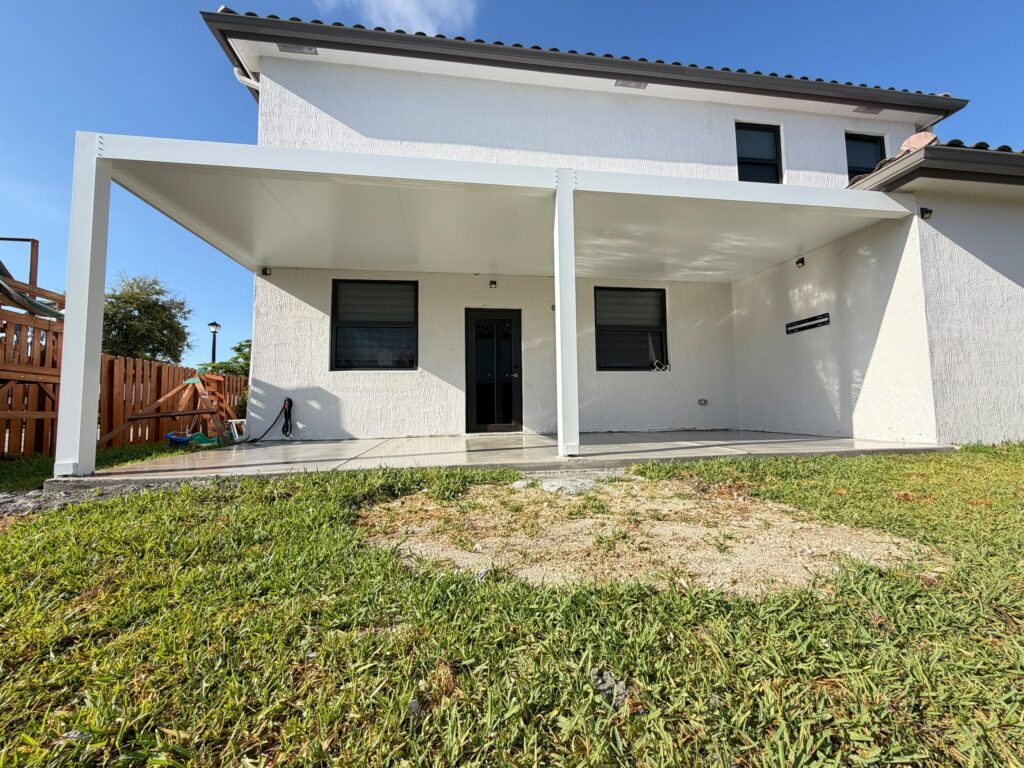
Elbaz Construction has no photographed historic-district project to show on this page. The photographs below are real Elbaz Construction photographs — stucco elevation and repair work, and a glazed-opening installation, from other South Florida renovations — shown to illustrate the kind of exterior work described here, not this specific property type.
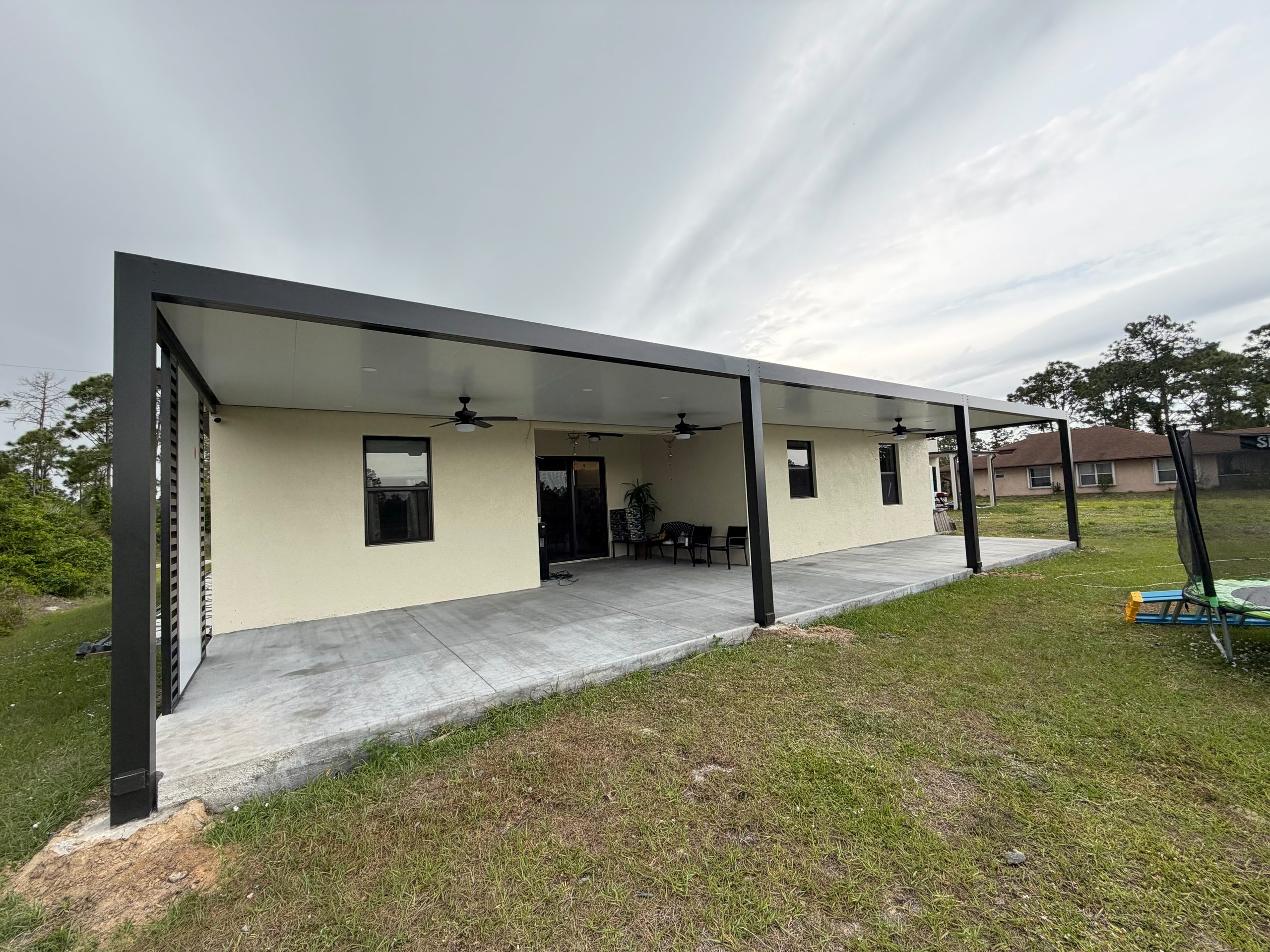
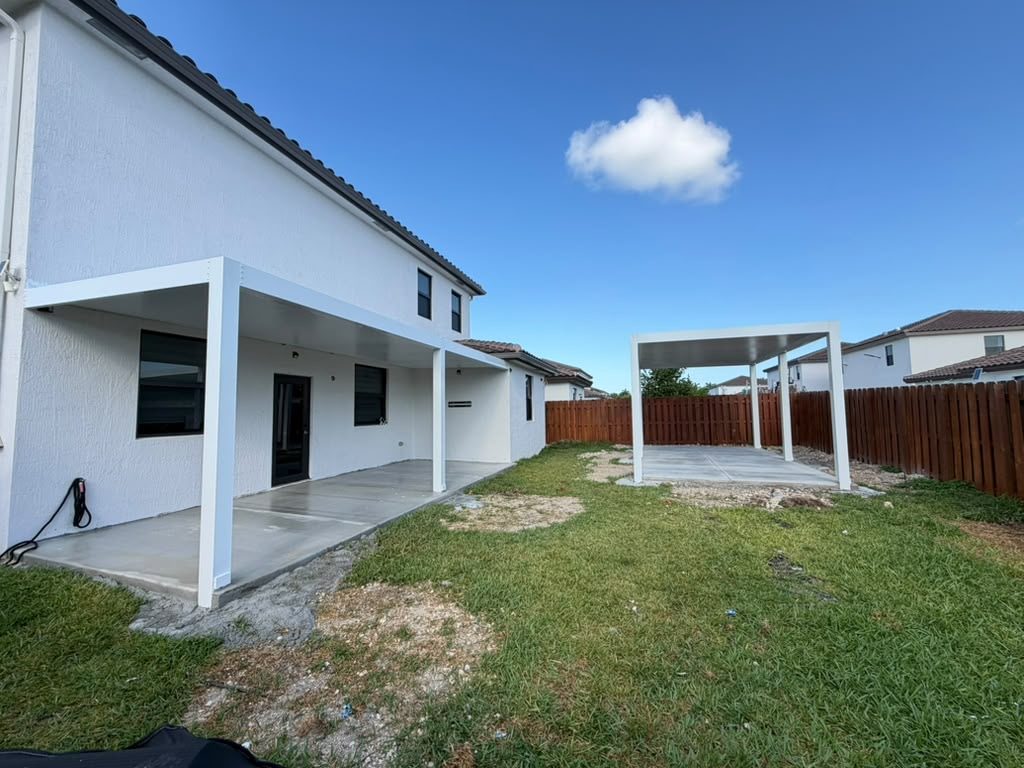
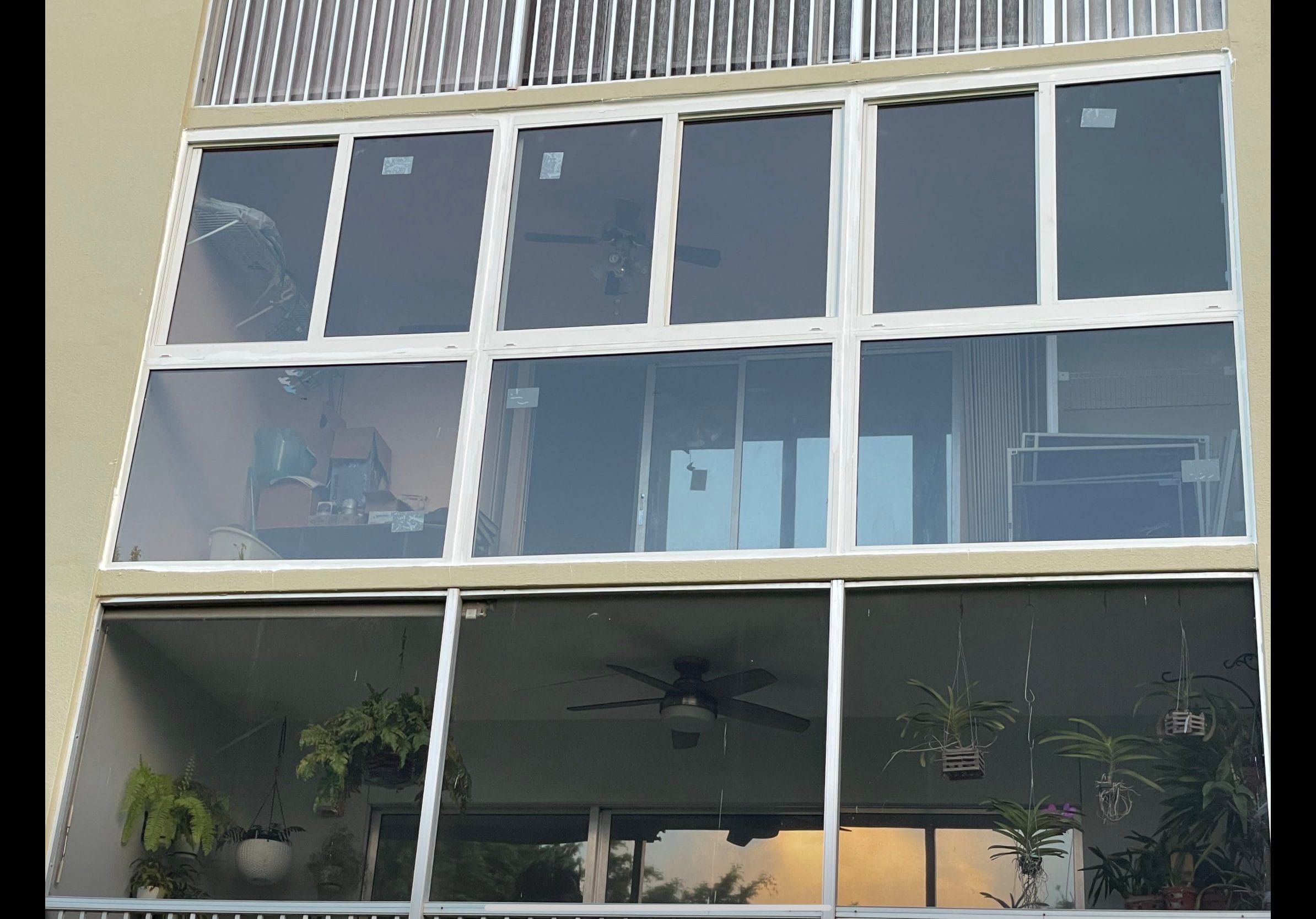
Real Elbaz Construction photographs from other South Florida renovations (not this property type).
The service
Character is the asset.
Everything else is negotiable.
The value of an older house is in the things that cannot be bought new: the proportions, the joinery, the plaster, the way the light works in rooms that were designed before air conditioning. Those are the things a renovation should protect.
Almost everything behind them — wiring, plumbing, insulation, mechanical, and the structural repairs that decades of moisture have earned — is fair game, and usually where the real work is.
- Survey before demolition
What is original, what was added later and what is failing are three different questions, and they get answered before anything comes out.
- Repair before replacement
Original windows, trim and plaster can usually be repaired. Replacement is a decision, not a default.
- Modern systems, quietly
New services routed so they serve the house without scarring the fabric that makes it worth renovating.
Scope
What a period renovation covers
Older houses fail in predictable places. This is the scope that addresses them, in the order the work has to happen.
The survey pays for itself
Every unpleasant surprise in an older house is cheaper to find with a moisture meter than with a demolition crew. The condition survey is the least glamorous line in the budget and the one that protects the rest of it.
Investigation and protection
- Condition survey of structure, envelope and services as built
- Identifying original fabric against later alterations
- Protection of features that are staying before any work starts
- Testing where hidden conditions are suspected
Structure and envelope
- Repair of framing, joists and headers where moisture or insects have taken them
- Roof and flashing repairs where water has been getting in
- Window and door repair, with replacement only where repair is not viable
- Exterior repair and repainting tied back to the original detailing
Systems brought current
- Electrical rewiring, panel replacement and grounding to current requirements
- Plumbing supply and waste replacement where original material is failing
- Mechanical and ventilation designed for a building that was not built for it
- Insulation and moisture management appropriate to the construction type
Interior and finish
- Plaster repair, or replacement matched to the original profile
- Trim, skirting and architrave repaired or milled to match
- Kitchen and bathroom renewal within the existing plan where possible
- Decoration and reinstatement of protected features
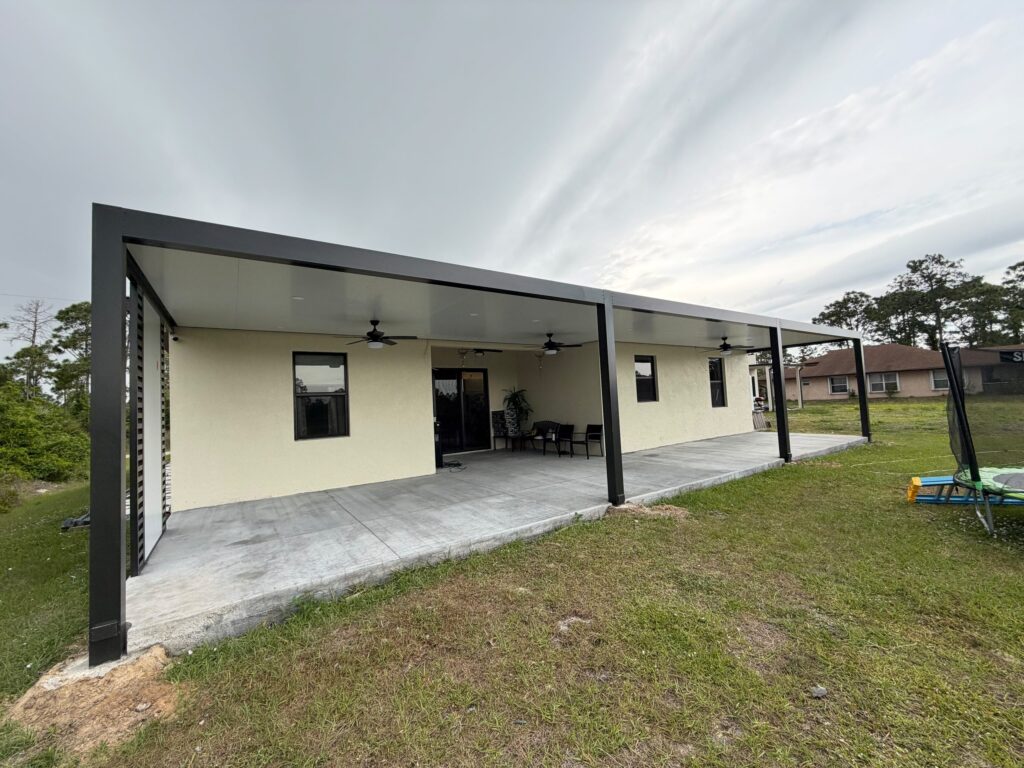
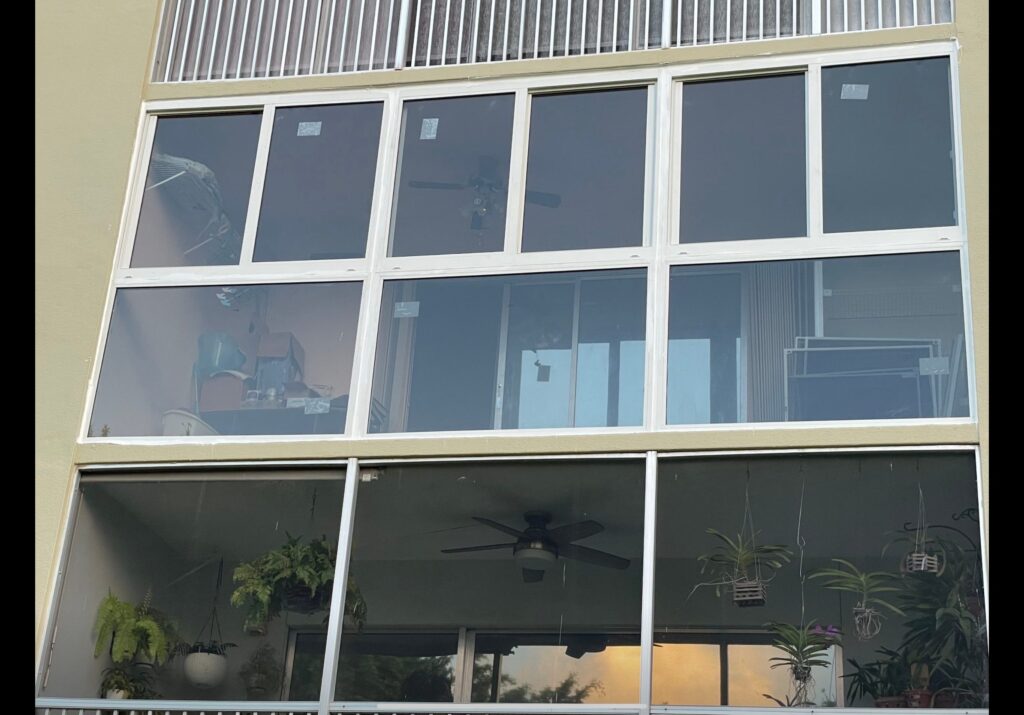
Stills from other Elbaz Construction renovation projects, cycling through the stages described here (not a historic-district property).
How it runs
Eight stages,
one contract
Period work rewards sequence. Opening up before you know what is behind the wall is how small problems become large ones.
- 01
Condition survey
Structure, envelope, services and moisture recorded as they actually are, with the original fabric identified separately from later work.
- 02
Feasibility
What the house will realistically support, what the jurisdiction will require, and where the money is best spent.
- 03
Design
Resolved against what the survey found rather than against an assumption about what is behind the plaster.
- 04
Scope and specification
Written scope naming what is repaired, what is replaced and what is matched — the document the build is measured against.
- 05
Permitting
Submission and correction responses handled by us, including any historic-district or association review the property triggers.
- 06
Strip and stabilise
Careful removal, protection of retained features, and structural repair before anything is covered.
- 07
Systems and close-up
Electrical, plumbing and mechanical rough-in, inspected before it disappears behind new plaster.
- 08
Finish and reinstatement
Plaster, trim, decoration and the reinstatement of everything that was protected at the start.
Approvals
Older houses attract
more reviewers.
A renovation permit is the baseline. Depending on the property there may also be a historic-district or architectural review, a community association approval, and — where the work touches structure — engineering sign-off.
Where a property sits in a designated district, exterior changes are usually the sensitive part: windows, roofing, cladding and anything visible from the street. Interior work is generally less constrained, though that varies by jurisdiction.
We establish which reviews apply to your address before design, because they shape both what is possible and how long approval takes.
Simplified sketch, for explanation only. It is not a permit drawing and not a plan of either project shown on this page.
From first call to closeout
- Property research
Age, any designation, and what has been permitted before.
- Condition survey
Recorded by inspection, not assumed from the age of the house.
- Scope definition
What is repaired, replaced and matched, written down.
- Drawings
Prepared for submission to the authority having jurisdiction.
- Engineering
Where framing, openings or loads are being altered.
- Historic or architectural review
Where the property or district requires it.
- Association approval
Where a community association has its own process.
- Building permit
Submission and correction responses handled by us.
- Inspections
At each required stage through the work.
- Closeout
Final inspection and documentation.
Designation changes the exterior conversation
In a designated district the street-facing envelope is usually what review focuses on. That is worth knowing before you fall in love with a window schedule.
Nothing here is legal advice, and no approval outcome or review duration is promised. Requirements vary by municipality and by property.
Cost and schedule
What moves the number
Older houses are priced on what is found, not on square footage. These are the variables that actually decide the budget — and we establish them by survey before quoting.
What moves the cost
- What the survey finds
Rot, insect damage, failed framing and previous unpermitted work are the four most common budget events.
- Systems condition
Whether wiring, supply and waste are serviceable or need full replacement is usually a whole-house decision, not a room-by-room one.
- Repair versus replace
Repairing original windows and trim costs more in labour and less in material than replacing them. Which is right depends on condition.
- Matching
Milling trim to an original profile, or sourcing a matching tile or plaster finish, costs more than choosing from a catalogue.
- Review requirements
Historic or association review adds process, and sometimes specifies materials.
- Access and protection
Working around retained features slows everything down and is a real line in the schedule.
What moves the schedule
- Survey and investigation
Front-loaded deliberately. It is what makes the rest predictable.
- Review cycles
Historic or association review runs on its own calendar, often monthly.
- Permit corrections
Set by the authority having jurisdiction.
- Long-lead matching
Milled trim, matched tile and custom glazing are made, not stocked.
- Hidden conditions
The one genuinely unpredictable element. We price a contingency rather than pretend otherwise.
- Inspection scheduling
Each gated inspection booked and passed before the next trade proceeds.
Illustrative diagram · not a photograph of a project
Where old houses
actually fail.
Six failure patterns account for most of what a period renovation has to correct. All of them are invisible from the street.
Water at the envelope
Failed flashing, blocked gutters and perished sealant put water into framing that was never designed to dry quickly.
Original wiring
Cloth-insulated or ungrounded circuits, undersized panels and decades of extensions are a safety issue before they are a capacity one.
Supply and waste
Galvanised supply and cast-iron waste both fail from the inside, so condition is not visible until something is opened.
Structural alteration
Walls removed and openings cut over the years without adequate heading, discovered when new loads are added.
Trapped moisture
Later impermeable finishes applied over breathable original construction, holding water in the fabric.
Previous repairs
Well-meant work done without permit or matching, which has to be assessed and often reversed.
What to expect
Living beside
a house being opened up.
Period renovation is dustier and less predictable than new work, because the building keeps telling you things after the contract is signed.
- Dust
Plaster and lath removal is the dustiest work in construction. Containment and negative air are standard, not extras.
- Discovery
Opening up finds things. We document, price and agree before proceeding rather than pressing on.
- Protection
Retained features are boxed and protected for the duration, which makes rooms look worse before better.
- Occupancy
Whole-house work is usually easier vacant. Phased work is possible and slower.
- Communication
One point of contact, and notice before anything that affects your day.
- Inspections
Booked and attended by us at each gated stage.
- Reinstatement
Protected features unwrapped, made good and decorated at the end.
Questions
Ask the
awkward ones.
Six categories. Pick one and the answers change.
Assess before deciding. Original timber windows are often repairable — sashes, cords, glazing and weatherstripping can all be renewed, and repaired originals usually outlast a mid-range replacement. Replacement makes sense where the frames themselves are gone, or where impact protection is required and cannot be achieved another way. In a designated district the choice may not be entirely yours.
Often, but it is a structural question in an older house rather than a cosmetic one. Walls in period construction frequently carry more than they appear to, and previous owners may already have removed things they should not have. It needs engineering input, not a guess.
Not everything, but what you touch generally has to comply, and some items — electrical safety, egress, smoke alarms — are commonly triggered by the permit regardless. The scope of that trigger varies by jurisdiction and by how extensive the work is.
Visual inspection, moisture metering and targeted opening-up in the places these problems concentrate: sill plates, window and door heads, roof edges and anywhere water has been running. Finding it early is the entire point of the survey.
It gets assessed. Sometimes it is sound and can be permitted retrospectively; sometimes it has to be opened up and corrected. Either way it is better addressed during a renovation than discovered at sale.
Where framing, openings or loads are being altered, yes. We coordinate that rather than leaving you to.
That is a matter of public record and we check it at the start. Designation affects what you can change on the exterior and adds a review step, so it changes both the design conversation and the schedule.
Usually far less than exterior work, but it varies by jurisdiction. We confirm what applies to your address rather than generalising.
Historic and association reviews often run on a monthly meeting calendar, which is the main scheduling difference from ordinary permitting. We will not promise a number here — what we control is that submissions are complete first time.
Frequently, if the original wiring survives. It is usually more economical to rewire once during a renovation than to do it piecemeal, and it resolves grounding and capacity at the same time.
Yes, and the design question is how to route it without cutting through the fabric that makes the house worth keeping. Slim-duct, high-velocity and mini-split approaches all exist for exactly this problem.
It has to suit the construction type. Adding impermeable insulation to a wall built to breathe is a common and expensive mistake.
Yes. A profile can be taken from an existing length and milled to match. It costs more than stock and it is the difference between a repair that disappears and one that announces itself.
Sound plaster is repairable. Where it has failed, it can be replaced in kind or with a board-and-skim system finished to match the original texture.
Where they are visible, usually. Where they are not, modern equivalents that perform better are the sensible choice. That is a line worth drawing deliberately.
The finished work, the final inspection signed off, closeout documentation, and a record of what was found and what was done to it — which matters more on an older house than a new one.
The intent is that they are not. Matched profiles, matched plaster texture and careful decoration are what make a renovation read as maintenance rather than surgery.
Workmanship is covered by our own warranty and manufactured products carry their own manufacturer warranties, set out in writing in your contract.
Why Elbaz
What we will actually
put our name to
- Licensed general contractor
Licensed, bonded and insured · CBC1265280. The licence covers the whole job, not just the parts that need one.
- Survey-led scope
What we price is what an inspection found, not what a square-foot rate assumes.
- Repair considered first
Original fabric is assessed for repair before replacement is proposed.
- Review handled here
Historic, architectural and association submissions are ours to make and ours to answer.
- Systems brought current
Wiring, plumbing and mechanical brought to current requirements without scarring the house.
- Written scope
What is repaired, replaced and matched is agreed in writing before work starts.
Every claim in this column is something we can evidence. We have deliberately left out award badges, membership logos and project counts.
Reviews
I highly recommend them for home improvement. They renovated my master bathroom and a few upgrades for other guest bathrooms. They are very professional, courteous and transparent. They are great at communicating and finding ways to streamline the work. Sean has impeccable project management and customer relationship management skills. Very pleased with the work!
Omri B
Genuine Google reviews of Elbaz Construction, shown as written. None of these reviewers describes a period-property renovation specifically, so none is presented as one.
Redid my whole bathroom and kitchen. Great service - Great quality - very quick - very professional !! Highly recommended!
Adir Davidov
They are amazing! Very professional. Met my exact requests with so much patience and knowledge. They renovated my whole house and the whole process was such a breeze. I highly recommend them!
Lee Morali
We hired them to renovate our investment property and they provided exceptional quality service for an affordable price!
Shir Partush
Amazing experience with the entire company! They did a great job in my house for some work that needed to be completed, and I am extremely happy with the result. Super professional & great service. I highly recommend Elbaz Construction.
Mia Zafrani
After I've been Looking for a good company to renovate my house , I found those guys! These people are super professional super honest super Fast !! Don't hesitate to Rent their service! They are number one!!
carmit cohen
Service Areas
Proudly serving homeowners across Miami-Dade, Broward and Palm Beach
- Aventura
- Bal Harbour
- Bay Harbor Islands
- Biscayne Park
- Coral Gables
- Cutler Bay
- Doral
- El Portal
- Florida City
- Golden Beach
- Hialeah
- Hialeah Gardens
- Homestead
- Indian Creek
- Key Biscayne
- Medley
- Miami
- Miami Beach
- Miami Gardens
- Miami Lakes
- Miami Shores
- Miami Springs
- North Bay Village
- North Miami
- North Miami Beach
- Opa-locka
- Palmetto Bay
- Pinecrest
- South Miami
- Sunny Isles Beach
- Surfside
- Sweetwater
- Virginia Gardens
- West Miami
- Coconut Creek
- Cooper City
- Coral Springs
- Dania Beach
- Davie
- Deerfield Beach
- Fort Lauderdale
- Hallandale Beach
- Hillsboro Beach
- Hollywood
- Lauderdale-by-the-Sea
- Lauderdale Lakes
- Lauderhill
- Lazy Lake
- Lighthouse Point
- Margate
- Miramar
- North Lauderdale
- Oakland Park
- Parkland
- Pembroke Park
- Pembroke Pines
- Plantation
- Pompano Beach
- Sea Ranch Lakes
- Southwest Ranches
- Sunrise
- Tamarac
- Weston
- West Park
- Wilton Manors
- Atlantis
- Belle Glade
- Boca Raton
- Boynton Beach
- Briny Breezes
- Cloud Lake
- Delray Beach
- Glen Ridge
- Golf
- Greenacres
- Gulf Stream
- Haverhill
- Highland Beach
- Hypoluxo
- Juno Beach
- Jupiter
- Jupiter Inlet Colony
- Lake Clarke Shores
- Lake Park
- Lake Worth Beach
- Lantana
- Loxahatchee Groves
- Manalapan
- Mangonia Park
- North Palm Beach
- Ocean Ridge
- Pahokee
- Palm Beach
- Palm Beach Gardens
- Palm Beach Shores
- Palm Springs
- Riviera Beach
- Royal Palm Beach
- South Bay
- South Palm Beach
- Tequesta
- Wellington
- Westlake
- West Palm Beach
104 municipalities across three counties — and we hold the licence to build in all of them. Not sure about your address? Ask us.
Keep reading
Related guides
- Renovation vs Remodel
Where repair ends and remodelling begins, and why the distinction matters on a period property.
- How Much Does It Cost to Remodel a House?
How survey findings, not floor area, drive an older property’s budget.
- Will My Home Be Worth More After a Remodel?
How to think about return when the asset being protected is character.
- Choosing a General Contractor
What to check before you sign, and which questions surface problems early.
Related services
Start here
Tell us about the house
Roughly when it was built, whether it is in a designated district, what you already know is failing, and what you want to change.
We survey before we scope. What we price is what an inspection found, not what an age bracket implies.
A budget quoted from square footage on a house this old.
Thanks — that came through.
Your details are with the Elbaz Construction team and we will come back to you, usually the same or next working day. If it is urgent, call (754) 236-0675.
Find out what
your house actually needs.
One survey, one written scope, one contract. We will tell you what the house is asking for before we tell you what it costs.


