


Phases you can actually hand back
Each phase is scoped so it can be signed off and returned to service on its own. That means life safety, egress and accessibility complete within the phase, not at the end of the project.
10 service categories · 100 service pages · Miami-Dade, Broward & Palm Beach
View all services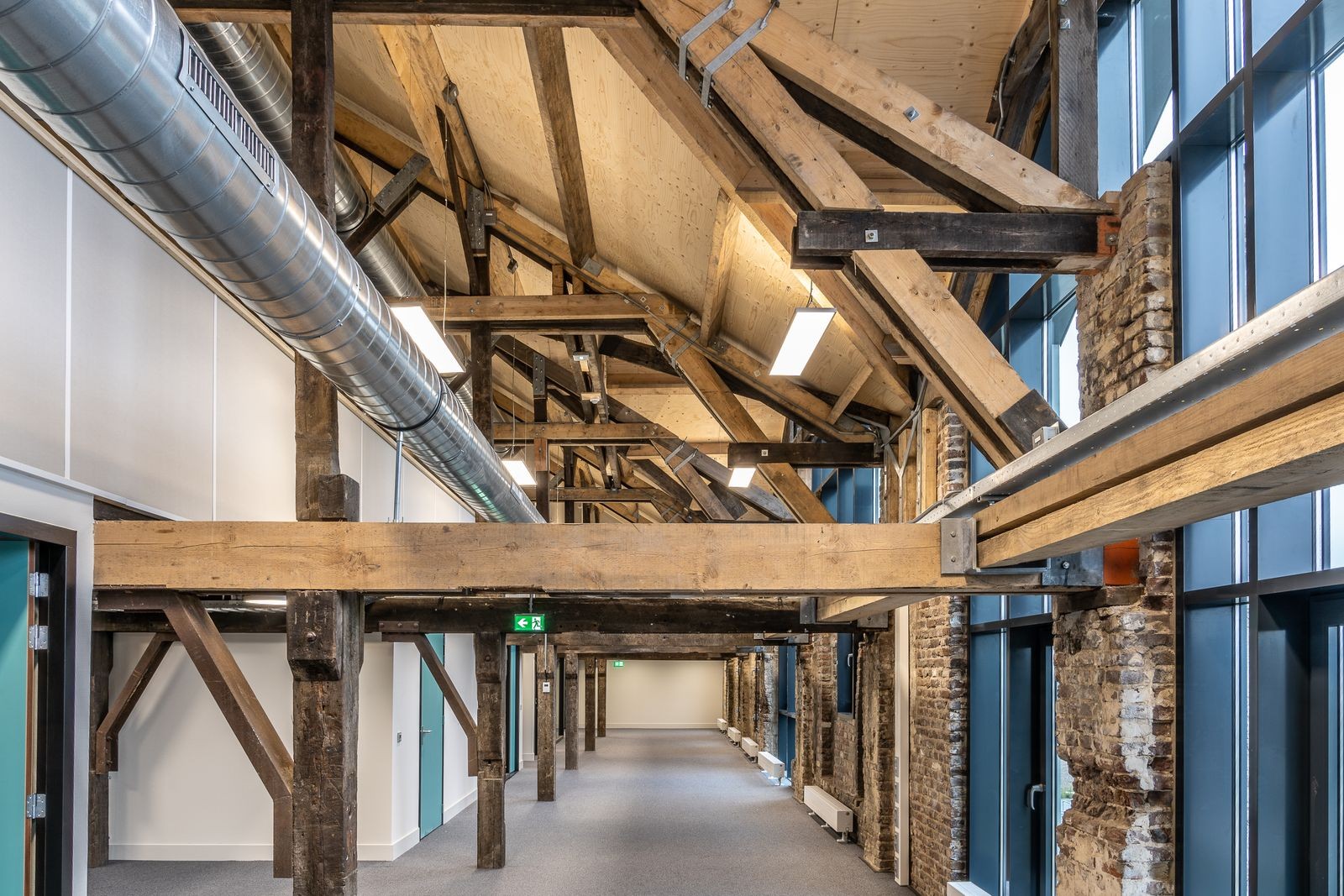
Hotel, restaurant and hospitality renovation across Miami-Dade, Broward and Palm Beach — sequenced so the building keeps trading, with life safety and accessibility built into the programme rather than bolted on at the end.
Miami-Dade · Broward & Palm Beach Counties
ScrollHospitality & hotel renovation
A hospitality property is a business that has to keep running while you take it apart. Every decision on a hotel or restaurant renovation is really a decision about how much of the property stays sellable this month.
That changes the shape of the job. Work is packaged into phases small enough to hand back, so floors, wings or rooms return to service rather than the whole property closing. Each phase has to be complete in itself — fire alarm, sprinkler coverage, egress and accessibility all working — because a phase you cannot hand back is a phase that costs revenue every night it stays shut.
It also changes the logistics. Deliveries, waste, trade access and noisy work are planned around service times, not the other way round. Dust, odour and noise are controlled because the neighbours are paying guests thirty feet away and the consequence of getting it wrong is a review, not a complaint.
And it changes the paperwork. Life-safety systems, accessibility upgrades triggered by the scope, and food-service areas each bring their own approvals and inspections, often from different authorities, and all of them sit on the critical path to reopening.
How we work
Each phase is scoped so it can be signed off and returned to service on its own. That means life safety, egress and accessibility complete within the phase, not at the end of the project.
Hard hoarding, negative air where it is warranted, dedicated routes and protected lifts. Guests and staff should not be able to tell how big the job is.
Demolition, coring and coating scheduled against occupancy and service periods, and agreed with the operator before the programme is fixed.
Fire alarm, sprinkler and egress provision have to remain valid in every intermediate state, not just at the beginning and the end.
Renovation work can trigger accessibility upgrades in the area of work and on the path of travel to it. Establishing that early is much cheaper than discovering it at inspection.
Kitchens, laundry, plant and service routes decide whether the front of house can open. They are sequenced first and given the same attention as guest space.
Illustrative · 01

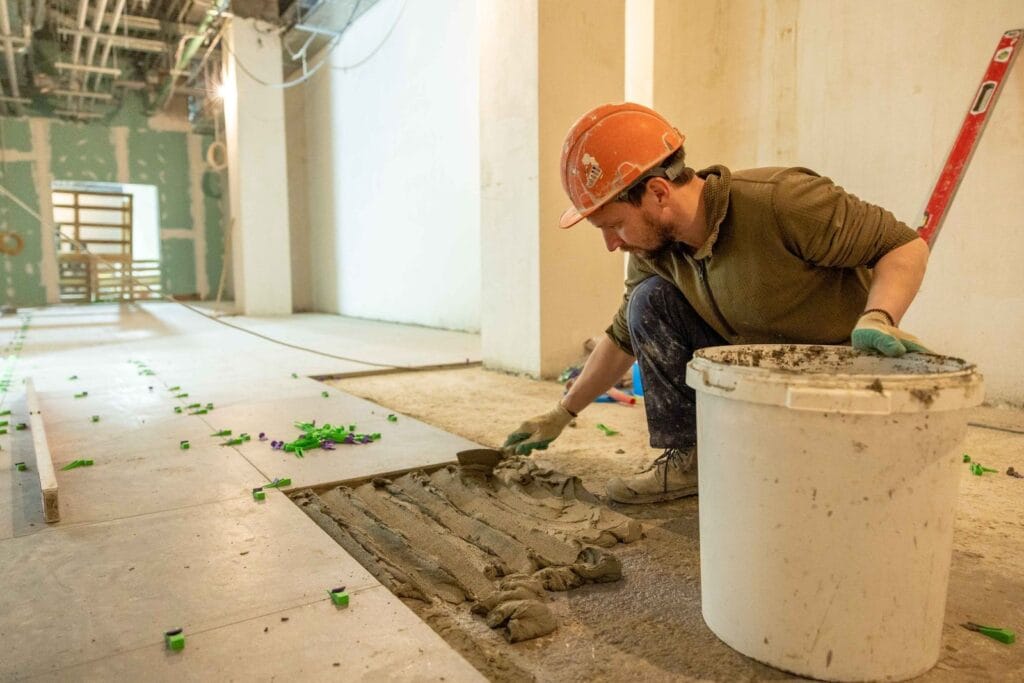
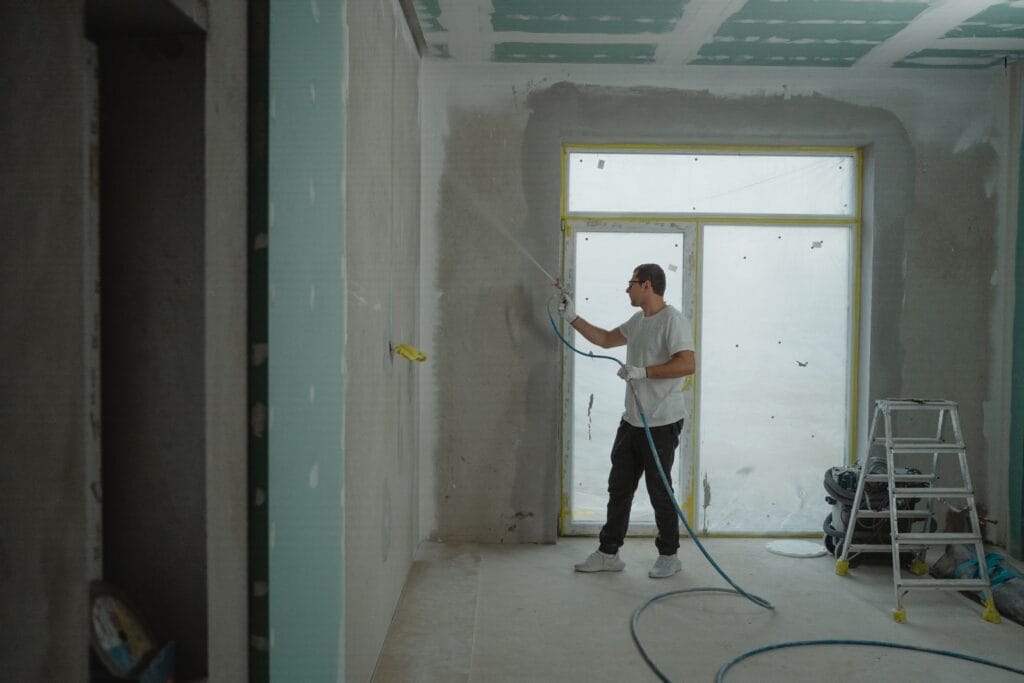
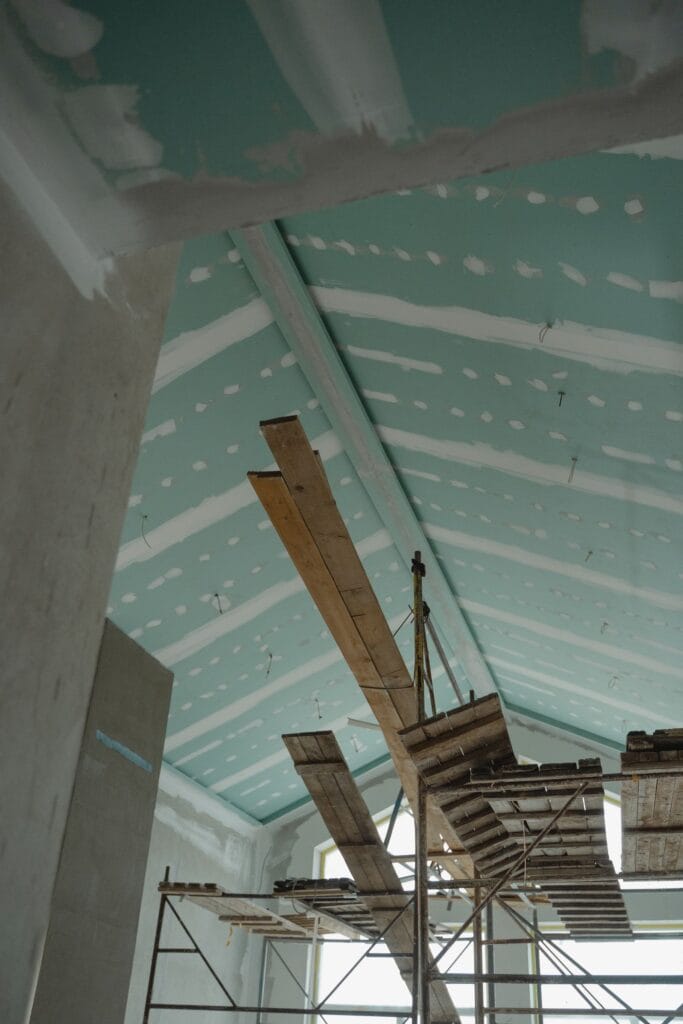
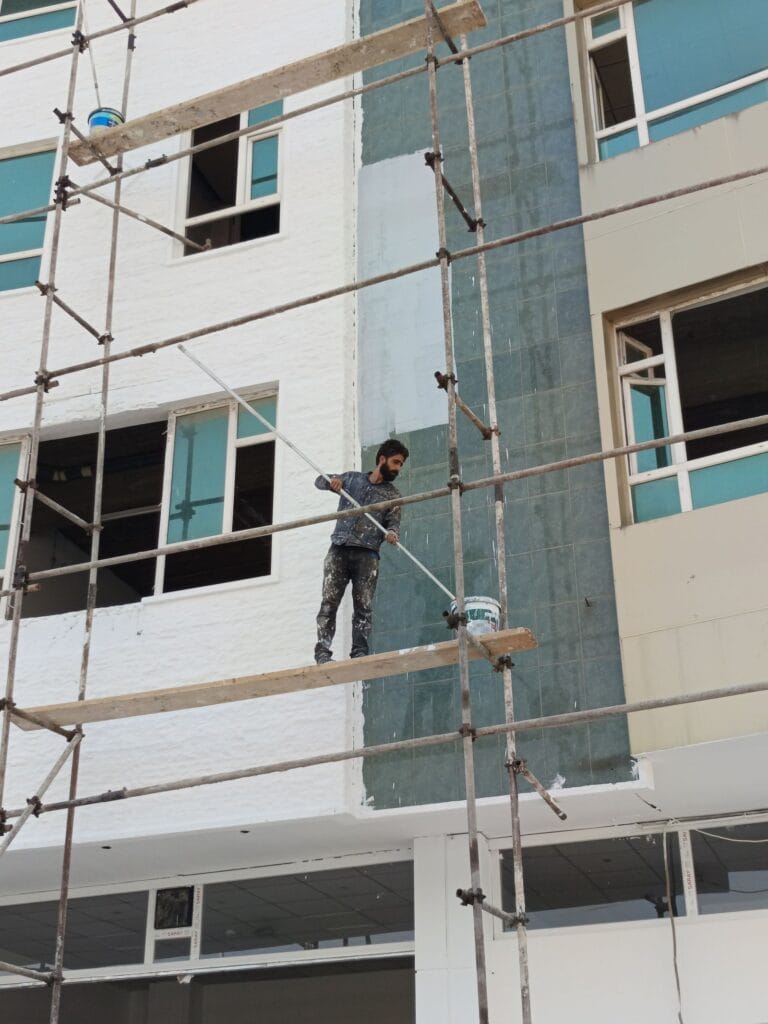
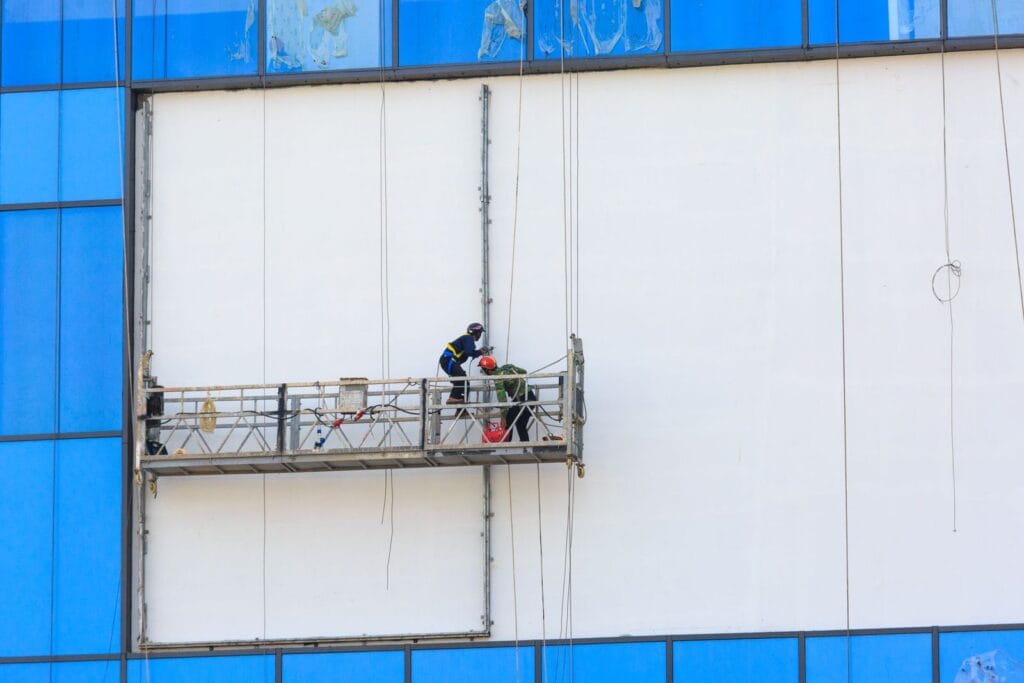
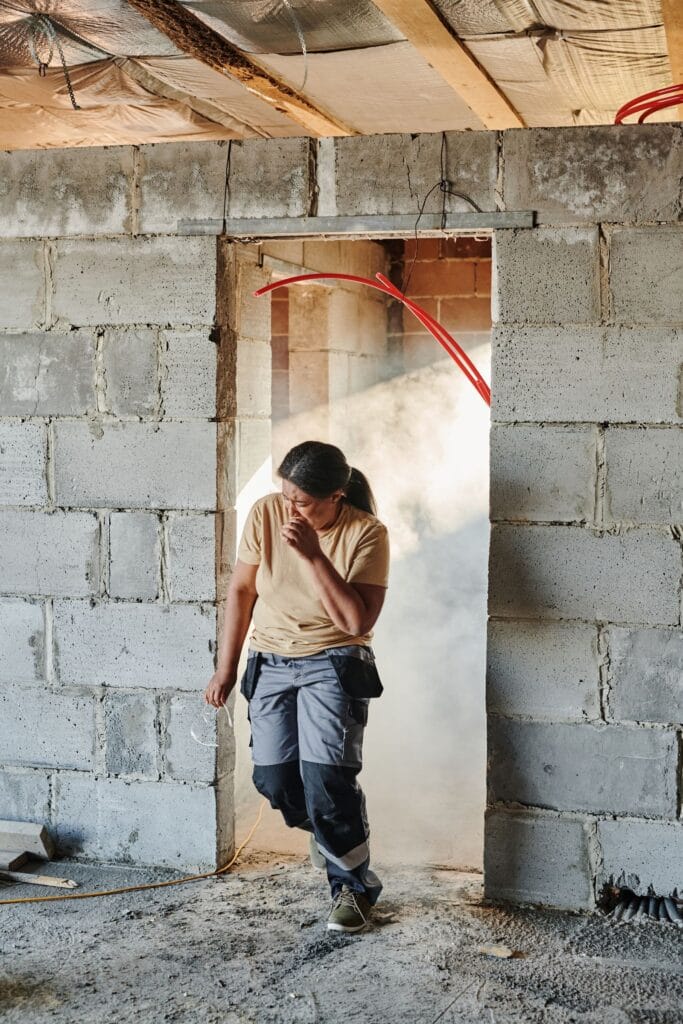
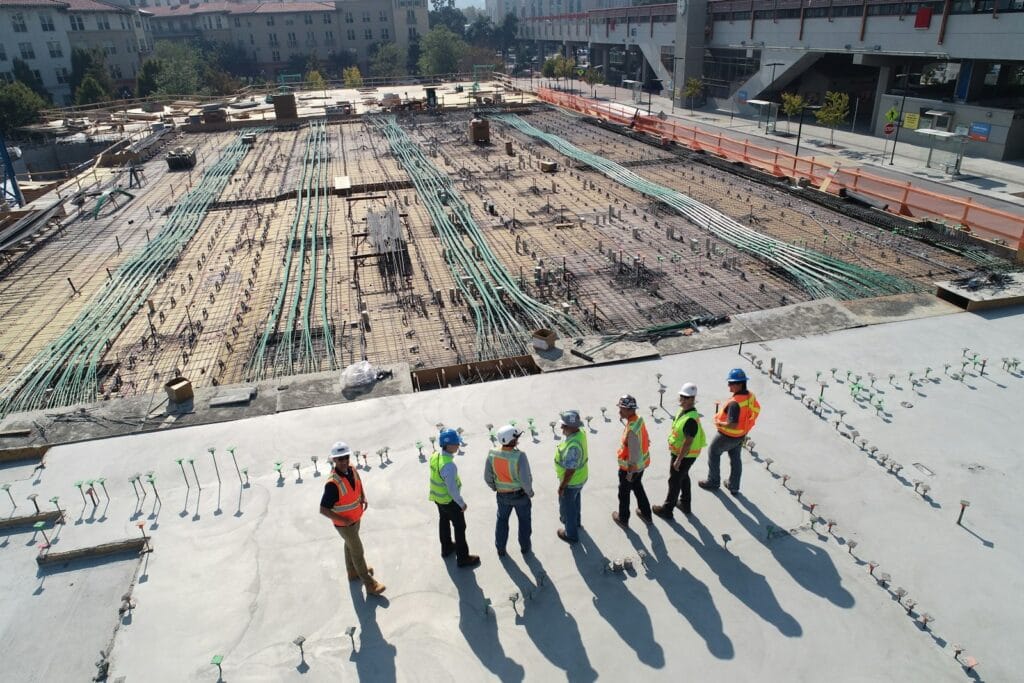
Spraying out a wall during a fit-out. Library photograph, not an Elbaz project.
How the programme is built
On a hospitality property the fixed point is not the start date, it is the date a phase has to be back in service. So the programme is written backwards from it: inspection dates first, then the work that has to be complete to pass them, then the long-lead items that have to be ordered months earlier to make any of it possible.
That is why procurement is a construction decision here rather than a purchasing one. Casegoods, lighting, glazing, kitchen equipment and lifts all have lead times that are longer than the works they belong to. A phase that is ready except for a delivery is still a phase that cannot be sold.
On a hotel, the fixed point is the reopening date. Everything else is scheduled backwards from it.
The last piece is what happens between phases. Temporary walls, temporary egress routes, temporary alarm coverage and temporary finishes all have to be good enough to live with, because guests will be living with them for the whole of the next phase.
| Typical phasing | By floor, by wing, or by front-of-house and back-of-house |
|---|---|
| Continuously required | Fire alarm, sprinkler coverage, egress and accessible routes |
| Separation | Hard hoarding, protected routes, dedicated lifts and waste paths |
| Long-lead risk | FF&E, lighting, glazing, kitchen equipment and lift components |
| Handback | Per-phase inspection and closeout, so space returns to service in stages |
This describes how we plan and sequence hospitality work in general. It is not an account of a specific project, and the photography on this page is licensed library imagery rather than Elbaz project photography.
Detail
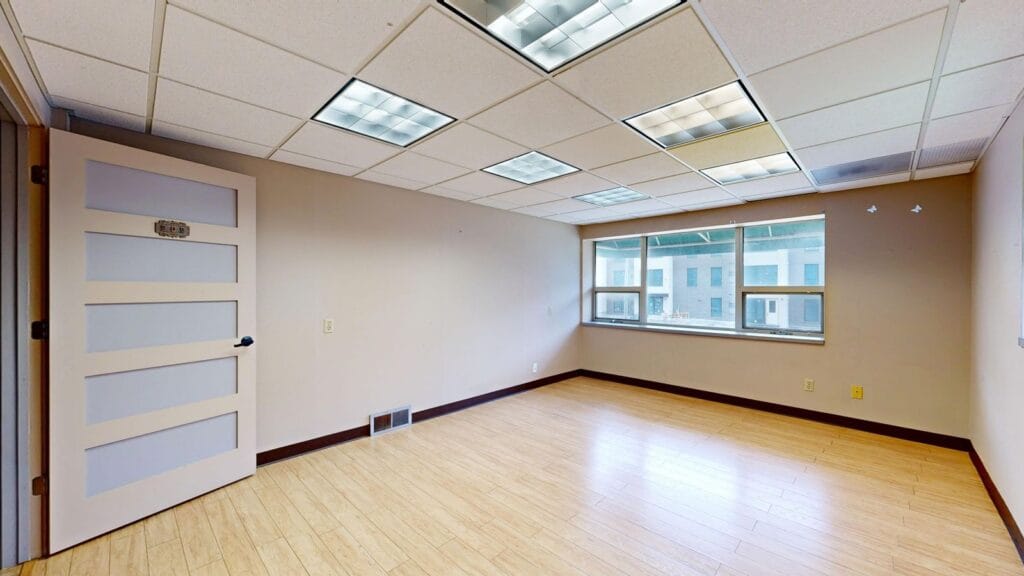
Above the ceiling
In a hotel or restaurant, the ceiling void carries fire detection, suppression, ventilation, drainage from the floor above and often the structure that limits everything else. Opening it is where a renovation discovers what it is actually dealing with — and it is the reason surveys above the grid happen before a programme is committed rather than after it has been published.
The hoarding line
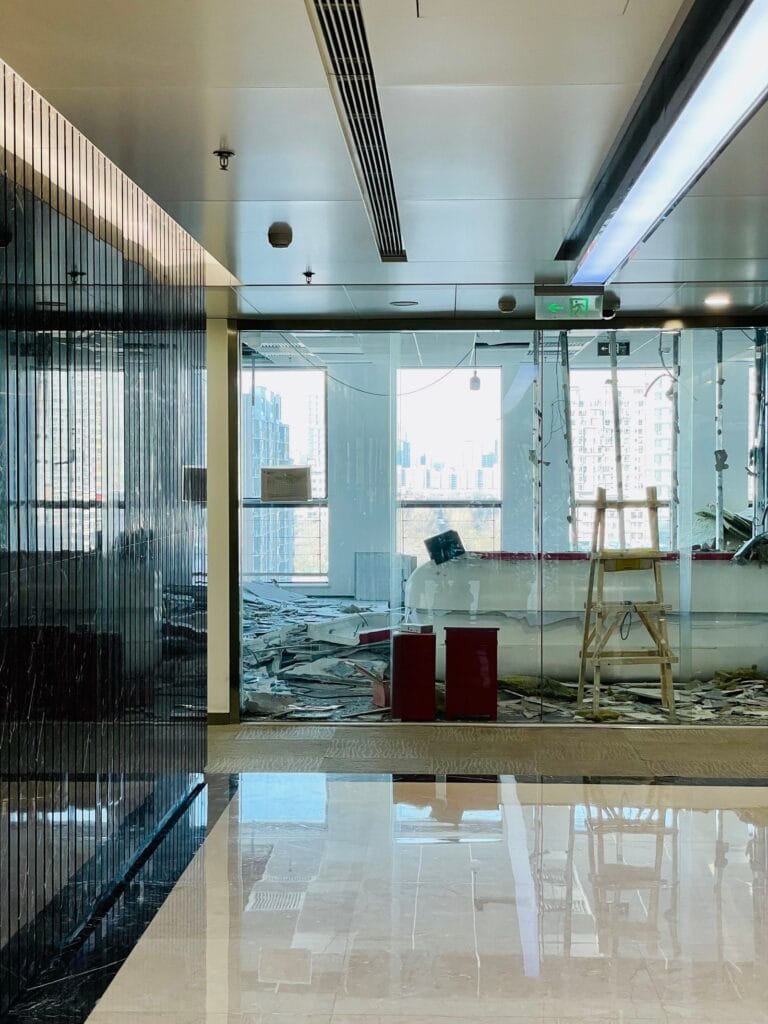
Where separation runs decides what can be worked on, how material moves and what guests experience. It is drawn with the operator, not imposed on them.
Wet areas at scale
Guest bathrooms repeat. A waterproofing detail that is merely adequate becomes a portfolio-wide liability when it is built a hundred times.
Circulation
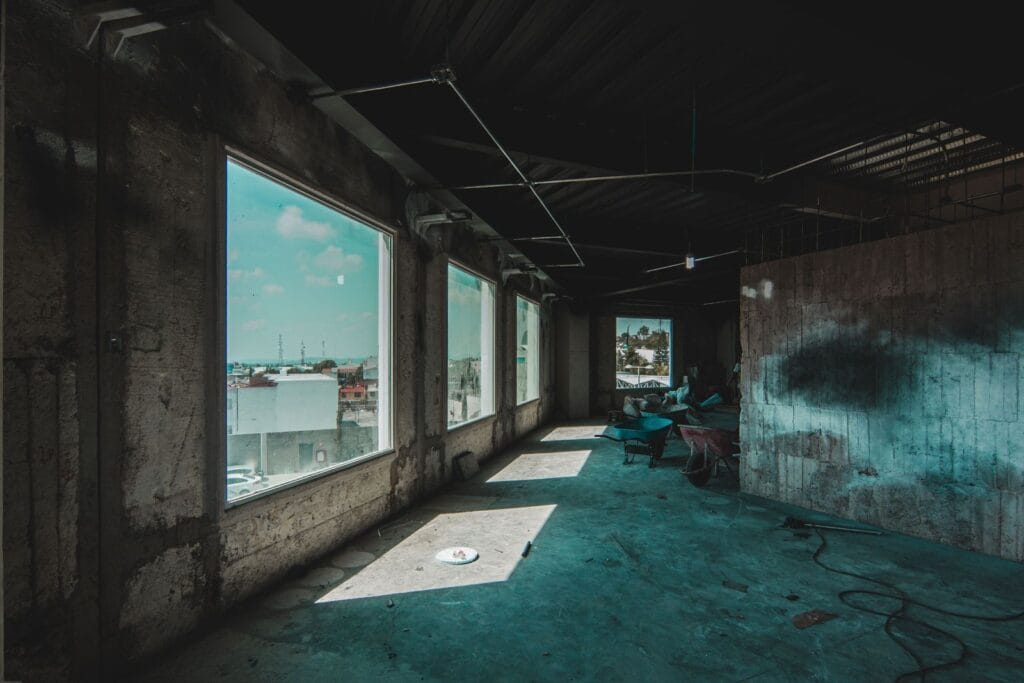
Egress width, signage and alarm coverage have to remain valid at every intermediate stage of the works.
Facade and exterior
Access, protection and hours for exterior work above areas that stay in use.
Handback condition
A phase is done when it can be sold — cleaned, commissioned, inspected and signed off, not when the trades leave.
Common questions
What owners and operators ask before committing to a phased refurbishment.
Usually, with phasing. The property is broken into packages that can each be handed back complete, so floors or areas return to service while work continues elsewhere. How small the phases can be depends on the building services and the egress layout.
Hard separation, controlled routes, dust management appropriate to the work, and noisy activities scheduled into agreed windows. It is planned with the operator before the programme is fixed, because the operator knows the property's rhythm.
They have to. Detection and suppression have to remain valid in every intermediate state, which means modifications are planned, permitted and inspected as part of the phasing rather than left to the end.
It can, depending on the scope and what is being altered. Establishing that at design stage is far cheaper than discovering it at inspection, so it is one of the first things we check.
Either way works — you procure and we install and coordinate, or we carry it. What matters is that lead times are in the construction programme, because a phase waiting on a delivery is a phase that cannot be sold.
Sometimes, with temporary provision and careful sequencing, and sometimes not. Food service brings health approvals as well as building inspections, and those are what usually decide the answer.
They are identified at the start and ordered against the reopening date rather than the start date. Lifts, glazing, kitchen equipment and casegoods are the usual offenders.
Coring, drilling and anything with vibration is scheduled against occupancy, and protection is put in below before it starts. Sometimes the honest answer is that a floor has to come out of service for a short window.
Yes. A PIP is a scope document with dates attached; we price it, sequence it and flag where it collides with code requirements or with the building as it actually is.
Yes — Elbaz Construction holds a Florida certified building contractor licence, CBC1265280, and is bonded and insured.
Your details are with the Elbaz Construction team and we will come back to you, usually the same or next working day. If it is urgent, call (754) 236-0675.
Illustrative · 02
How the work runs
Existing conditions including above the ceiling, plant, risers and egress — the parts drawings are least reliable about.
How the property is packaged so each phase can be handed back complete, agreed with the operator.
What the scope triggers: life safety, accessibility, occupancy and food service.
From each handback date, through inspections and works, to procurement.
Building permit plus the separate life-safety, accessibility and health approvals the scope brings.
Hoarding, routes, lifts, waste, working hours and the interfaces with daily operations.
Demolition and services within the phase boundary, with life safety maintained throughout.
Fit-out, installation and the coordination of owner-supplied items against the programme.
Systems tested, inspections passed, and the phase signed off for occupancy.
Space returned to service, separation moved, and the following phase started.
Which approvals and inspections apply depends on the property, its occupancy classification and the municipality. We confirm them for the specific building rather than working from a general rule, and we do not publish review durations.
Approvals
The scope determines which trades are permitted and inspected. Sequencing inspections around a phased handback is a planning exercise, not an administrative one.
Changing walls, ceilings or occupancy generally means modifying detection and suppression. These are separately permitted and separately inspected.
Where alterations trigger it, accessible routes, restrooms and elements in the area of work have to comply. Establishing the trigger early is what keeps it affordable.
Commercial kitchens and bars bring health and licensing requirements on top of the building permit, with their own inspection before service can resume.
Lift work, and anything affecting machine rooms or shafts, is regulated separately and rarely moves quickly.
Returning a floor or wing to service is a formal step. Each phase needs its own closeout so it can be occupied while the next one is still open.
Which approvals apply, which authorities are involved, and what a given scope triggers depend on the property, its occupancy classification and the municipality. These are confirmed for the specific building before a programme is committed, and nothing here should be read as a determination for your property.
Budget
The same scope costs materially more delivered in phases around guests than delivered in an empty building. This is the defining cost of hospitality work.
Alarm, sprinkler, ventilation and electrical modifications, kept valid at every intermediate stage rather than only at the end.
What is actually above the ceiling and behind the wall. On an older property this is the largest single source of change.
What the alteration triggers in the area of work and on the path of travel to it.
Casegoods, lighting, floor and wall finishes. Visible, adjustable, and lead-time critical.
Restricted hours, protected routes, night work and the labour premium that comes with them.
The bars show the relative weight these factors typically carry against one another on occupied hospitality work. They are not prices, percentages of a budget, or a quotation, and the order changes with the property.
Google reviews
4.8
I give them a five star rating not only for their excellent roofing skills and timelines, but also for their competitive pricing and the honesty and professionalism of the team !! We are very pleased with the outcome
We had a good time dealing with Asher and the crew, he went over and above all our expectations and made every effort to ensure that the end result was up to their high standards. Thank you !!
Elbaz Construction provided excellent service and outstanding craftsmanship. The team was professional and attentive to our needs. We’re extremely satisfied with the results!
If you are planning to remodel your kitchen or bathroom or do any other construction project, call Sean from Elbaz Construction . He has a lot of experience and will recommend the best options/ suggestions to your project. He did high quality job !
Asher was knowledgeable and gave us cool ideas that we didn't even know before. Nice beautiful color and design. We appreciate the price !
Asher has a lot of experience . We replaced our windows to energy efficient windows. He got down to business right away and did high quality work. His team is very professional! Thanks again
Review text is reproduced verbatim from the connected Google Business Profile, including its original spelling. Nothing is rewritten, shortened or combined. These reviews describe residential and roofing work; they are shown as evidence of how we work, not as hospitality references. No review schema is emitted on this page.
Proudly serving homeowners across Miami-Dade, Broward and Palm Beach
104 municipalities across three counties — and we hold the licence to build in all of them. Not sure about your address? Ask us.
Keep reading
Scope
The distinction decides which approvals a commercial scope triggers.
Cost guide
Residential, but useful for how finish specification drives a number.
Value
How South Florida property is valued after work.
Your details are with the Elbaz Construction team and we will come back to you, usually the same or next working day. If it is urgent, call (754) 236-0675.
Next step
Tell us when each area has to be back in service. We will work backwards from there and tell you what is achievable.

