


10 service categories · 100 service pages · Miami-Dade, Broward & Palm Beach
View all servicesThe journey
Six stages, first look to closed permit.
Roof repair goes wrong in one of two ways. Either nobody finds the real entry point and the roof gets patched three times at the wrong spot, or a roof that is genuinely finished gets repaired anyway and the money is gone. Both are avoidable with an honest look first. This page walks that sequence, starting with the part most people skip: finding out where the water is actually getting in.
Use the stage markers to jump straight to what you care about. Nothing here is a sales pitch - it is the sequence we actually follow.
Stage 01 · Find it
What is usually actually wrong
Four patterns cover most roof leaks we are called to. Which one you have decides whether this is a contained repair or the start of a bigger conversation.
A junction has failed
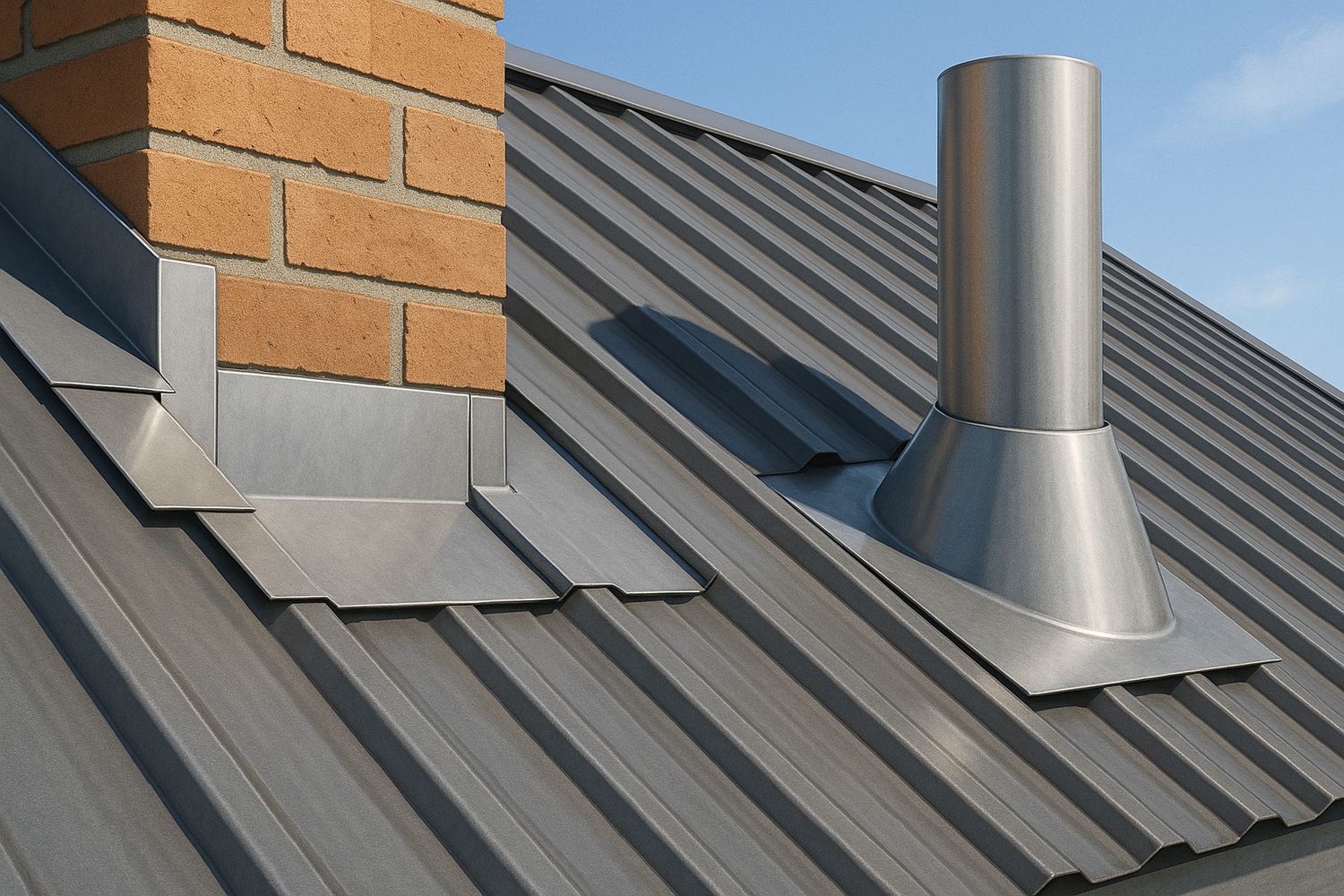
This is the single most common cause, and the most commonly mistreated. Flashing manages every point where the roof meets something else. When it fails, the usual response is a bead of sealant over the top, which buys months. A real repair rebuilds the junction so the water is shed by geometry rather than held out by adhesive.
- Junctions leak far more often than the open field of a roof
- Sealant over a failed flashing buys months, not years
- Every vent, skylight and pipe is a penetration and a risk
- Chimneys and wall abutments are the classic problem details
- This is usually genuinely repairable and worth repairing
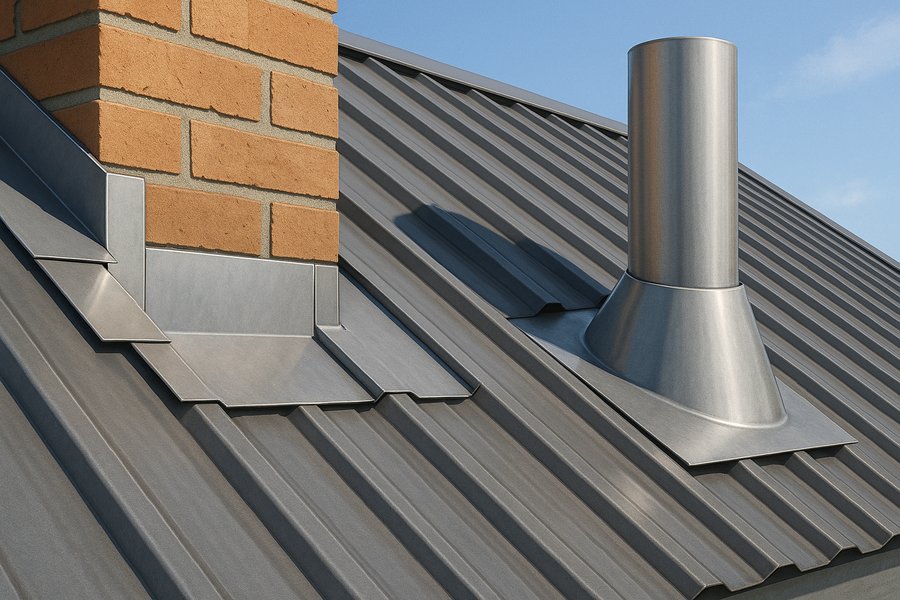
Illustration: flashing lapped into a covering at a wall and a penetration.
Water is being concentrated
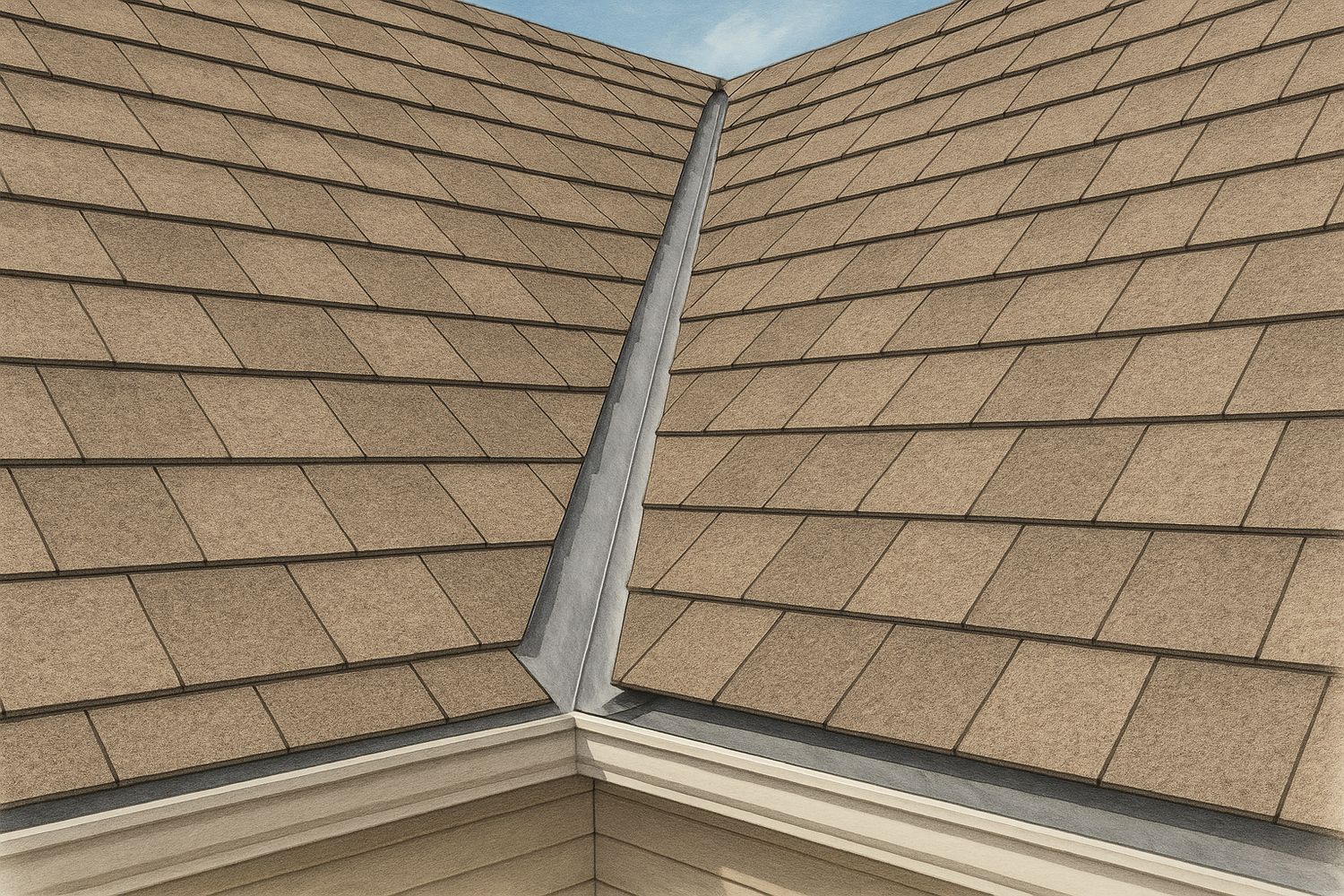
A valley collects the water from two slopes and moves all of it through one line. Anything marginal there fails first. The same is true wherever water slows down - a low-pitched section, a spot where debris collects, or a place where an addition meets the original roof at an awkward angle.
- A valley carries more water than any other part of a roof
- Debris in a valley dams water and holds it against the covering
- Where an addition meets an original roof is a recurring weak point
- Low-slope sections need a different assembly, not just more sealant
- Clearing valleys and gutters prevents a surprising share of leaks
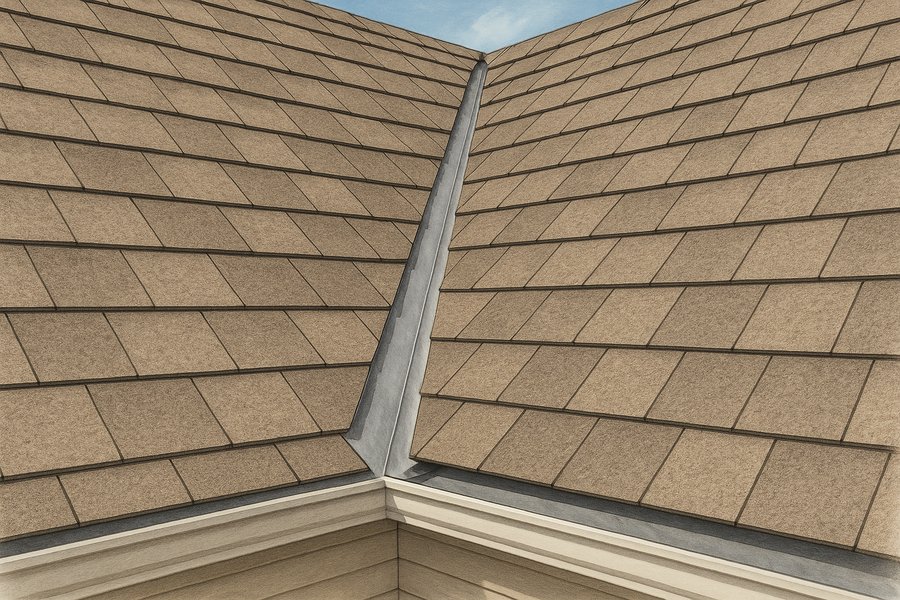
Illustration: a metal-lined valley taking both slopes.
Wind lifted something
Wind damage starts at edges - a rake, an eave, a ridge, a corner - because that is where uplift is highest. Once one course lifts, the wind has purchase on everything above it. It does not take a named storm; a strong squall finds anything already marginal. Missing pieces are obvious, lifted ones often are not.
- Damage concentrates at edges, ridges and corners
- One lifted course gives the wind something to work with
- Missing covering is visible; lifted covering frequently is not
- It does not take a hurricane to find an already-weak edge
- Caught before water enters, this is a straightforward repair
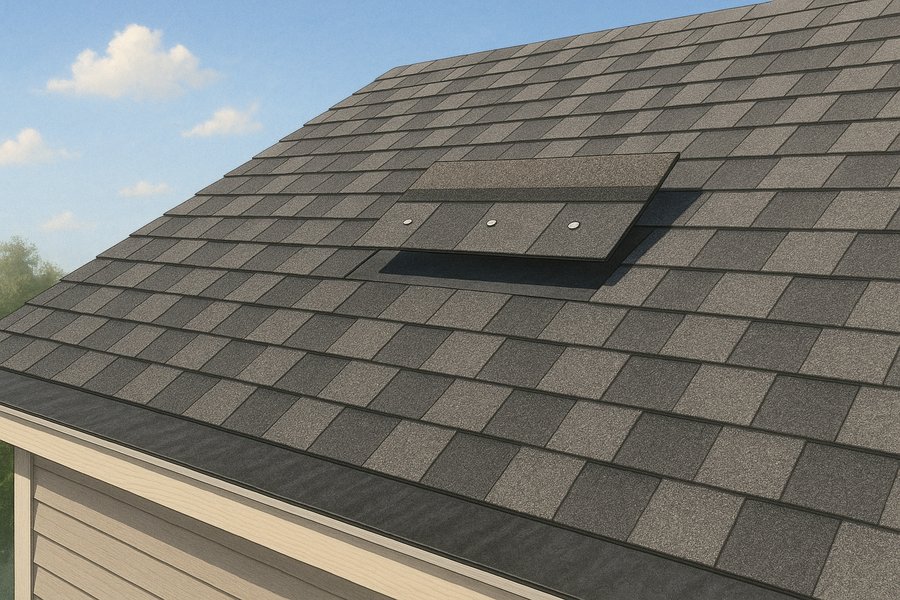
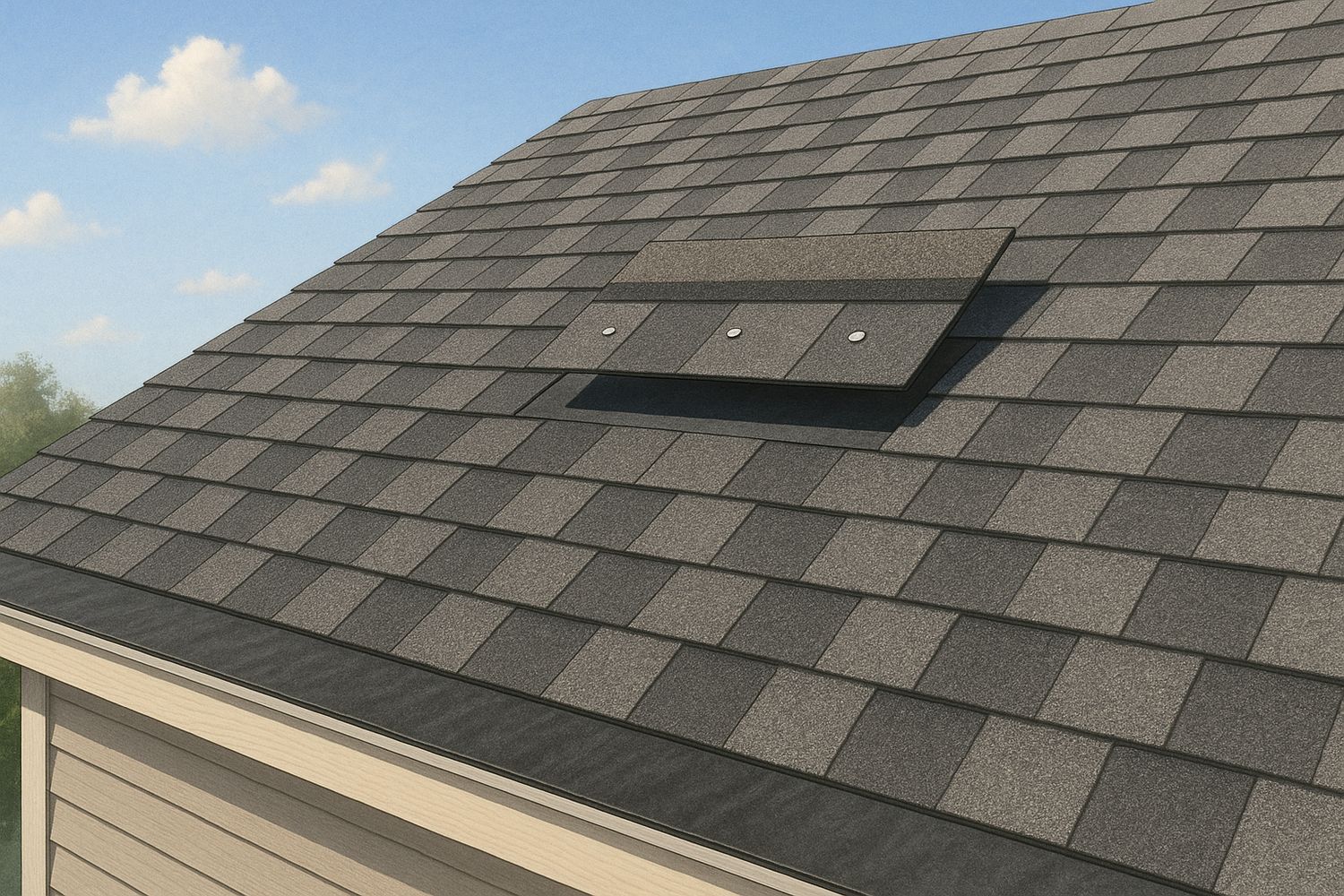
Illustration: shingles laid in overlapping courses.
The roof is simply finished
Sometimes the leak is not a defect, it is the roof reaching the end of its service life. Where the covering is brittle, several details are failing at once and there is no meaningful barrier beneath, a repair is money spent on something that is going to be replaced anyway. We would rather tell you that than take the smaller job twice.
- Several simultaneous failures usually means age, not one event
- A brittle covering breaks further wherever it is walked on
- Older roofs often have no meaningful secondary water barrier
- Repeated patching of an old roof rarely pays for itself
- Replacement brings the deck and barrier up to current requirements
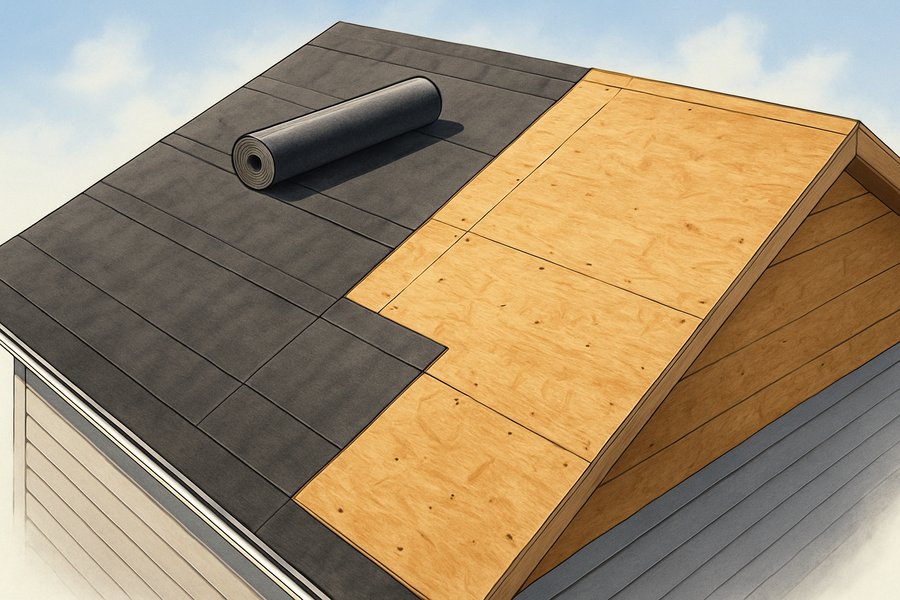
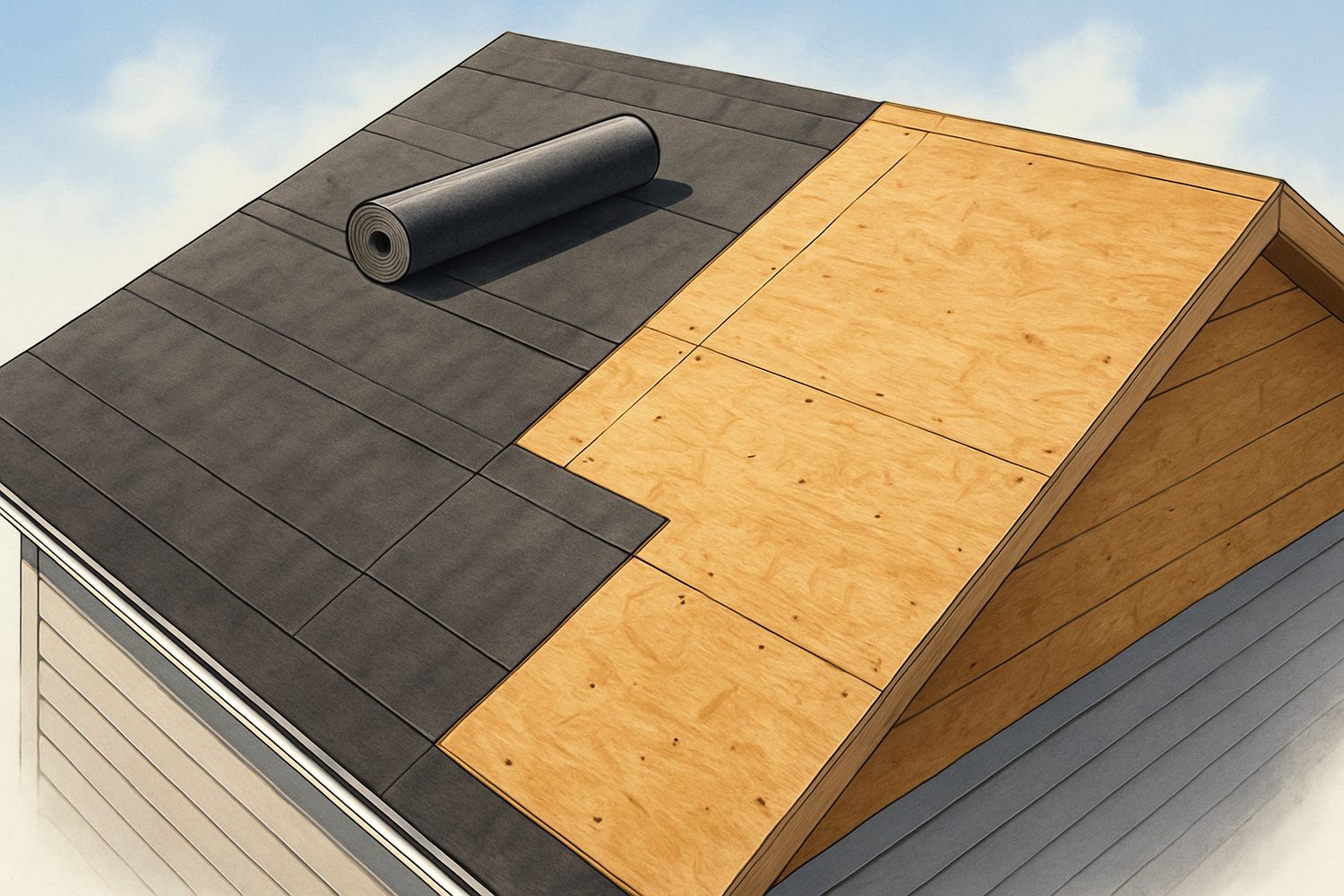
Illustration: a self-adhered secondary water barrier over the bare deck.
Stage 02 · Decide
The four decisions that set the work
These decide the scope, the permit route and whether you are buying a few more seasons or a new roof.
Repair or replace
A localised failure on a roof with life left in it is a repair. Several failures at once, a brittle covering, or a soft deck point to replacement. There is also a code dimension: how much of a roof may be repaired before the whole assembly has to meet current requirements is limited, and the exact provision depends on the code edition in force and on your jurisdiction.
- Localised damage on a sound roof is genuinely repairable
- How much repair is permissible before upgrades apply is limited
- The applicable provision depends on the code edition and jurisdiction
- Matching a discontinued tile or shingle is often impossible
- We will tell you when a repair is not worth doing
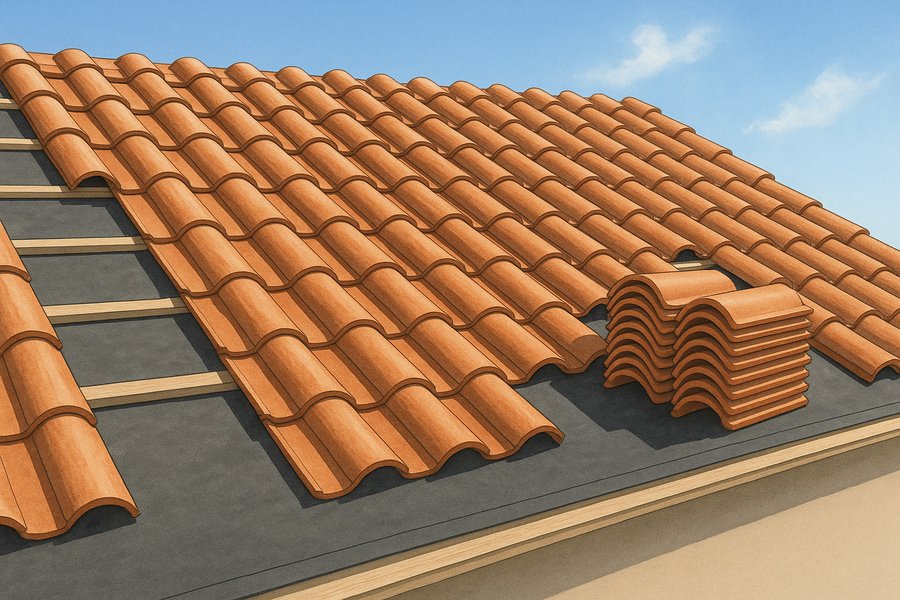
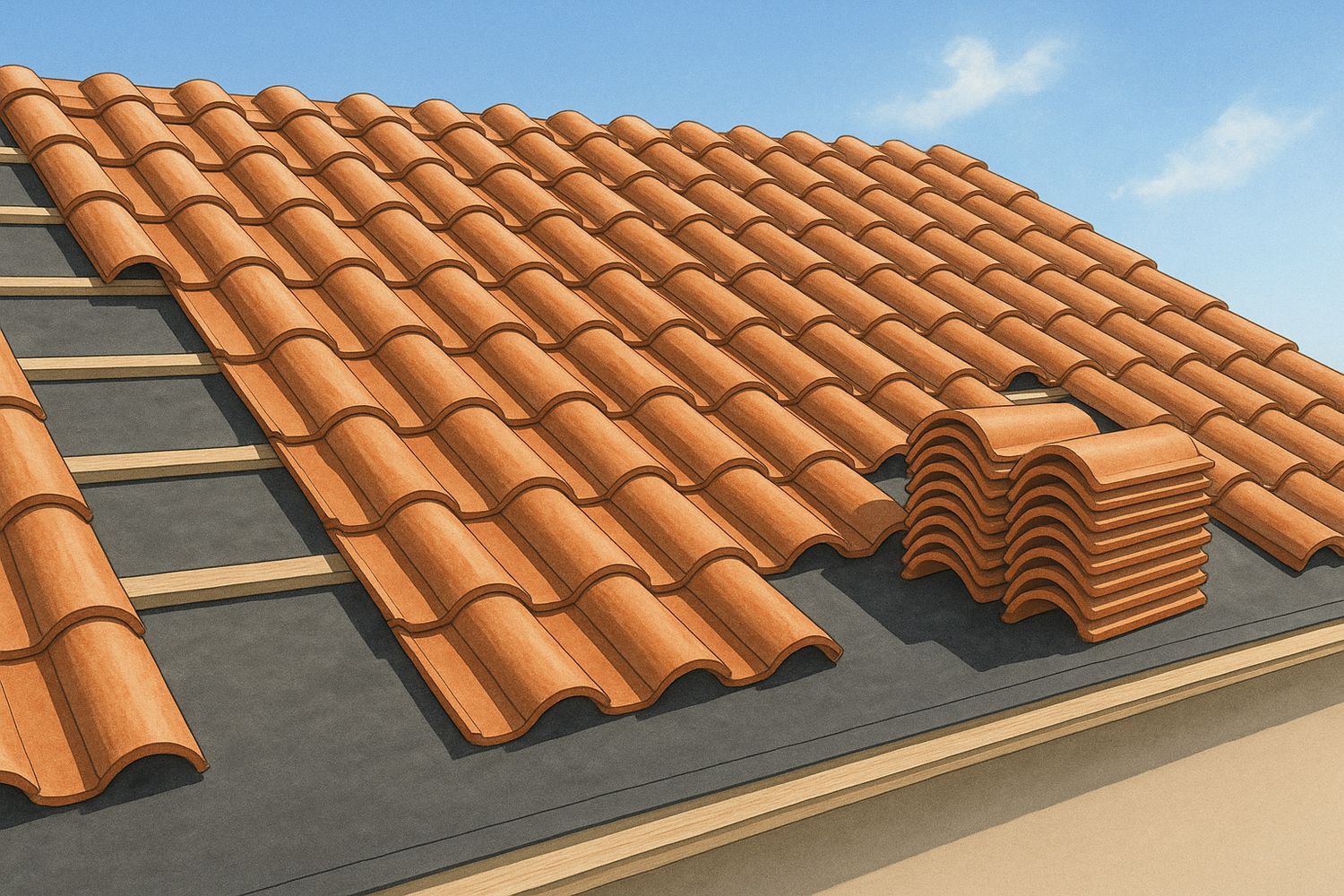
Illustration: barrel tile set over its underlayment.
Which jurisdiction you are in
South Florida is not one roofing jurisdiction. Miami-Dade and Broward sit inside the High-Velocity Hurricane Zone and carry their own stricter requirements for assemblies and product approval. Palm Beach County is outside it. Anyone quoting the same assembly across all three without asking your address is not paying attention.
- Miami-Dade and Broward are inside the High-Velocity Hurricane Zone
- Palm Beach County is outside it, with different requirements
- Products need a Miami-Dade NOA or a Florida Product Approval
- The approval has to cover the assembly, not just the material
- We confirm what applies at your address, not at the county line
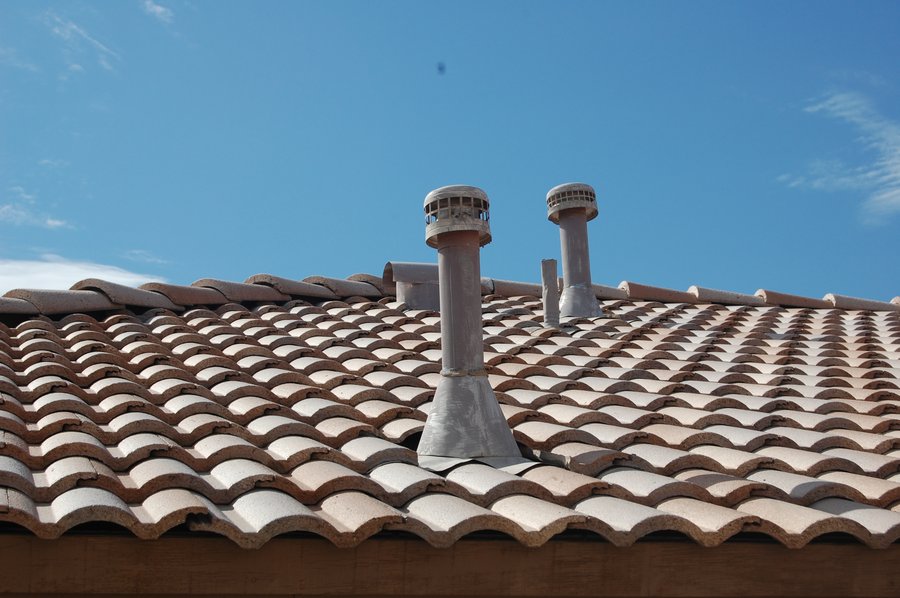
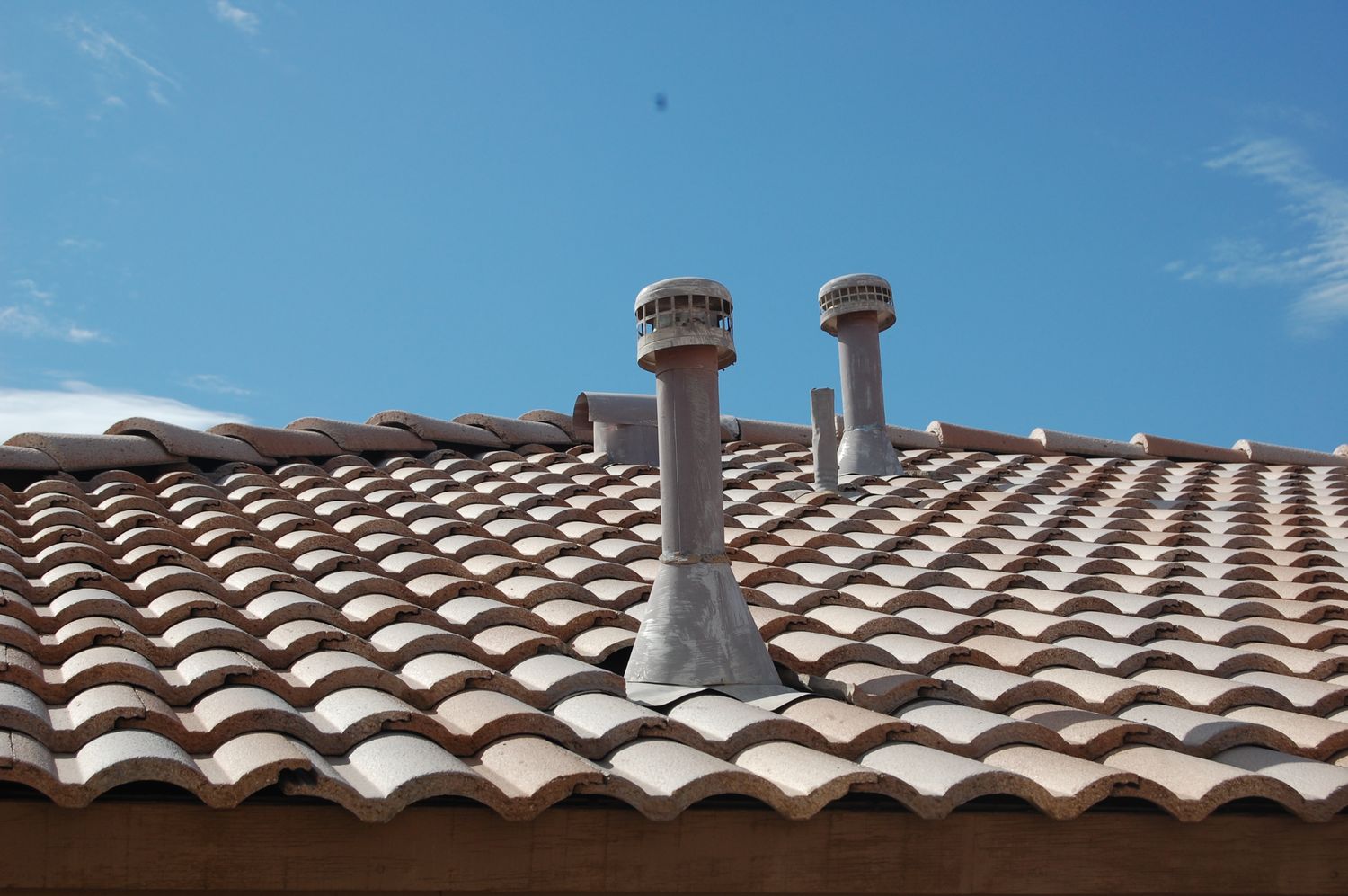
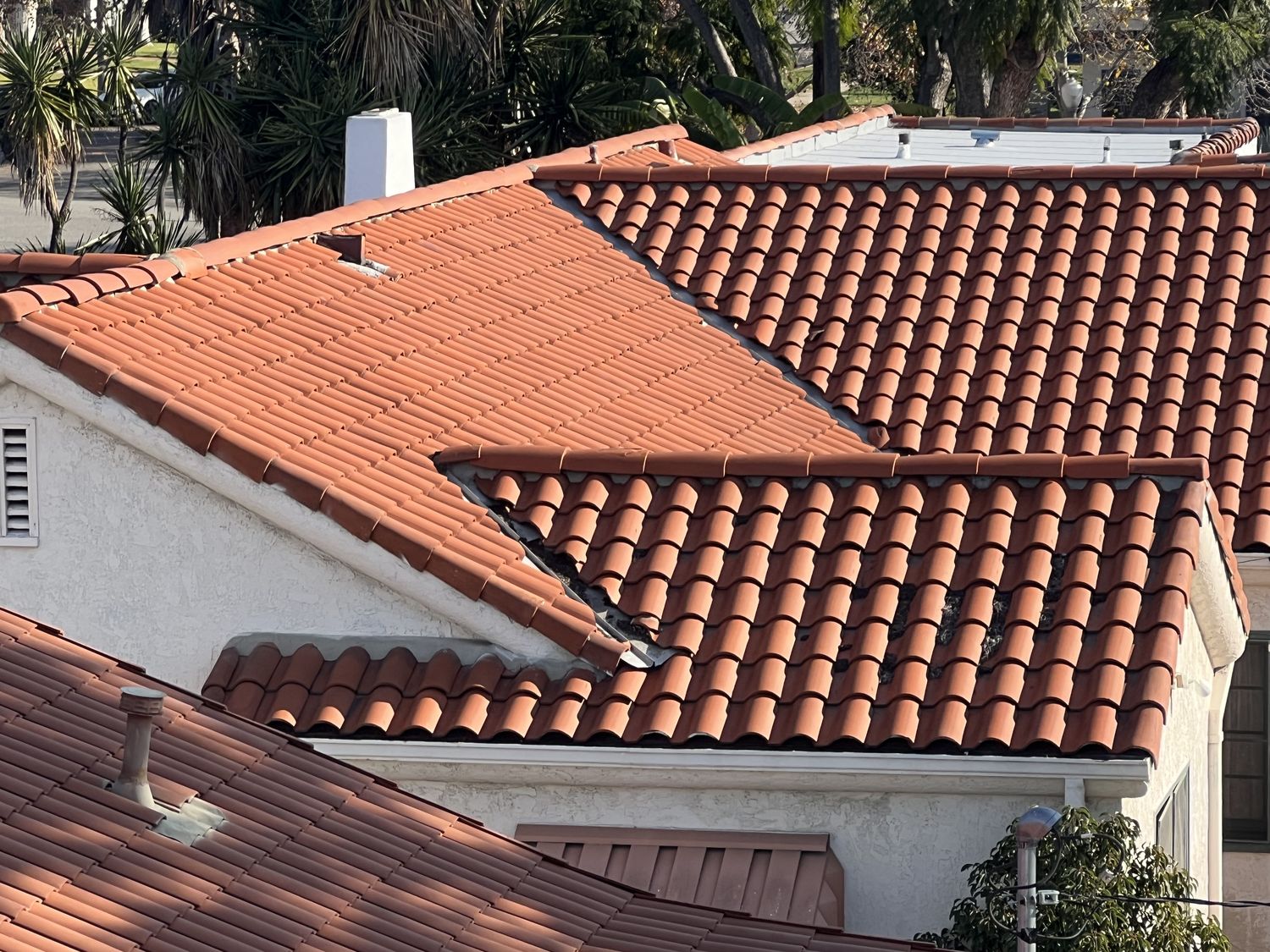
Real photograph: barrel tile roof with ridge ventilators.
Whether it can be matched
A repair has to blend into what is already there. Tile profiles and shingle colours are discontinued constantly, and an aged roof has weathered away from its original colour regardless. Where an exact match does not exist, borrowing material from a less visible slope and using the new material there is usually the better answer.
- Profiles and colours are discontinued more often than people expect
- An aged covering has weathered away from its original colour anyway
- Borrowing from a hidden slope keeps the visible elevation consistent
- We show you the match before committing to it, not after
- If it cannot be matched acceptably, you hear that up front
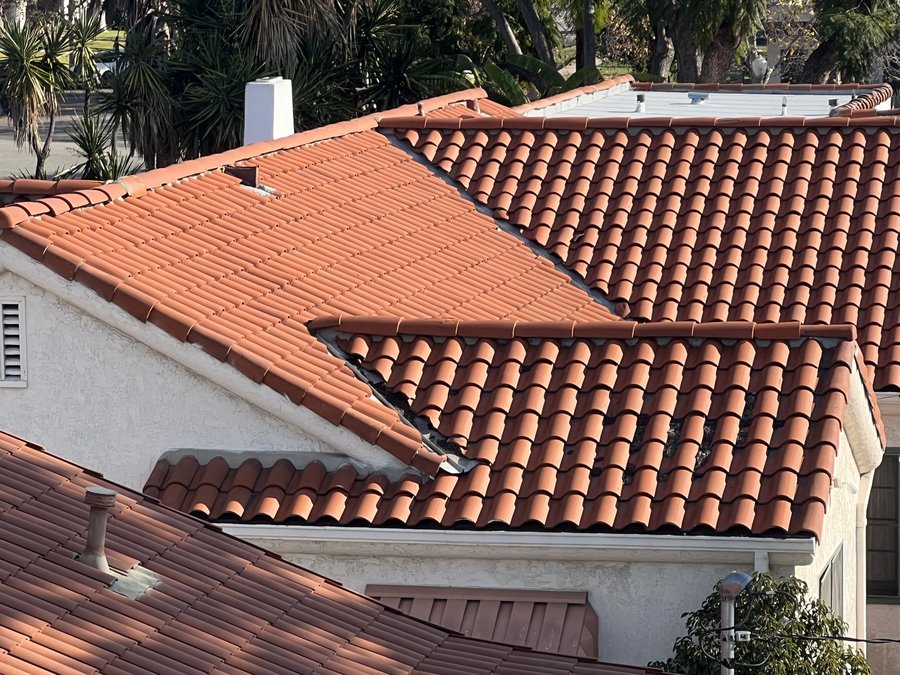
Real photograph: clay barrel tile over white stucco.
What is under the covering
A leak that has been running for a while has been wetting the deck the whole time. Any repair opens up enough to see it, and soft or delaminated sheathing gets replaced rather than covered back over. On a full replacement the deck is also re-attached to current requirements and sealed, which is the largest real performance gain available.
- A long-running leak has been wetting the deck the entire time
- Soft or delaminated sheathing is replaced, not covered over
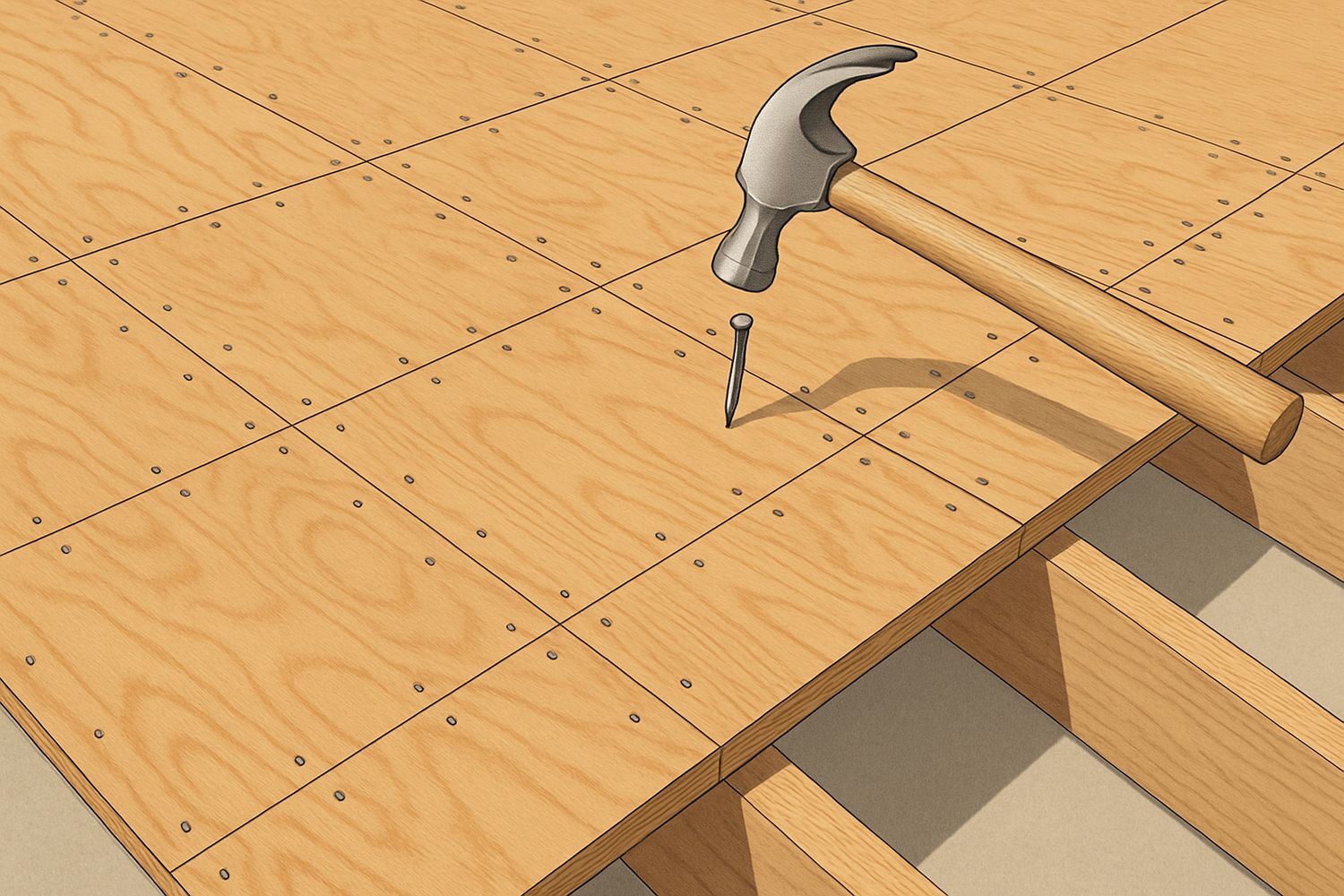
- On a replacement the deck is re-nailed to current requirements
- A sealed deck keeps water out even if covering is lost
- This is inspected before any covering goes back on
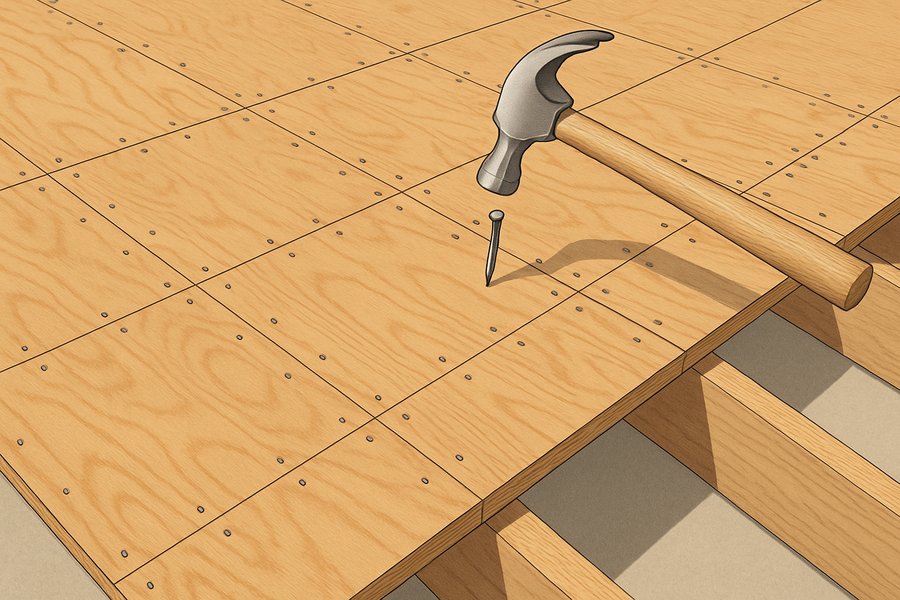
Illustration: a roof deck being re-nailed to the framing.
Three photographs on this page are real roof photography from the Elbaz Construction library. Every other image is an illustration drawn for this guide and labelled as one. We do not have project photography for this service that we can verify to the standard the rest of this site is held to, so we are not going to pretend otherwise.
Project gallery 01
How a roof is actually built up
Ten images explaining the assembly, in the order it goes on - because a repair only makes sense once you can see what it is repairing. Three are real roof photographs from our library; the other seven are illustrations drawn for this guide. Every caption says which.
Project 01, guided tour
The framing
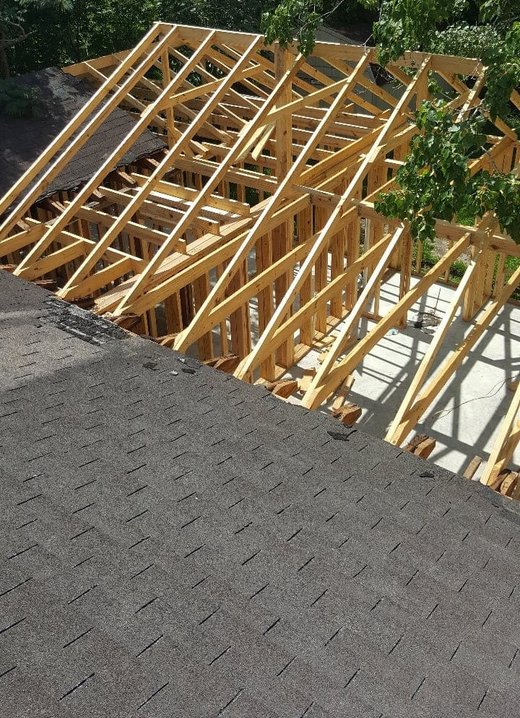
REAL PHOTOGRAPH. Roof framing and trusses seen from the surface of an adjacent shingled roof - the structure everything above it is fixed to.
What these show
How a roof assembly is built up, in order. This is an explainer rather than a project gallery, and it is labelled that way deliberately.
Why there is no project gallery
Our roofing image library could not be verified to the standard the rest of this site is held to. It contains AI-generated marketing images, photographs belonging to other roofing companies, and stock photography with the agency reference still in the filename. Rather than show you images we cannot stand behind, we show you three we can and illustrate the rest.
The three photographs
Barrel tile with ridge ventilators; clay barrel tile over white stucco; and roof framing seen from an adjacent roof surface. All three are genuine photographs from our own library.
The illustrations
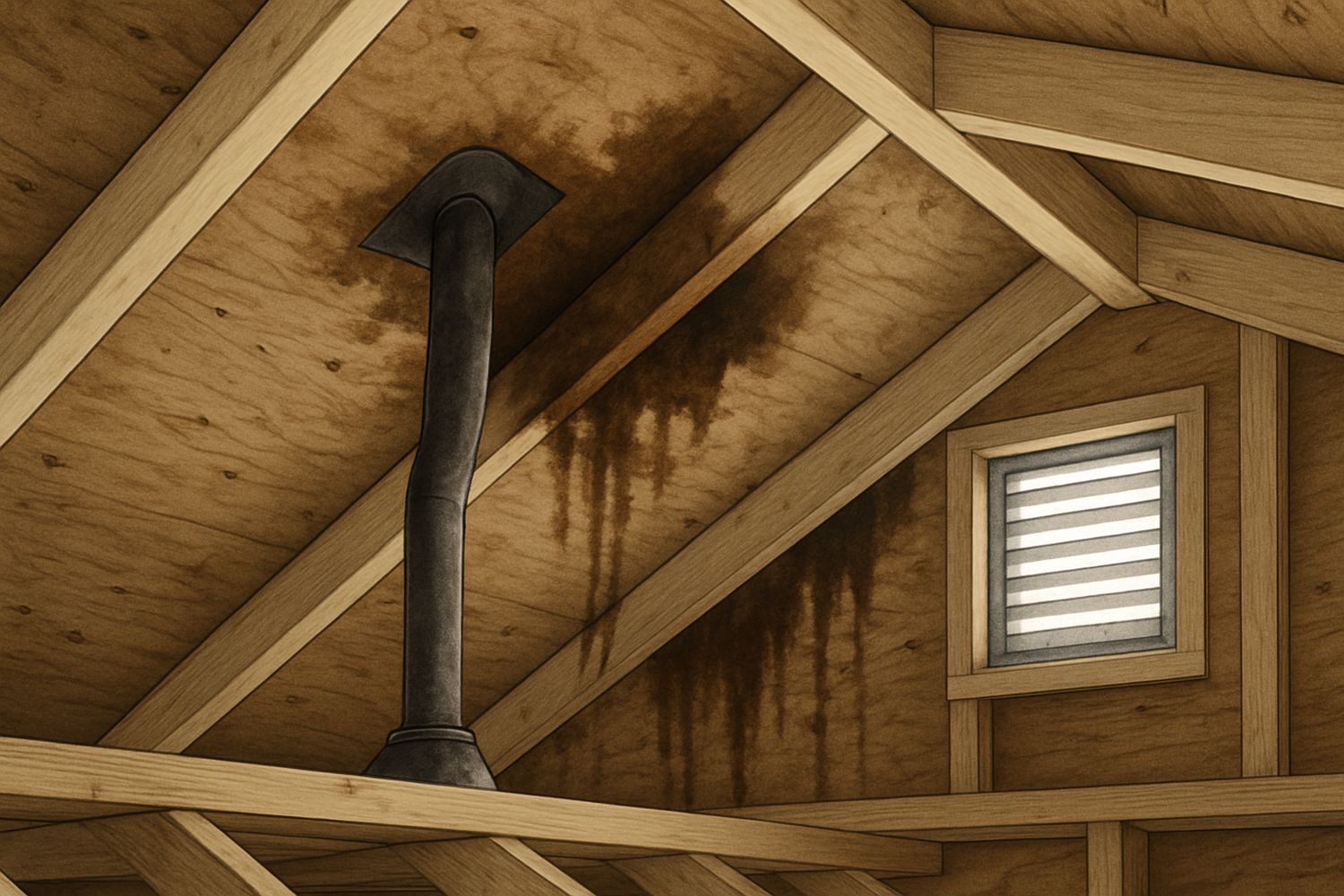
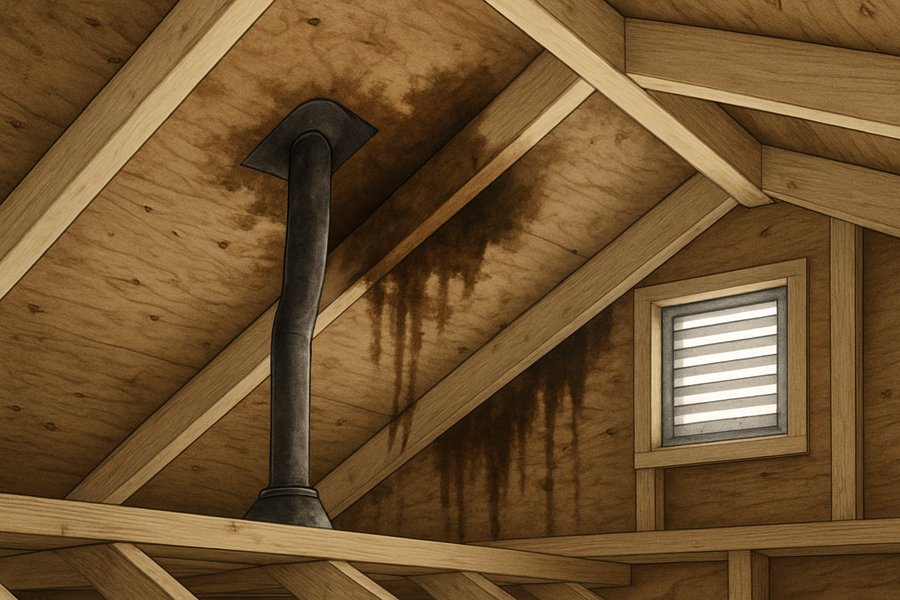
Seven images drawn for this guide to explain deck attachment, the secondary water barrier, tile and shingle coverings, flashing, valleys and what a leak looks like from the attic. None is a photograph, and none represents a specific job.
What is not claimed
No cost, timeline, address, client, claim outcome or permit history appears anywhere on this page, and no image here is presented as a completed Elbaz project.
Stage 03 · Permit
Diagnosis, approvals and the insurance question
Roofing is among the most tightly regulated trades in South Florida, and it has the worst reputation for door-knocking after a storm. Both are worth being direct about.
Where the water actually enters
The roof surface, the edges, every penetration and - where there is access - the underside from the attic. A leak is traced to its entry point rather than to the nearest plausible-looking defect.
A written record of the condition
You get the photographs and a written description of what we found, whether or not you use us for the work. That record is yours to give to anyone.
Where it is actively coming in
If there is an open breach, temporary protection goes on first and the permanent repair follows. Protecting a roof is not the same as repairing one, and we do not bill it as though it were.
An honest recommendation
Including when a repair will do and when a replacement is not yet necessary. The smaller job now is frequently the right answer, and saying so is the whole basis of the relationship.
What we do, and what we do not
We document the condition and we quote the work. We do not negotiate with your carrier, advise you on your policy, or act as a public adjuster - those are separate regulated roles. Florida also prohibits a contractor from paying or rebating your deductible, and anyone offering to is telling you something important about themselves.
Assemblies that comply at your address
Materials are specified with a Miami-Dade NOA or Florida Product Approval covering the assembly rather than just a component, to whichever requirements apply in your jurisdiction.
Filed for the actual scope
Roofing is permitted work and replacement certainly is. The threshold at which a small repair needs one varies, so it is confirmed for your address and scope rather than assumed.
Where a board also approves
Many communities specify covering type, colour and sometimes manufacturer. Board approval runs separately from the permit and on its own calendar.
Weather and the season
Roofing is weather-dependent, and demand rises sharply after any significant storm. We schedule around forecast rain and will be honest about where you are in the queue.
The points that gate the work
Where the scope is permitted, the work is inspected before it is closed up, and there is a final at the end. Each inspection gates what follows it.
Requirements, review times and inspection sequences are set by your local building department, and they differ across Miami-Dade, Broward and Palm Beach and between the municipalities inside them. Nothing here is a guaranteed timeline or an assurance of approval - we confirm what your address actually requires once we know it.
Stage 04 · Repair
Doing the work, in order
A repair runs the same way a replacement does, just over a smaller area: open it up, fix what is underneath, then rebuild the assembly upward.
Protection
The property, not just the roof
Ground protection below the work area, landscaping and pool cages covered where needed, and somewhere for debris to go. Even a small tear-off drops a lot of material quickly.
Quality check · Ground and landscaping protected before anything opens
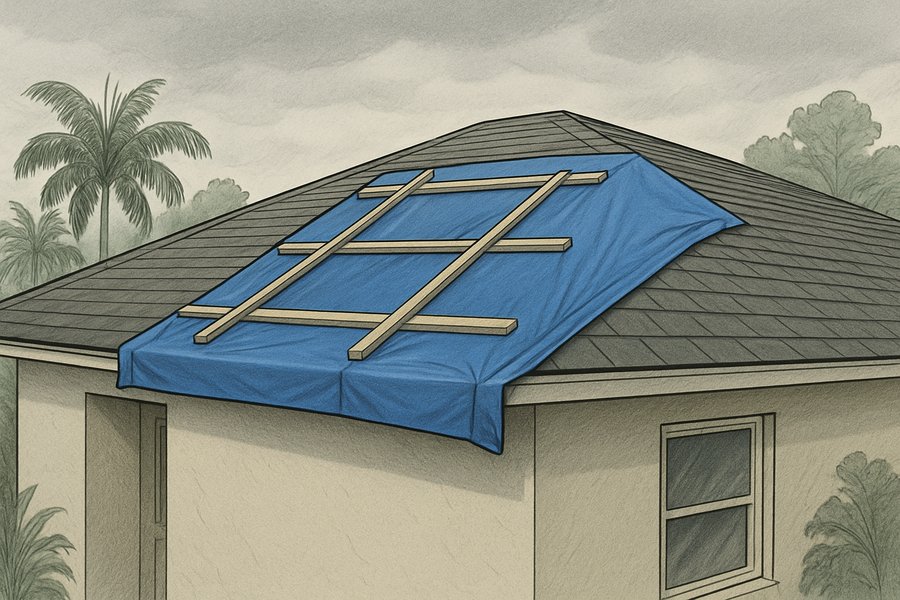
Emergency dry-in
Where water is coming in now
Temporary protection is battened down properly so it survives the next storm rather than the next breeze. This buys the time to do the permanent work correctly instead of hurriedly.
Quality check · Temporary protection secured, not just laid over
Opening up
Back to the deck, locally
The covering and underlayment come off across the affected area - far enough out to reach sound material, and no further than can be closed the same day.
Quality check · Only opened as far as can be closed that day
Deck check and repair
What the leak has been doing
The exposed sheathing is checked and any soft or delaminated panels are replaced. A leak that has run for a season has usually been wetting more deck than the ceiling stain suggests.
Quality check · Deteriorated sheathing replaced, not covered
Barrier
Sealing what was opened
Self-adhered membrane goes back over the repaired deck and is lapped into the surrounding underlayment so the repair is continuous with the roof around it rather than a patch sitting on top of it.
Quality check · New barrier lapped into the existing, not butted
Flashings and penetrations
Rebuilt, not sealed
Any flashing in the affected area is formed and lapped properly. If the original failure was a junction, this is the step that actually fixes the leak.
Quality check · Junctions formed, not caulked
Valleys
Where two slopes meet
Valley linings are renewed where they are part of the scope, and the covering is run into them from both sides so water is carried rather than dammed.
Quality check · Valley lining continuous through the repair
Covering
Matched and blended
The covering goes back to the approved assembly, blended so the repair reads as part of the roof. Where an exact match is not available, you have already seen and agreed the approach.
Quality check · Match agreed before it is installed
Ventilation and trim
Putting back what was disturbed
Any ventilation, edge metal or trim disturbed by the work is reinstated as part of the assembly rather than left approximate.
Quality check · Everything disturbed is reinstated properly
Check and clean
Tested, swept, walked
The repair is water-tested where that is practical, the permit is closed out where one was pulled, the grounds get a magnetic sweep for fixings, and we walk it with you.
Quality check · Repair tested and the site swept
Stage 05 · Inspect
The three decisions people find hardest
Balanced both ways. What is right depends on the roof, its age and what your jurisdiction requires.
Repair
Where the roof has life left
- How
- The affected area is opened, the underlying cause is fixed, and the assembly is rebuilt locally.
- Benefits
- Far cheaper and quicker, and the right answer where the failure is genuinely localised on a sound roof.
- Limits
- Matching an existing covering can be impossible if it is discontinued. There are limits on how much may be repaired before current requirements apply to the whole assembly.
- Upkeep
- The rest of the roof continues to age at its own rate.
- In South Florida
- How much repair is permissible before upgrades apply depends on the code edition and the jurisdiction, and we confirm it.
Replace
Where it is at the end
- How
- Tear-off to the deck, deck repair and re-nailing, a sealed deck, then a new covering.
- Benefits
- Brings the whole assembly up to current requirements including deck attachment and the secondary water barrier - the parts that actually determine performance.
- Limits
- Considerably more cost and disruption, and it is weather-dependent work.
- Upkeep
- A full service life ahead of it rather than a few more seasons.
- In South Florida
- Re-nailing plus a sealed deck is the single largest performance gain available on an older house.
Which oneIf the failure is localised, the covering has real life left and the deck is sound, repair it. If several details are failing at once, or the deck is soft, a repair is money spent on something that is going to be replaced anyway - and we will say so rather than take the smaller job twice.
Find it properly
What we do
- How
- The roof and, where accessible, the attic are examined together, and the entry point is traced rather than guessed.
- Benefits
- You pay once. The repair is aimed at the actual cause instead of the nearest plausible defect.
- Limits
- Takes longer up front, and occasionally the honest answer is that the roof is finished.
- Upkeep
- Nothing further, if the diagnosis was right.
- In South Florida
- Wind-driven rain enters at points that never leak in ordinary rain, which is why when it leaks matters as much as where.
Patch and see
Common, and expensive
- How
- Sealant goes over the most likely-looking spot and everyone waits for the next storm.
- Benefits
- Cheap on the day, and occasionally it happens to be right.
- Limits
- When it is wrong you have paid, waited for rain, and learned nothing. Layers of old sealant also make the eventual real repair harder.
- Upkeep
- Repeats, usually.
- In South Florida
- The wet season means each wrong guess costs you another few weeks of water in the structure.
Which oneDiagnose it. A patch aimed at the wrong detail is not a cheap repair, it is a deferred one with interest - and every layer of sealant makes the correct repair more awkward when it finally happens.
Tile
Long life, heavy
- How
- Concrete or clay tile set in courses over the underlayment and sealed deck.
- Benefits
- Long service life, and the appearance most South Florida communities are built around.
- Limits
- Heavy, so the structure has to carry it. Individual tiles break underfoot, and matching a discontinued profile can be difficult.
- Upkeep
- Occasional replacement of cracked tiles; the underlayment beneath is what actually ages.
- In South Florida
- Very common, and frequently what an association requires.
Shingle
Economical, easy to repair
- How
- Architectural asphalt shingles in overlapping courses over the underlayment and sealed deck.
- Benefits
- The most economical option, quick to install, and genuinely straightforward to repair locally.
- Limits
- Shorter service life than tile, and colour matching on an older roof is rarely perfect.
- Upkeep
- Straightforward, and localised repairs are practical.
- In South Florida
- Widely used and fully capable of meeting requirements when specified as an approved assembly.
Which oneOn a repair this is usually decided for you - you match what is there. It matters when the conversation turns to replacement, where structure and your association narrow it before preference does.
What moves the cost and the calendar
Tick whatever applies. This will not produce a price - repair pricing depends on the cause, the access and what the deck turns out to be like - but it will show which parts carry the cost and the calendar.
What this points to
We do not publish figures for this work, because the same scope can differ several-fold once the existing conditions are visible. You get a real, itemised number after a site visit, in writing.
Stage 06 · Maintain
What a roof repair is actually like
A short sequence from our roof photography, plus what the days on site actually involve. Roofing is loud, fast and weather-dependent, and it is worth knowing that before it starts.
How long it runs
A localised repair is often a day or two on site. The wait for a permit where one is needed, and for a weather window, is frequently longer than the work itself.
Noise
Tearing off even a small area is loud and it is directly above you. If anyone in the house works nights, it is worth knowing which day that falls on.
Debris
Old covering comes off fast and lands hard. Ground protection goes down first and the site gets a magnetic sweep for fixings at the end.
Weather
We open only as much roof as can be closed the same day. That is why a repair sometimes appears to progress slowly in the wet season - it is deliberate.
Your ceilings
Vibration can dislodge dust and occasionally crack old ceiling texture. Photograph the room and move anything fragile before we start.
Pets
Roofing is the trade pets react to most. Worth planning where they will be.
Inspectors on site
Where the scope is permitted the work is inspected before it is closed up, so the roof may sit part-finished for a short period. That is normal.
If we find more
Opening a roof sometimes reveals that the problem is larger than the symptom. You hear that the same day, with what it means, before we go further.
How we work, and what we will not do
Only claims we can stand behind. Everything below is either a matter of public record or visible in the work shown on this page.
Licensed, bonded and insured
Elbaz Construction is a licensed general contractor, CBC1265280. Roofing is permitted work and permits are pulled in the company name.
We diagnose before we quote
The entry point is traced rather than guessed at, because a repair aimed at the wrong detail is not a repair.
An honest repair-or-replace answer
Including when a repair will do and when a replacement is not yet necessary. The smaller job now is often the right recommendation.
We do not handle your claim
We document the damage and quote the work. We do not negotiate with your carrier, advise on your policy or act as a public adjuster - those are separate regulated roles and we will point you to them.
We cannot pay your deductible
Florida prohibits a contractor from paying or rebating a policyholder deductible. Anyone offering to is telling you something useful about how they operate.
We do not knock on doors after storms
You came to us. That is the relationship we want, and it is the opposite of how a lot of post-storm roofing works.
Jurisdiction-correct assemblies
Miami-Dade and Broward sit inside the High-Velocity Hurricane Zone; Palm Beach does not. What we specify follows your address.
Permit closed out
Where a permit is pulled it is signed off and closed. An open roofing permit follows the property, surfaces at sale and complicates insurance.
Questions, by stage
Filter to the part of the job you are thinking about.
My roof is leaking. What do I do first?Before starting
Contain the water inside, photograph everything while it is actively leaking, and get it looked at. If there is an open breach, temporary protection matters more than speed of diagnosis - a breach left open through a wet season costs far more in ceilings and insulation than the roof repair ever would.
Can you tell where the leak is from a photo of my ceiling?Before starting
Not reliably, and anyone who says otherwise is guessing. Water tracks along the top of the deck and down framing before it drops, so the stain marks where it left, not where it entered. The attic usually tells us more than the ceiling does.
It only leaks in heavy wind. Is that different?Before starting
Yes, and it is a useful clue. Wind-driven rain gets in at details that never leak in ordinary rain - head flashings, wall abutments, vents and the edges of the covering. When it leaks narrows down where to look considerably.
Can my roof be repaired instead of replaced?Design
Often, yes - where the failure is localised and the roof has real life left. There are limits on how much of a roof can be repaired before the whole assembly has to meet current requirements, and the exact provision depends on the code edition and your jurisdiction. We check rather than guess.
Can you match my existing tiles or shingles?Design
Sometimes. Profiles and colours are discontinued regularly, and an aged roof has weathered away from its original colour anyway. Where an exact match does not exist, taking material from a hidden slope and putting the new material there usually gives a better result. You see the approach before we commit to it.
Someone sealed it last year and it is leaking again. Why?Design
Because sealant over a failed junction is a cover, not a repair. It holds water out by adhesion rather than shedding it by geometry, so it fails on its own schedule. The real fix rebuilds the detail - and part of that job is removing whatever was put over it.
What is the High-Velocity Hurricane Zone?Planning
A designated area with its own stricter requirements for roofing assemblies and product approval. Miami-Dade and Broward counties are inside it; Palm Beach County is not. It genuinely changes what may be installed, so the answer depends on your address rather than on "South Florida".
What is a secondary water barrier?Planning
A sealed layer over the roof deck, beneath the covering, so that if covering is lost in a storm the building underneath stays dry. Combined with re-nailing the deck it is the largest real performance gain available in a re-roof.
Does a roof repair need a permit?Planning
Replacement certainly does, and most repairs do. The threshold varies by jurisdiction, so we confirm it for your address and your scope rather than assume either way.
What is an NOA?Permits
A Notice of Acceptance - Miami-Dade County product approval showing an assembly has been tested and accepted for use. Elsewhere in Florida the equivalent is a Florida Product Approval. It has to cover the whole assembly, not just one component in it.
Will you help with my insurance claim?Permits
We will give you a documented assessment with photographs and a clear quote, and you may give that to anyone. We will not negotiate with your carrier or advise you on your policy - those are separate regulated roles, and a licensed public adjuster or your own attorney is who you want for them.
How long will my roof be open?Construction
Only as long as it takes to close the section we opened, which is the same day. We do not open more roof than we can dry in before the afternoon.
Will I need to move out?Construction
Almost never. Roofing is disruptive and loud but it happens above you rather than inside the house.
What if you find rotten decking?Construction
It is replaced, and you hear about it the same day with what it means for cost. It is the most common thing opening a roof finds, which is exactly why an allowance for it is discussed before work starts.
Why can you not quote from photographs?Cost
Because the visible damage is often not the problem. Pitch, geometry, access, the number of penetrations, your jurisdiction and - most of all - what the deck turns out to be like once uncovered all move the number.
Is it worth repairing an old roof?Cost
Sometimes, and sometimes emphatically not. If several details are failing at once and the covering is brittle, a repair buys a season and complicates the replacement. We will give you that answer straight even though it is the smaller job.
What happens at the end?Completion
Where practical we water-test the repair, close out any permit, sweep the grounds magnetically for fixings, and walk it with you. You get the documentation for your records - it matters when you sell.
How do I stop this happening again?Maintenance
Have the roof looked at before each hurricane season, particularly the edges, the flashings and every penetration, and keep valleys and gutters clear. Most leaks begin at a detail that was already marginal long before the day it finally let water in.
Nothing in that stage yet — try “All”.
Find the cause before buying the cure.
A repair aimed at the wrong detail is not a cheap repair, it is a deferred one. The assessment is where the money is actually saved.

