


10 service categories · 100 service pages · Miami-Dade, Broward & Palm Beach
View all services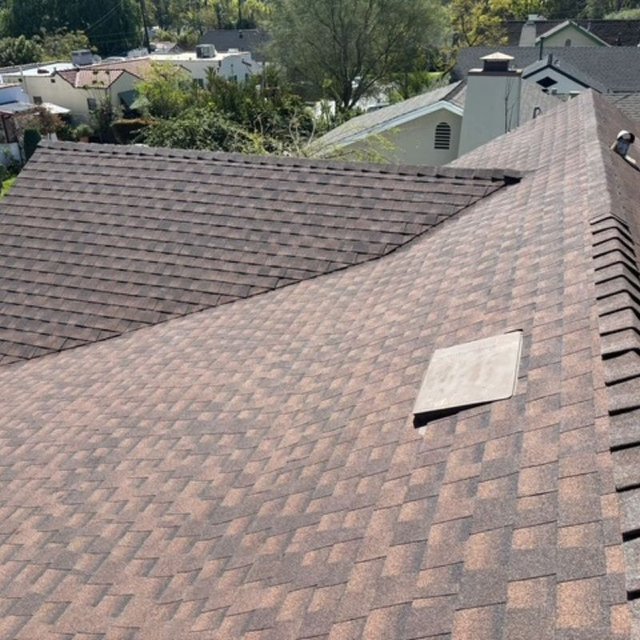
A roof is an
assembly, not
a shingle.
What keeps water out is the deck, the fasteners, the underlayment and the flashing. The shingle is the wear layer on top of all of it. We build the whole assembly to the approved detail and have it inspected at every stage that requires it.
- Licensed, bonded & insured · CBC1265280
- 104 municipalities across 3 counties
- Design-build: permitting & construction in-house
Miami-Dade · Broward & Palm Beach Counties
ScrollThe service, defined
Everything above the ceiling, replaced as one system.
Shingle roofing is the removal of the existing covering down to the deck, the repair or replacement of that deck, and the installation of a complete new assembly — underlayment, drip edge, flashing, valley treatment, field shingles, hip and ridge, and ventilation.
It serves owners whose roof has reached the end of its service life, has storm damage, or is failing an insurance inspection. Asphalt shingle remains the most common residential covering in South Florida because it is economical, repairable, and available in profiles approved for high-wind installation.
The Florida Building Code treats roofing as a wind-resistance problem first and a weather covering second. Miami-Dade and Broward sit inside the High-Velocity Hurricane Zone, so shingles, underlayment and fasteners all need approval for the pressures at your address, and the roof deck itself often has to be refastened to current standards during a replacement — work that is invisible the day after it is finished and decisive the day a storm arrives.
What is included
- Scope
- Tear-off and disposal, deck inspection and repair, underlayment, drip edge, flashing, valleys, field shingles, hip and ridge, ventilation, inspections and closeout
- Delivered by
- One licensed general contractor — CBC1265280
- Region
- Miami-Dade, Broward and Palm Beach counties
- Assembly
- Sheathing · secondary water barrier · underlayment · metal edge · valley and penetration flashing · shingle field · hip and ridge
- Also delivered
- Tile and metal systems where the roof or the association calls for them
Scope index
Everything a roof replacement actually contains.
Eleven items, four phases. Half of them are covered by the finished surface and are the half that decides how long the roof lasts.
Inspection and assessment
We look at the existing covering, the deck where it can be seen, the penetrations, the valleys and the ventilation, and identify what is actually failing rather than what is simply old.
Product selection and approval
Shingle, underlayment and fastening selected as an approved assembly for your jurisdiction and wind zone, with current Florida Product Approval or Miami-Dade Notice of Acceptance documentation.
Permitting
Roofing is a permitted activity. The application, product approvals and, in the HVHZ, the required roofing affidavits are submitted before work starts.
Protection and set-up
Landscaping, pool, driveway and AC units protected; disposal placed with access and neighbours in mind. Tear-off is messy and the mess is planned for.
Tear-off
Existing covering and fasteners removed down to the deck. Nothing is left to be roofed over — the condition of the deck cannot be judged through the old roof.
Deck inspection and repair
Sheathing inspected for rot, delamination and thickness; damaged panels replaced. On many replacements the deck also has to be renailed to current code, which is inspected before anything covers it.
Secondary water barrier
In the HVHZ a secondary water barrier is required at the deck. This is the layer that keeps water out if the covering is lost in a storm.
Underlayment and edge metal
Underlayment installed and fastened to the approved pattern, with drip edge and eave metal set in the correct sequence relative to it.
Flashing and valleys
Wall flashing, step flashing, valley treatment and penetration boots. Almost every leak on a shingle roof happens at one of these, not in the middle of the field.
Shingle field, hip and ridge
Shingles laid to the approved exposure and nailing pattern — including the high-wind pattern where required — then hips and ridges capped with matching components.
Inspection and closeout
Required inspections called and passed, magnetic sweep for nails, final clean, and handover of the permit, approvals and warranty documents.
Specification
Shingle Roof Replacement
Recorded from the photography only. Product brand, cost, schedule, address, client and wind-rating figures are not documented in the source material and are not stated.
- Project type
- Full replacement of an asphalt shingle roof, tear-off to deck
- Roof form
- Hipped roof with multiple planes, valleys and penetrations
- Stage documented
- Deck exposed · underlayment installed · field complete
- Deck
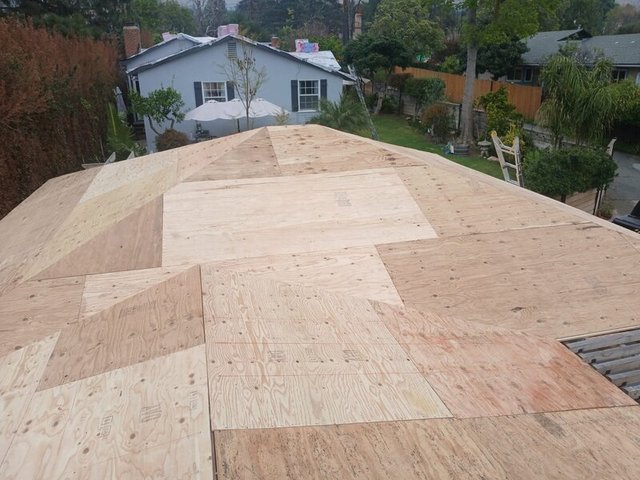
- Sheathing inspected with the covering removed; damaged panels replaced before anything is laid over it
- Underlayment
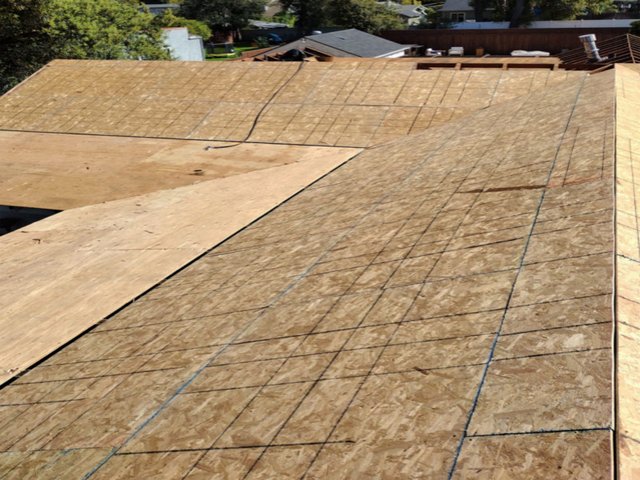
- Full-coverage underlayment fastened to the deck before the covering, visible in the second and third frames
- Visible detailing
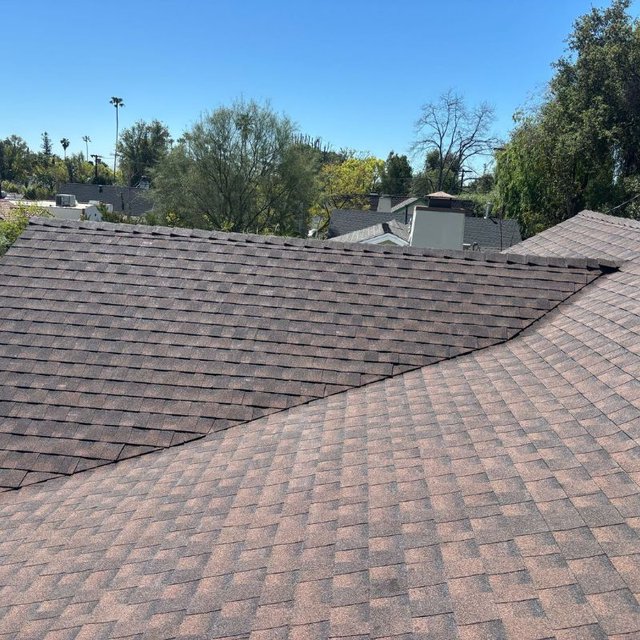
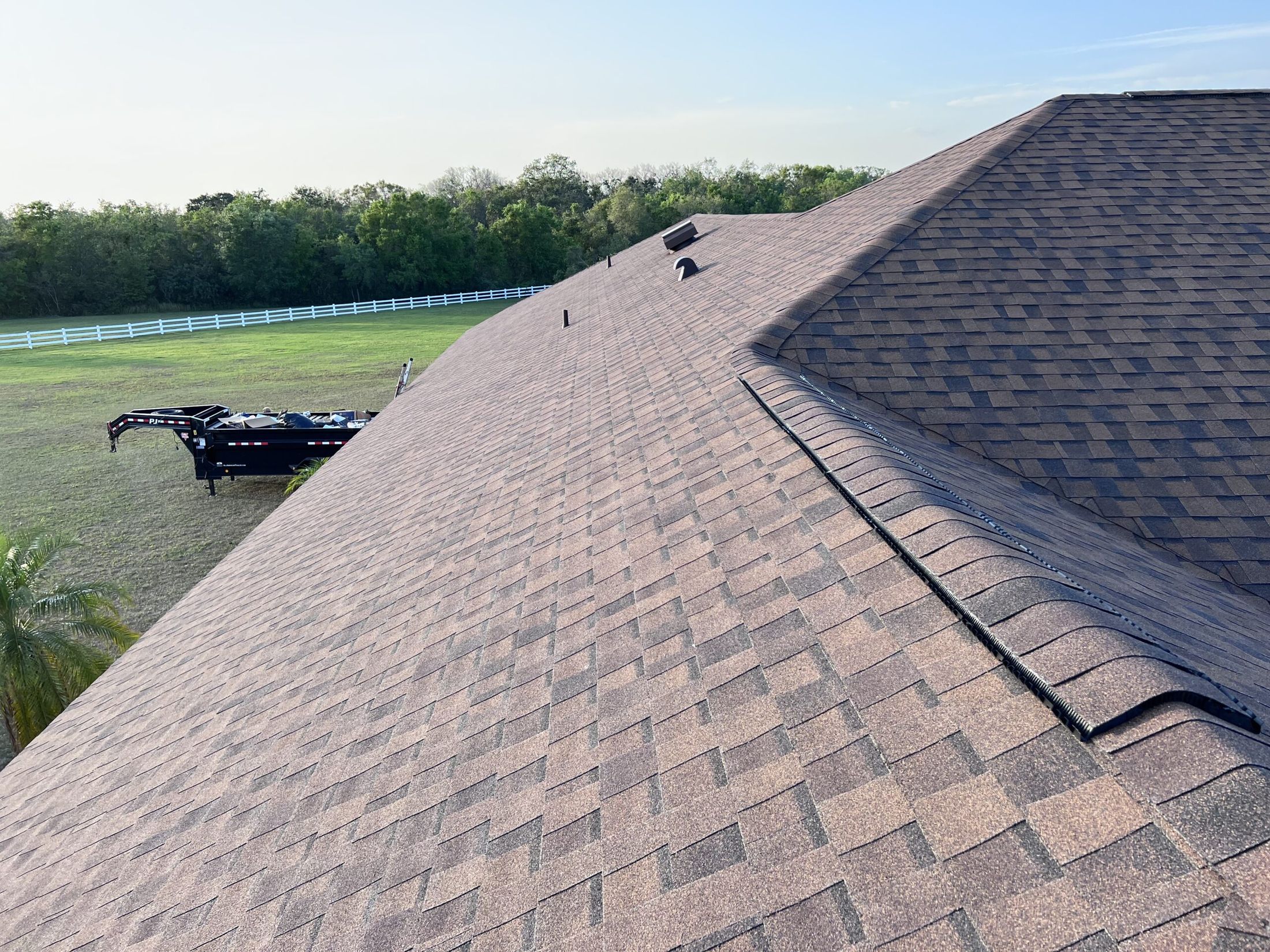
- Straight course lines · capped hips and ridge · flashed penetrations and vents · consistent exposure across planes
- Functional improvement
- A complete new assembly rather than a covering laid over an unknown deck
- Stage documented
- Complete
Design and material language
Five decisions that set how the roof performs.
What the assembly is made of, what appears on the documented roofs, and what the alternatives actually change.
Shingle type
Architectural or three-tab
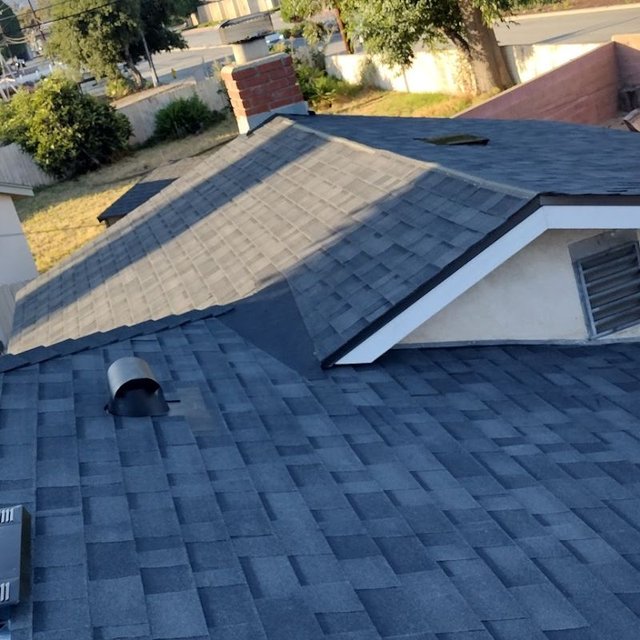
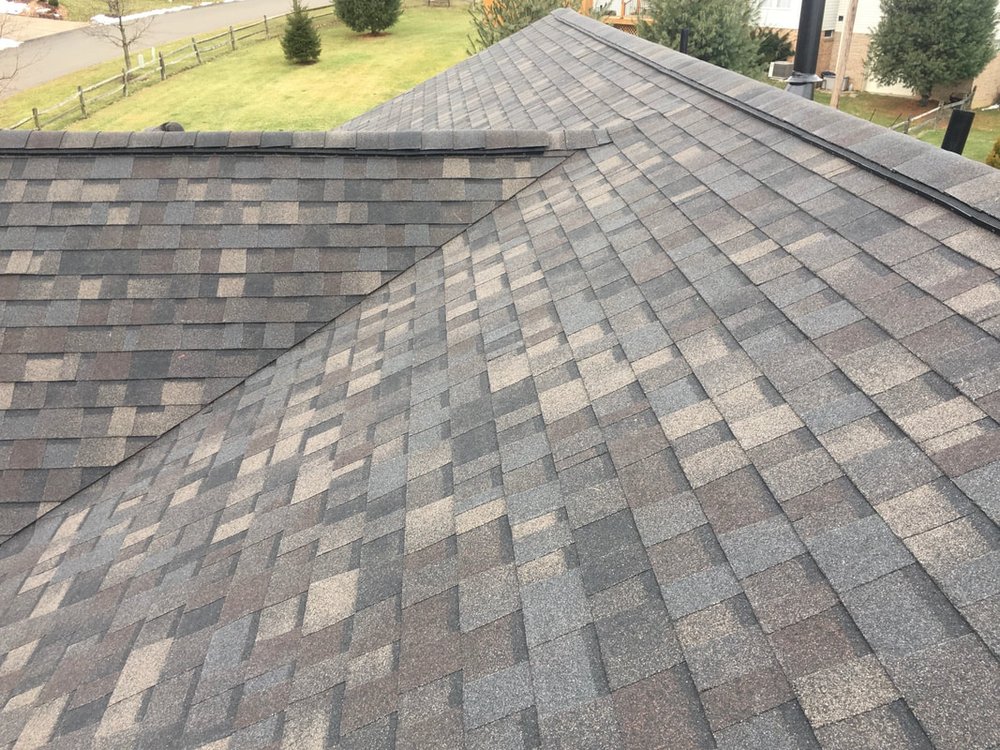
Used on these roofs. Architectural (dimensional) shingles appear across the documented roofs. They are heavier, read with more depth and shadow, and are generally the product available in higher wind ratings.
Other options. Three-tab is thinner, flatter and cheaper, and is now uncommon on replacements here because of wind-rating requirements. Tile and standing-seam metal are the other two systems we install.
Underlayment
The layer that actually keeps water out
Used on these roofs. Full-coverage underlayment fastened to the deck before the covering, visible in the documented sequence.
Other options. Self-adhered membranes cost more and perform better at the eave, in valleys and on low slopes. In the HVHZ a secondary water barrier is a code requirement, not an upgrade.
Fastening
The part the code cares about most
Used on these roofs. Nail type, length, count and placement are specified by the approved assembly, and the high-wind nailing pattern uses more fasteners in a defined position.
Other options. A shingle nailed high or with too few fasteners looks identical from the ground and fails at a fraction of the rated pressure. This is where inspection matters.
Flashing
Where roofs leak
Used on these roofs. Wall and step flashing, valley treatment and penetration boots appear throughout the documented work. These are the locations where nearly every real leak starts.
Other options. Reusing old flashing to save cost is a false economy: it is buried under the new covering and cannot be replaced later without disturbing it.
Ventilation
What extends the life of everything else
Used on these roofs. Ridge and roof vents are set into the documented assemblies. Ventilation moves heat and moisture out of the roof space.
Other options. Intake and exhaust have to balance. Adding exhaust vents without adequate soffit intake can make attic conditions worse rather than better.
On what is shown. Every photograph on this page is real Elbaz Construction roofing work. The alternative systems described are named for comparison only and are not claimed to be what is pictured.
Technical brief
Why a roof permit is stricter here than almost anywhere.
Roofing in South Florida is one of the most tightly regulated residential activities there is. Here is what the building department actually requires and inspects.
A permit is always required
Roof replacement is a permitted activity everywhere in South Florida. Work done without one can affect insurance and will surface at sale.
High-Velocity Hurricane Zone
Miami-Dade and Broward sit inside the HVHZ, which has its own roofing provisions, its own required affidavits and stricter product approval. Palm Beach follows the standard code but remains a high-wind region.
Product approval
Shingles, underlayment and accessories must carry current approval — a Miami-Dade Notice of Acceptance or Florida Product Approval — for the assembly and the pressures at your address.
Deck attachment
On a replacement, the roof deck generally has to be refastened to current standards and inspected before dry-in. This is often the single largest unexpected item on an older house.
Secondary water barrier
Required in the HVHZ. It is the layer that limits water entry if the covering is lost during a storm, and it is inspected before it is covered.
Inspection sequence
Typically deck and renail, then dry-in, then final. Each must pass before the next stage covers it — which is the reason roofing cannot be compressed into one visit.
Twenty-five percent rule
Where more than a quarter of a roof section is repaired or replaced within a twelve-month period, the code can require the whole section to be brought to current standards. It is worth knowing before choosing a partial repair.
Wind mitigation and insurance
A completed permitted roof supports a wind mitigation inspection, which is what insurers use. We do not promise a premium outcome — that is between you, the inspector and your carrier.
Closeout documentation
You should end up holding the closed permit, the product approvals, the manufacturer warranty registration and the workmanship warranty.
Disclaimer. Requirements, fees and review times are set by your municipality and change. Nothing here is a legal opinion or a guarantee of approval, timing or insurance outcome — the building department having jurisdiction over your address is the authority.
Performance and quality
What we hold ourselves to.
No wind rating, insurance saving or product performance figure is claimed on this page. Those belong to the specific approved assembly installed and to your carrier.
- Tear-off to deck
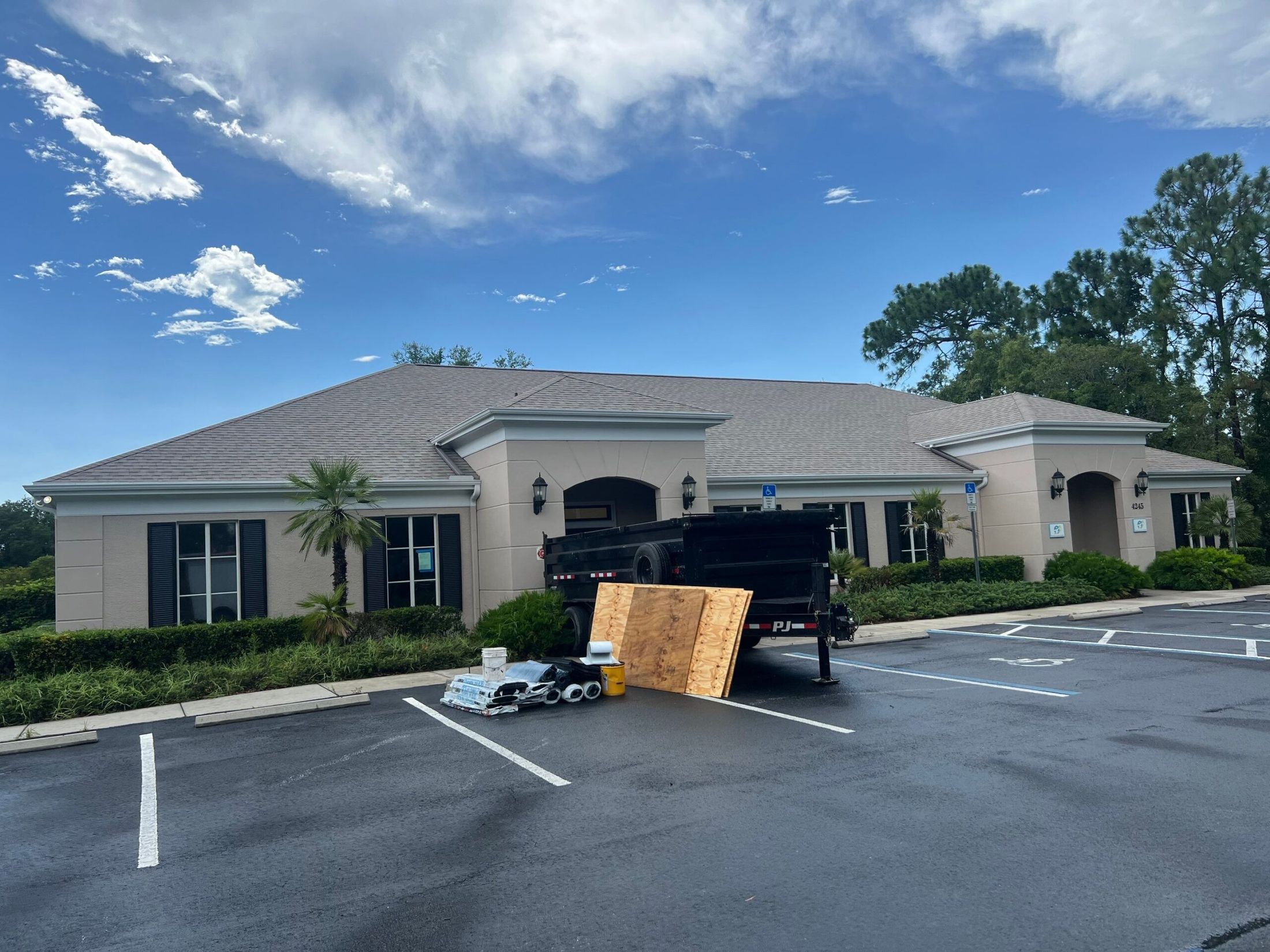
- The covering comes off. Roofing over an existing layer hides the deck and shortens the life of the new roof.
- Deck condition
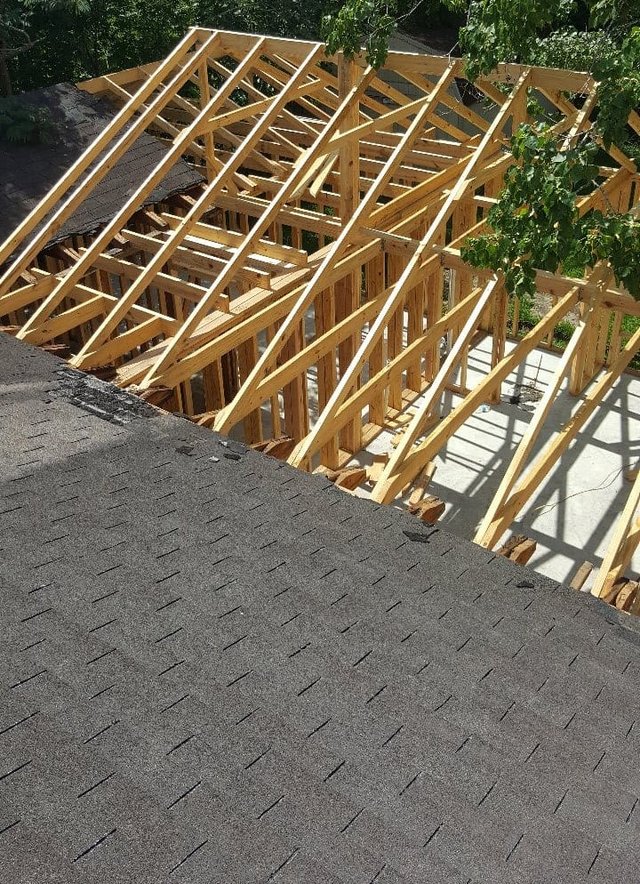
- Sheathing is inspected with the deck open, damaged panels are replaced, and refastening is done to current code.
- Approved assembly
- Shingle, underlayment and fasteners are installed as an approved system rather than mixed by convenience.
- Nailing pattern
- Fastener count, type and placement follow the approval, including the high-wind pattern where required.
- New flashing
- Valley, wall, step and penetration flashing is replaced, not reused. It is buried and cannot be revisited.
- Ventilation balance
- Intake and exhaust are assessed together rather than vents simply added at the ridge.
- Site protection and cleanup
- Landscape and pool protected, magnetic sweep for nails, and the property left clean.
- Inspection record
- Every required inspection is called and passed. The closed permit is the record that the assembly was reviewed.
Cost and timeline
The thirteen things a real number is built from.
We do not publish a price per square. Deck condition is the largest unknown on any replacement and it cannot be seen until tear-off. Our proposals state clearly what is included and how deck repair is priced, so there are no invented surprises.
| # | Variable | Why it moves the number |
|---|---|---|
| 01 | Roof area and pitch | Area drives material; pitch drives safety, access and labour rate. |
| 02 | Roof complexity | Hips, valleys, dormers and penetrations all take longer per square foot than a simple plane. |
| 03 | Number of existing layers | Every layer removed is disposal weight and labour. |
| 04 | Deck condition | Rotten or delaminated sheathing found at tear-off. The largest genuine unknown on the job. |
| 05 | Deck refastening | Renailing to current code is commonly required on older houses and is inspected. |
| 06 | Shingle specification | Product line and wind rating within the architectural category vary considerably. |
| 07 | Underlayment specification | Standard versus self-adhered, and how much of the roof gets the upgraded treatment. |
| 08 | Flashing and penetrations | How many chimneys, skylights, vents and wall junctions the roof actually has. |
| 09 | Ventilation work | Adding or correcting intake and exhaust as part of the replacement. |
| 10 | Access and staging | Where disposal can sit, how far material must be carried, and whether a lift or crane is needed. |
| 11 | Protection requirements | Pools, screens, pavers and mature planting all need protecting during tear-off. |
| 12 | Permit and inspections | Municipal fees and the inspection sequence itself. |
| 13 | Weather and season | Storm season compresses schedules and tightens material and labour availability across the region. |
Four things worth looking for.
These frames are real Elbaz Construction roofing work in South Florida. AI-generated frames and images naming other roofing companies were found in the source folder and excluded — none appears on this page.
Observations
- 01
- The deck is visible
There is a stage where the sheathing is completely exposed. That is the only opportunity to assess and repair it, and a roof that skips it is a roof laid over an unknown. - 02
- Underlayment before covering
The dry-in layer goes on and gets inspected before any shingle. In the HVHZ this stage includes the secondary water barrier. - 03
- Consistent course lines
Straight, evenly spaced courses across every plane indicate the exposure was set and held. Wandering courses usually mean the nailing zone wandered too. - 04
- Capped hips and ridges
Hips and ridges are finished with matching components rather than field shingles bent over the line, which is where wind gets under a roof first.
Credentials and delivery
Six verifiable reasons, and no badges.
Nothing here is an award or a membership we cannot substantiate. The licence number is public and checkable.
Licensed general contractor
CBC1265280 — certified building contractor, bonded and insured, permitted and inspected on every roof.
Tear-off as standard
We remove the existing covering rather than laying over it, because the deck is the part that decides how long the new roof lasts.
Approved assemblies
Shingle, underlayment and fasteners installed as a matched approved system with current documentation for your jurisdiction.
Deck work included honestly
Refastening and sheathing repair are priced openly and photographed as found, rather than discovered as an argument later.
Local to the region
Miami-Dade, Broward and Palm Beach — including the HVHZ requirements that apply to two of those three counties.
Documentation handed over
Closed permit, product approvals and warranty registration handed over as a set, which is what a future buyer or insurer asks for.
Start here
Book the roof inspection.
Tell us the age of the roof and what you are seeing. We will come and look at it properly, including the attic where we can get to it.
What happens next
- 01
- We call or email within one business day, Sunday to Friday.
- 02
- A roof inspection: covering, deck where visible, flashing, valleys, penetrations and ventilation.
- 03
- A written scope stating the assembly, how deck repair is priced, and a fixed proposal.
- Useful to have
- The approximate age of the roof, any leak history, and any notice your insurer has sent you about the roof.
Take it back to the deck.
Then build it once.
Inspection, permitting, tear-off, deck repair and a complete new assembly under one licensed general contractor across Miami-Dade, Broward and Palm Beach.

