Garage Conversion Rules in Broward and Palm Beach County: Parking, Setbacks and Permits
A converted garage almost always needs a permit, and most cities make you replace the parking space it was providing. Setback distances depend on the parcel’s own zoning district, not one county-wide number.
2off-street spaces for a Hollywood single-family home
<3units: WPB parking stays on-site
105.1FBC permit section for the conversion work
By Elbaz ConstructionUpdated November 17, 20268 min readSources: City of Hollywood LDR · City of West Palm Beach Code Ch.94 · Florida Building Code
Garage conversions in Broward and Palm Beach County
The short answer
1
Yes, you generally need a building permit, and in most Broward and Palm Beach cities you also have to replace the parking space the garage was providing -- the conversion does not erase that requirement. Setback distances depend on the parcel’s own zoning district, so the honest answer is “check with the city,” not a single number that applies everywhere. Hollywood and West Palm Beach are used below as two real, citable examples of how this plays out city by city.
01
Permit required
Converting a garage to living space triggers structural, electrical, plumbing and/or mechanical work, which Florida Building Code s.105.1 requires a permit for.
02
Parking usually must be replaced
Most cities require the parking space a garage provided to be replaced elsewhere on the lot if the conversion removes it.
03
Dwelling-unit test
Some cities only allow the conversion if the result qualifies as an allowable dwelling unit under that city’s own zoning code.
04
Setbacks are per-district
There is no single Broward or Palm Beach County setback number -- it is set by the parcel’s zoning district.
City by city, not county by county
Why there is no single Broward or Palm Beach answer
Broward and Palm Beach County do not set a single garage-conversion rule for every address inside them -- each incorporated city writes its own zoning code, and unincorporated areas follow the county’s own code instead. The two cities below, Hollywood in Broward and West Palm Beach in Palm Beach County, show what a real, currently-in-force code actually says, so you can see the pattern rather than a guess at every municipality.
Hollywood requires the conversion to result in an allowable dwelling unit and any deleted parking to be replaced; West Palm Beach requires parking for small developments to stay on the same lot. Setback distances are set by each parcel’s zoning district in both cities.
If your property is in a different city, or in an unincorporated part of either county, treat these two as an illustration of what to look for in your own city’s code (zoning district rules, an accessory-use or parking-replacement section, and a dwelling-unit definition) rather than as your own city’s exact numbers.
The parking rule
Why the lost parking space usually has to come back
In the City of Hollywood’s Accessory Use Regulations (LDR s.4.21), a garage or other accessory structure can be converted into living space only if the result qualifies as an allowable dwelling unit under the applicable zoning district, and critically: if the conversion deletes or makes unusable a parking space the code required, that space has to be replaced elsewhere on the lot. Hollywood’s own off-street parking table (LDR s.7.2) sets 2 spaces as the baseline for a single-family residence of 2,000 sq ft or less, so a two-car garage converted without adding two replacement spaces is the kind of gap a plan reviewer will catch.
West Palm Beach’s Code of Ordinances Chapter 94, s.94-482 takes a related approach for small residential developments: required parking for fewer than three dwelling units must be provided on the same property, and if that parking sits in the front yard, the lesser of 1,000 sq ft or 75% of the remaining front yard still has to stay landscaped -- so a conversion that turns a garage into a bedroom and the driveway into extra parking still has a landscaping limit to work around, not an open slab.
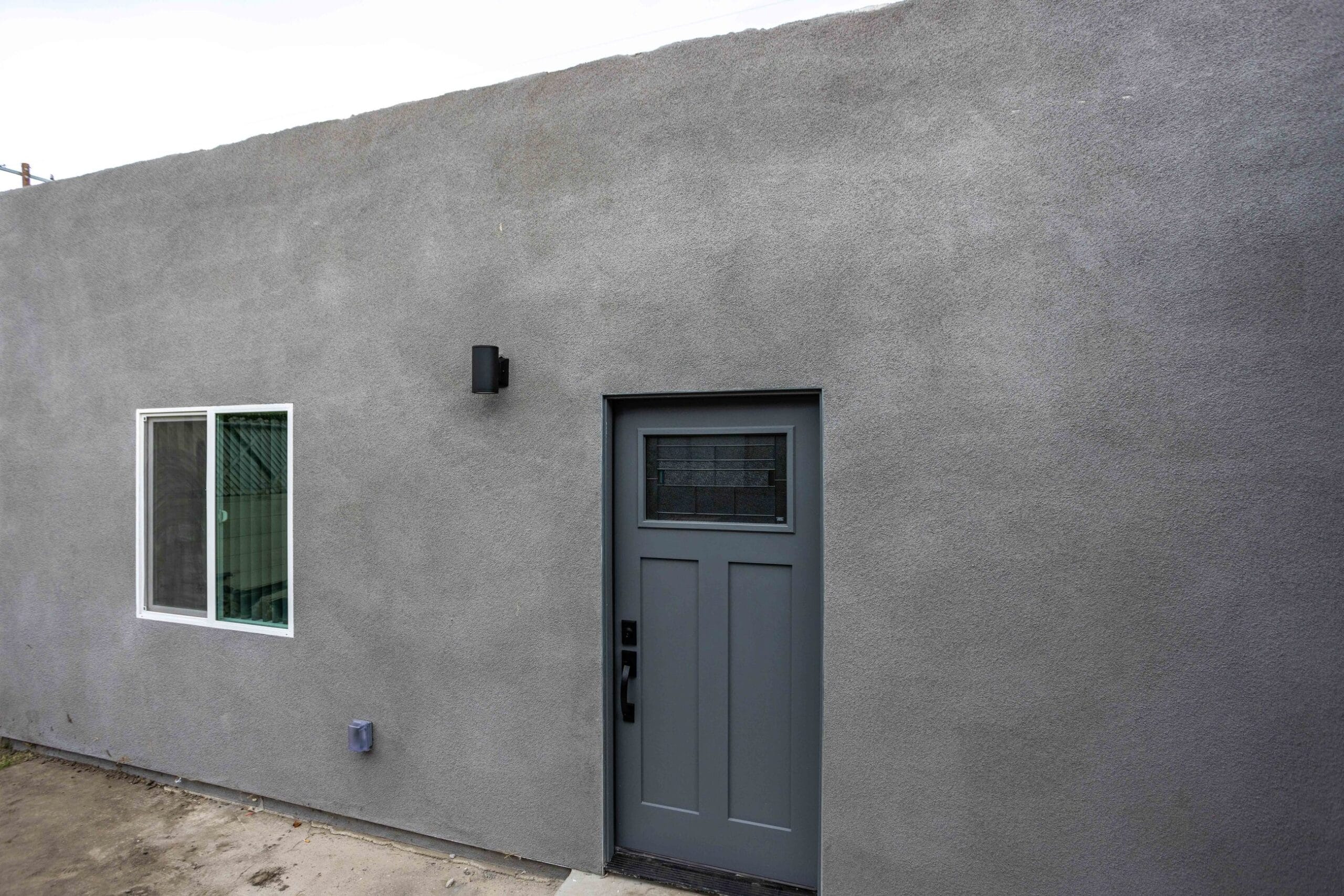
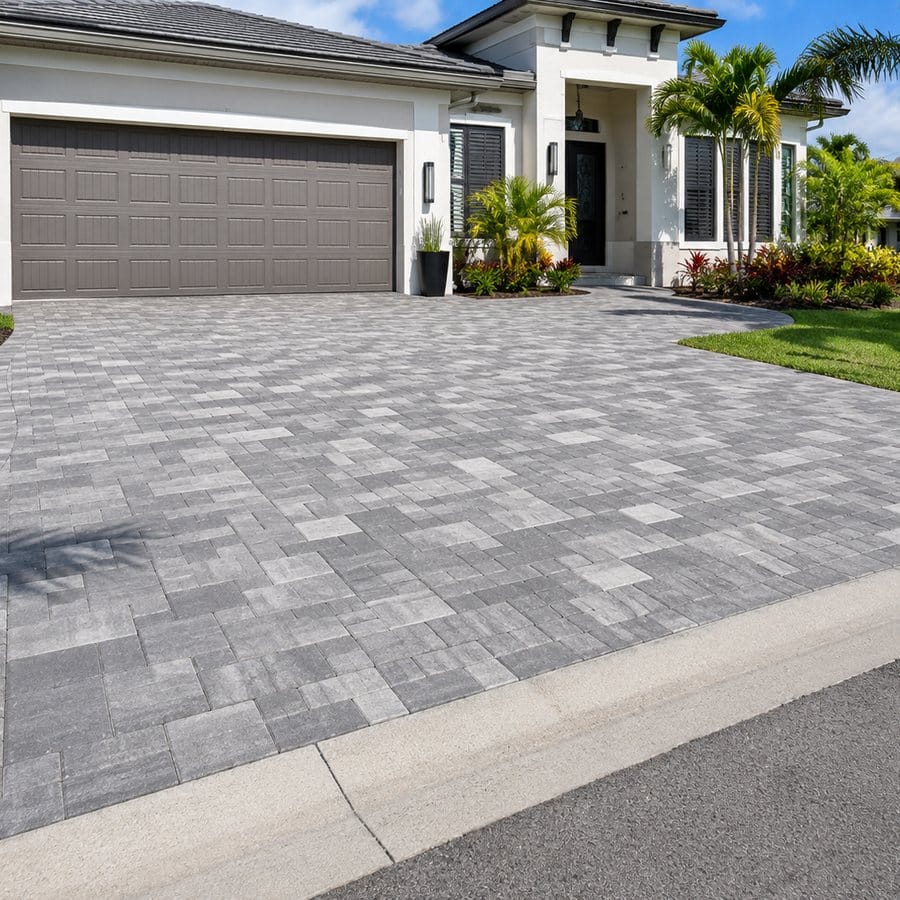
A large-format paver driveway running to a double garage -- the kind of surface parking a conversion has to preserve or replace.A converted garage: grey stucco walls, a flat parapet roofline, a window and a panelled entry door where the garage door used to be.
The honest answer on setbacks
Setbacks depend on the parcel’s zoning district
Every Broward and Palm Beach city divides its single-family areas into multiple zoning districts (Hollywood alone has several single-family districts under LDR s.4.1; West Palm Beach has districts labelled SF3 through SF14), and each district sets its own front, side and rear setback distances. A garage conversion does not usually change the footprint, so if the garage already sits inside the required setback as a legally built structure, converting its use does not by itself violate setbacks -- but adding square footage, a new door or window opening closer to a property line, or any exterior change can trigger a fresh setback review. There is no single number that is true for every address in either county, which is why the only accurate answer is to confirm the parcel’s zoning district and its setback table with the city before assuming anything.
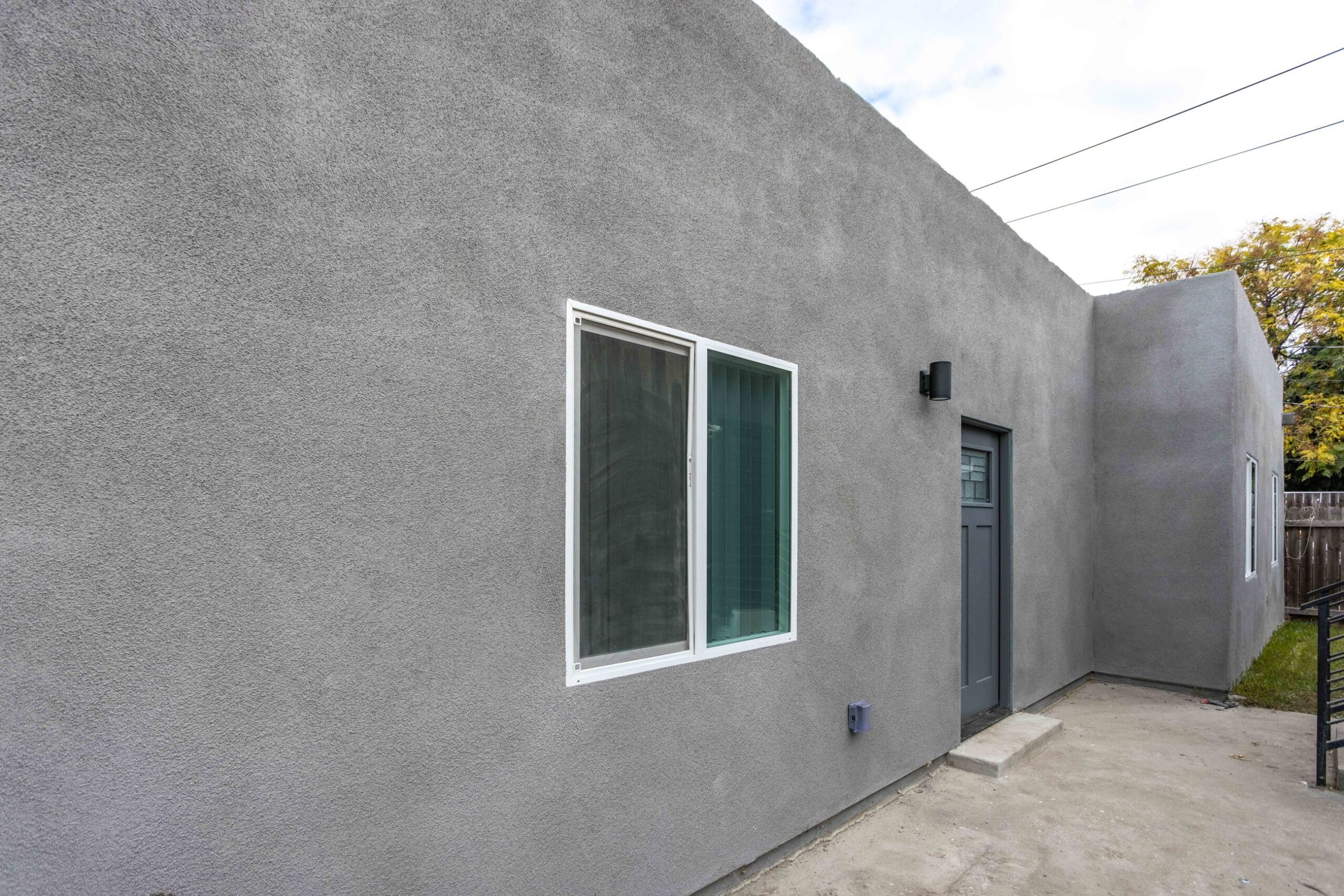
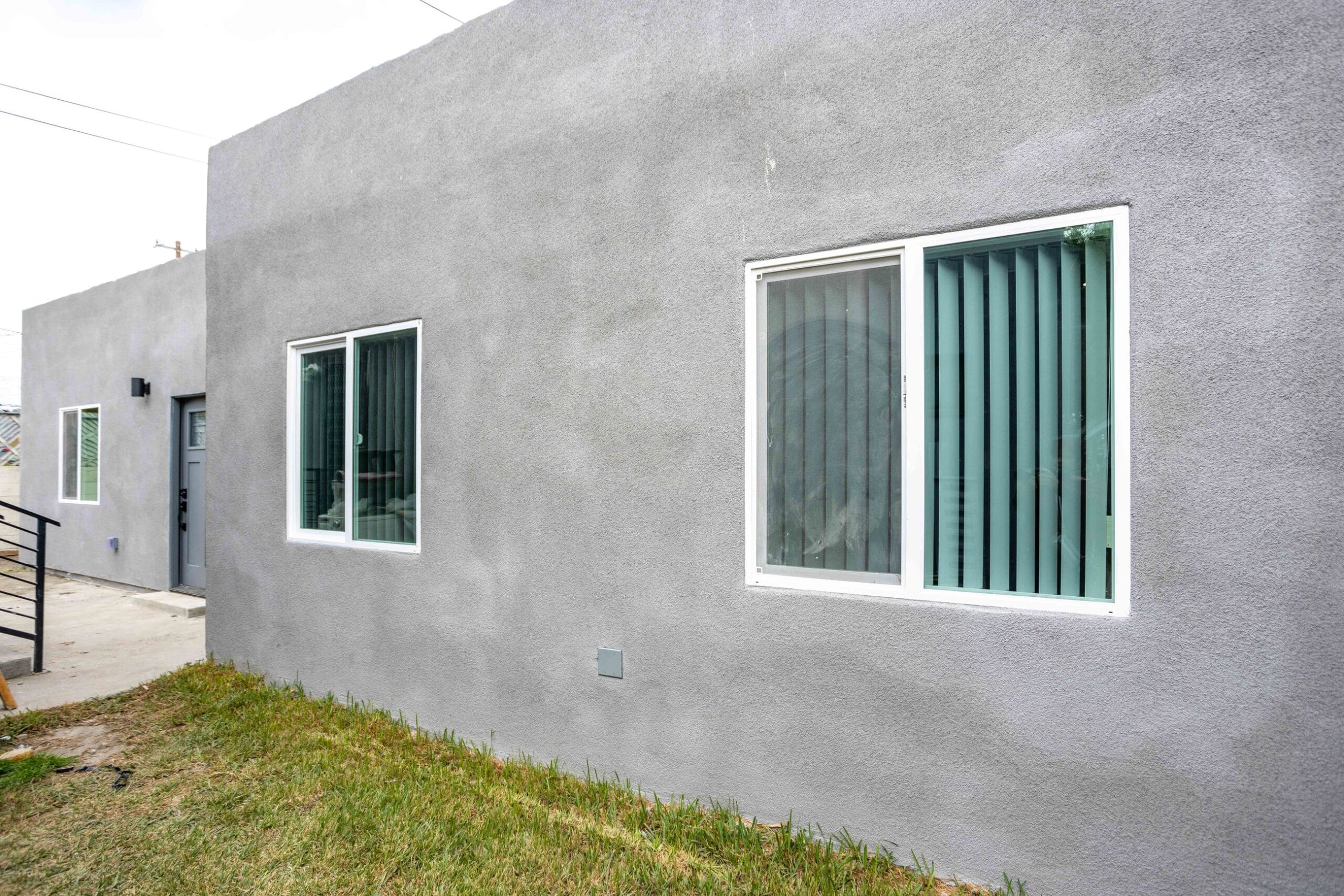
Side elevation of a converted garage, a sliding window and a second doorway added where the structure already sat inside its lot’s setback.
Step by step
The permit path for a garage conversion
Converting a garage changes a non-habitable structure into living space, which almost always means new walls, windows, wiring and often plumbing or air conditioning -- work the Florida Building Code requires a permit for (FBC s.105.1), regardless of city. The sequence below keeps the two issues above, zoning and parking, from surfacing as a surprise at the inspection stage.
Check the zoning district and dwelling-unit rules first, plan where the displaced parking goes, then apply for the building permit covering the structural, electrical, plumbing and mechanical scope, pass inspection, and the space counts as living area.
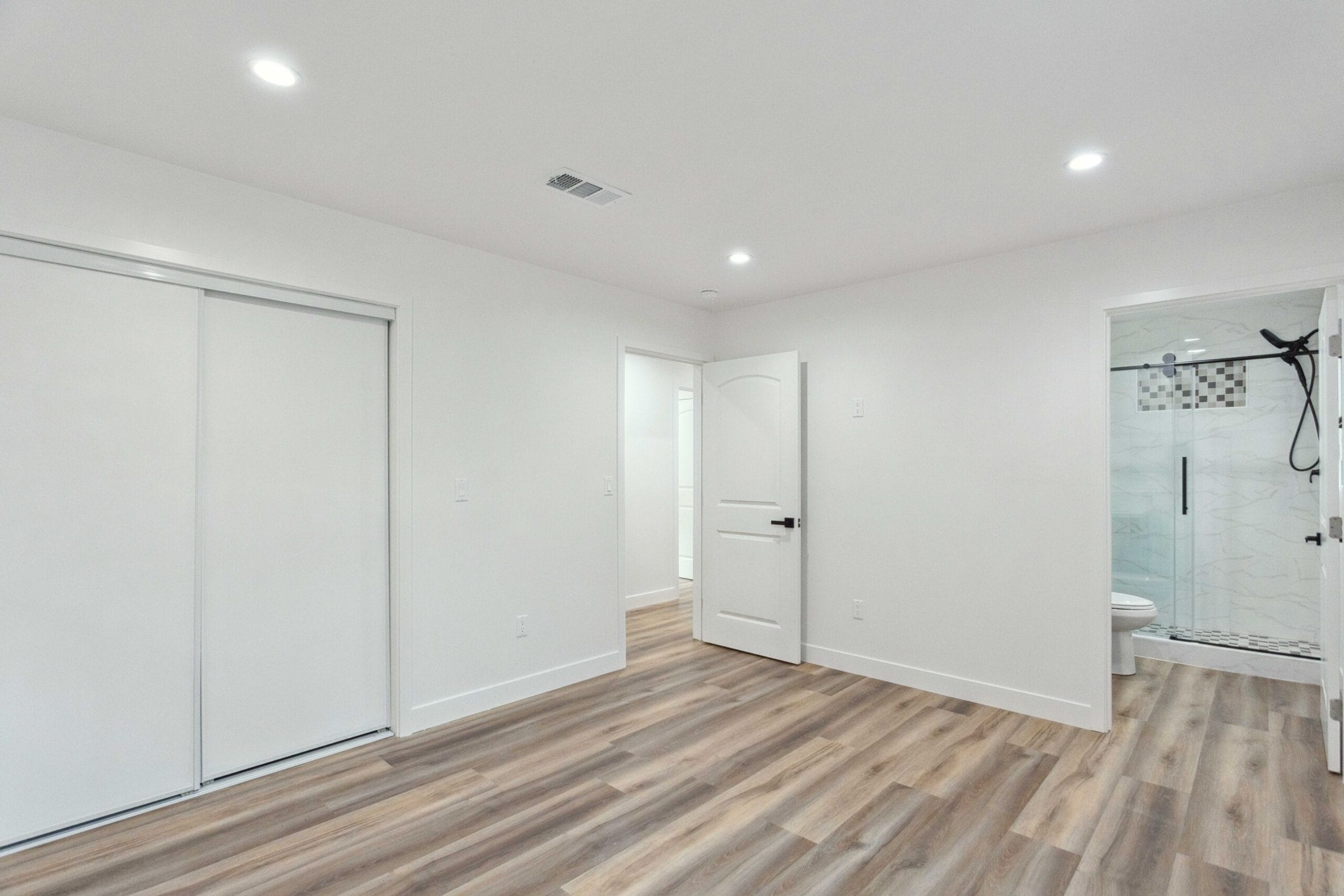
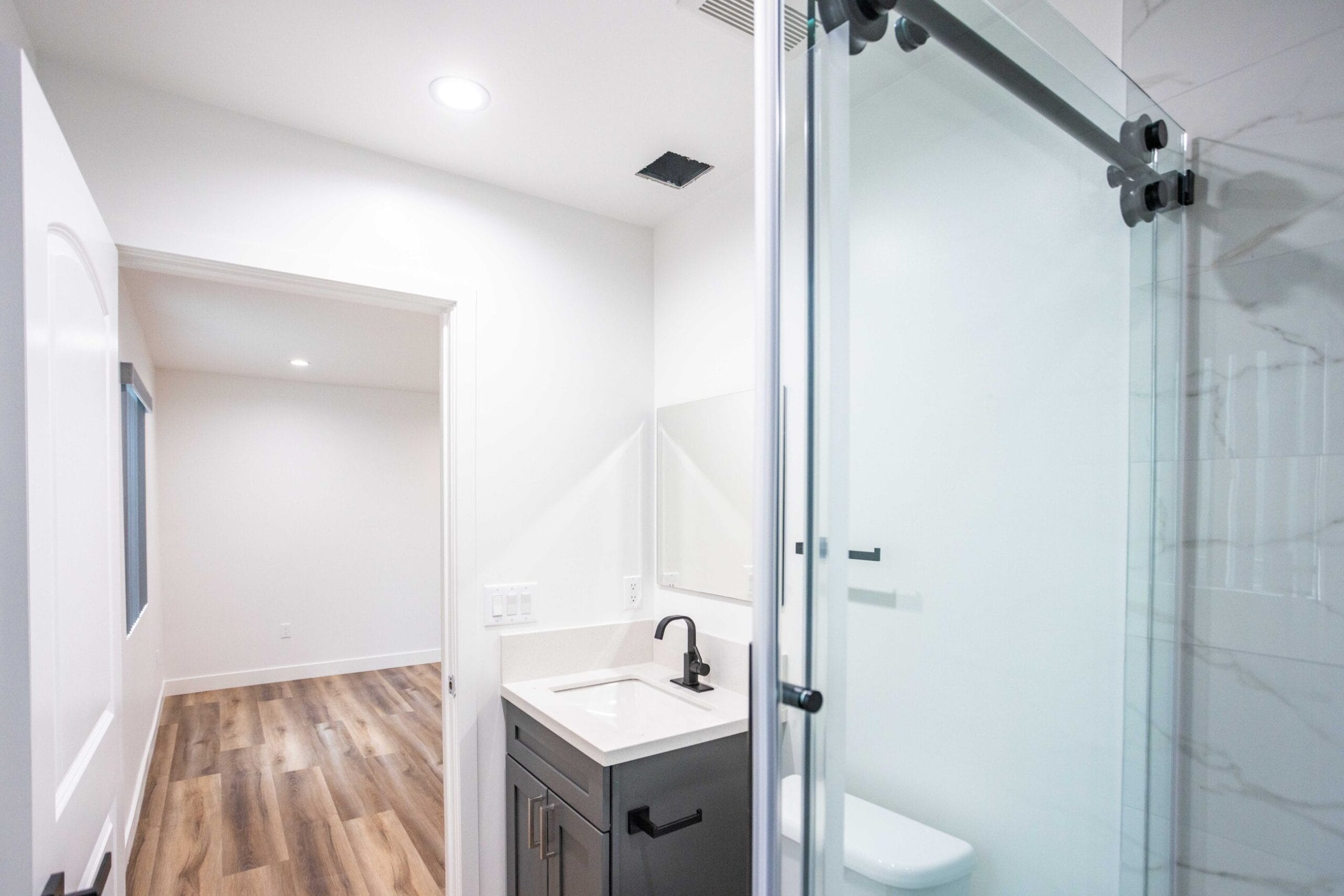
Finished interior of a converted garage: mirrored sliding closet doors, wood-look plank flooring and an open doorway through to the bathroom.Converted garage bathroom, looking past the vanity and glass shower to the adjoining room -- plumbing added as part of the same permit.
Interactive checklist
What to settle before you call a contractor
Check off what you already know. Anything left unchecked is a question for your city’s zoning or building department before a layout gets drawn.
0 of 6 done
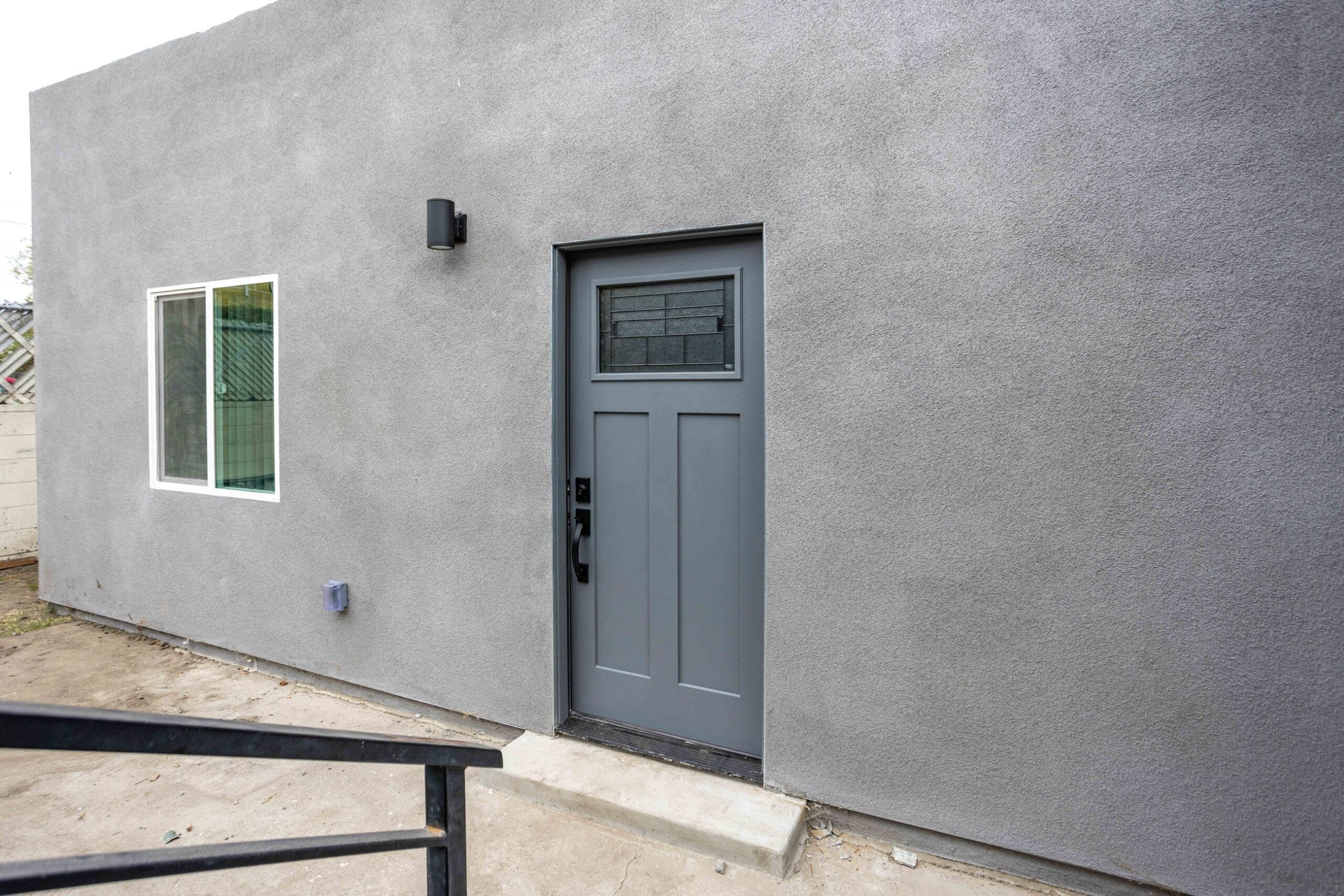
Entry door of a converted garage: a wall sconce, a black steel handrail and a poured concrete step where the garage door previously opened directly onto the driveway.
Our process
How this shapes an Elbaz garage conversion
For a garage conversion anywhere in Miami-Dade, Broward or Palm Beach County, we check the parcel’s zoning district and parking requirement before drawing a layout, so the permit application already accounts for both. If the goal is a separate accessory dwelling unit rather than extra living space for the main house, our ADU and garage-to-ADU conversion team walks through the dwelling-unit rules for your specific city.
Certified photographs of a real completed Elbaz Construction garage conversion -- exterior, interior and the driveway parking it preserved. Tap a photo to enlarge.
Asher was the best choice I have made. We love the outcome of the ADU . They showed up on time and did a great job, were friendly. No issues at all during the whole process. Very organized team . I would recommend them to everyone I know !
RRobert Bryan
”
Great experience! The team was professional, efficient, and delivered high-quality work on time. They communicated clearly throughout the project and exceeded our expectations. Highly recommend for any construction needs!
AAndrew
”
If you are planning to remodel your kitchen or bathroom or do any other construction project, call Sean from Elbaz Construction . He has a lot of experience and will recommend the best options/ suggestions to your project. He did high quality job !
KKameron Allison
”
Thank you Ashley ! We love the new bathrooms. Good with communication and very clear with explanations . I will definitely use them again in the future
AAndrew Tyupa
”
Asher has a lot of experience . We replaced our windows to energy efficient windows. He got down to business right away and did high quality work. His team is very professional! Thanks again
Jjessica berliner
”
I give them a five star rating not only for their excellent roofing skills and timelines, but also for their competitive pricing and the honesty and professionalism of the team !! We are very pleased with the outcome
ZZachary Gugliotta
Genuine Google reviews of Elbaz Construction, reproduced as written. They describe general work with us, not the specific topic of this article. Read all reviews on Google.
Questions
Quick answers on garage conversion rules
Rules vary by address and scope. For your property, call 754-236-0675.
Yes, in virtually every case. The Florida Building Code (s.105.1) requires a permit for the structural, electrical, plumbing and mechanical work a garage conversion almost always involves, regardless of which city the property is in.
In most cities, no -- not permanently. Cities such as Hollywood require any parking space a conversion deletes or makes unusable to be replaced elsewhere on the lot, and West Palm Beach requires required parking for small developments to stay on the same property.
There is no single Broward or Palm Beach County number. Each city divides its single-family areas into multiple zoning districts, and each district sets its own setback distances, so the parcel’s specific district and setback table has to be confirmed with the city.
Not automatically. Some cities, including Hollywood, only allow the conversion if the resulting space qualifies as an allowable dwelling unit under that city’s zoning code, and a garage slab below the required flood elevation generally cannot become living space as it is.
No. Each incorporated city writes its own zoning code, and unincorporated areas follow the county’s code instead -- Hollywood and West Palm Beach are used here as two real, citable examples of the pattern, not as a county-wide rule.
Thanks — that came through.
Your details are with the Elbaz Construction team and we will come back to you,
usually the same or next working day. If it is urgent, call (754) 236-0675.
General information about Hollywood and West Palm Beach zoning and the Florida Building Code as of November 2026, not legal advice. Every Broward and Palm Beach city sets its own code; confirm your parcel’s zoning district, parking requirement and setbacks with the local building department.
Converting a garage in Broward or Palm Beach County?
We confirm zoning, parking and setbacks before anything is designed
We check the parcel’s zoning district, parking requirement and permit scope together for garage conversions across Miami-Dade, Broward and Palm Beach.