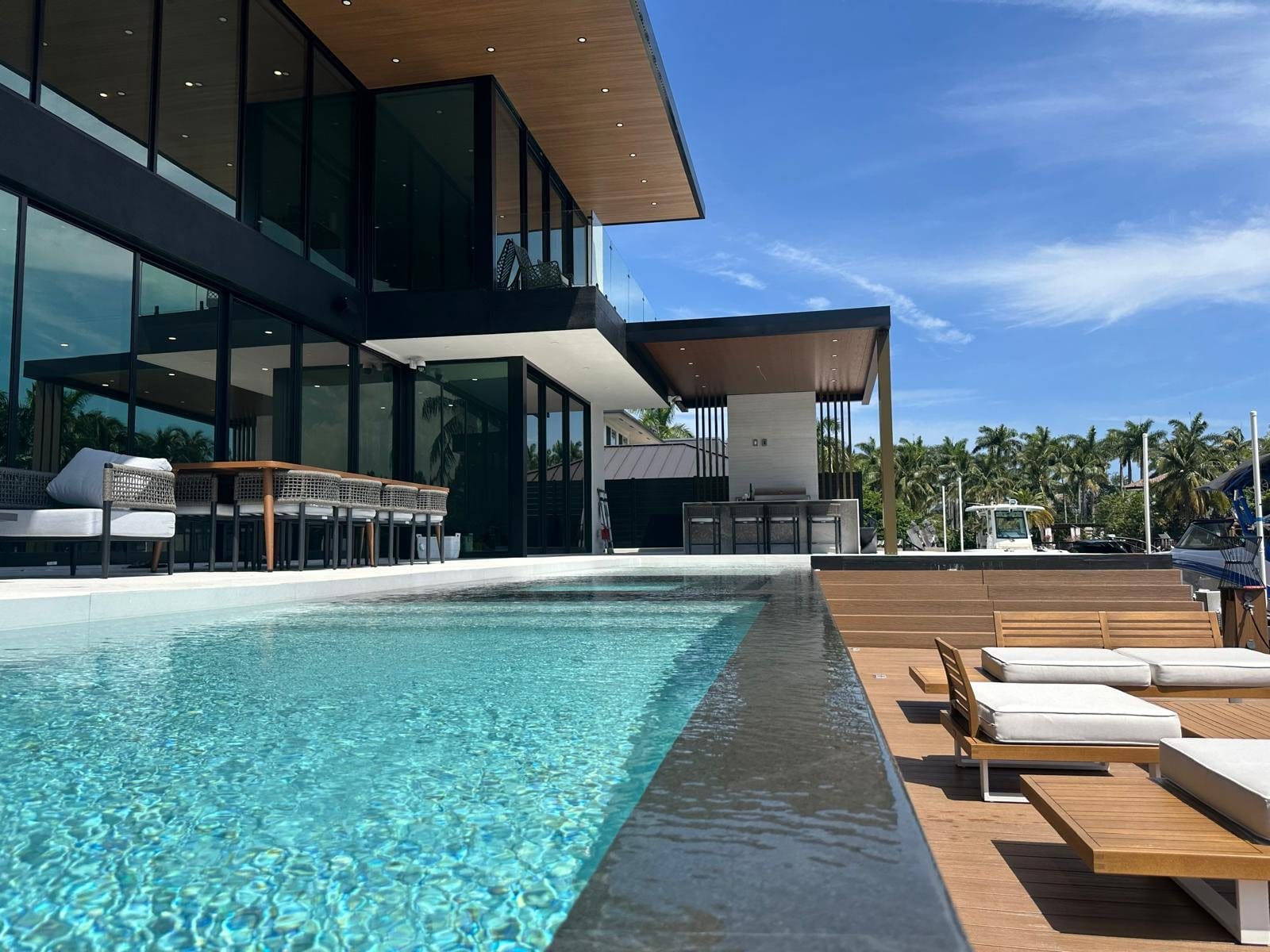
Canal-front pool deck with teak loungers below a two-storey glass residence and a timber-soffit covered terrace

Flood-zone remodeling guide · Miami-Dade · Broward · Palm Beach

The 50% Rule for South Florida Remodels and Additions

How FEMA’s substantial-improvement threshold is calculated, what it forces you to do, how additions are treated, and what Florida changed in 2025.

50%of structure value triggers it
BFE + 1 ftminimum floor height in Florida
2025look-back periods banned
By Elbaz ConstructionUpdated September 24, 202611 min readSources: FEMA · Florida Statutes · Florida Building Code

Flood-zone remodeling guide

The short answer

If your house is in a FEMA Special Flood Hazard Area and the cost of your remodel, addition or repair equals or exceeds 50% of the building’s market value (structure only, not land), it is a substantial improvement. The whole house must then meet current flood rules: in Florida, a lowest floor at least 1 ft above base flood elevation. Since June 26, 2025, Florida cities can no longer add up your permits over a multi-year look-back period.

Flood zones only

The rule applies in A and V zones on FEMA’s maps. In zone X it does not govern the project.

Cost vs value

Construction cost divided by the market value of the structure, land excluded.

Cross it, comply

Over 50%, every part of the house must meet current flood elevation rules.

2025 law change

Section 163.31795 bans cumulative look-back periods statewide.

Step 1

Does the 50% rule apply to your home?

The rule comes from the National Flood Insurance Program and applies to buildings in a Special Flood Hazard Area: the A zones (A, AE, AH, AO) and coastal V zones (V, VE) on FEMA’s Flood Insurance Rate Maps. Each participating community enforces it through its floodplain administrator, usually part of the building department.
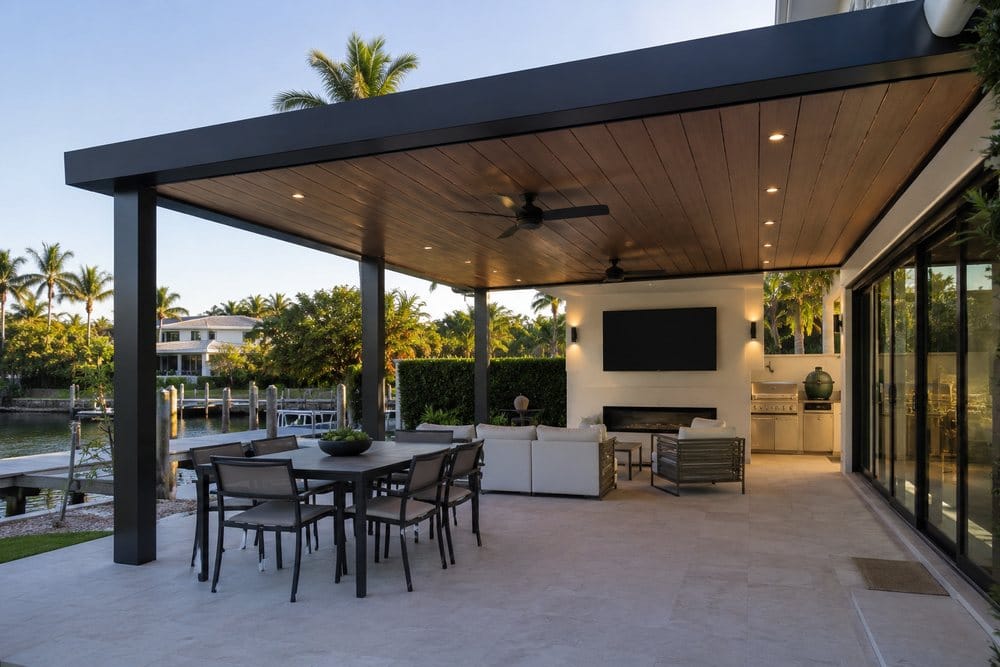
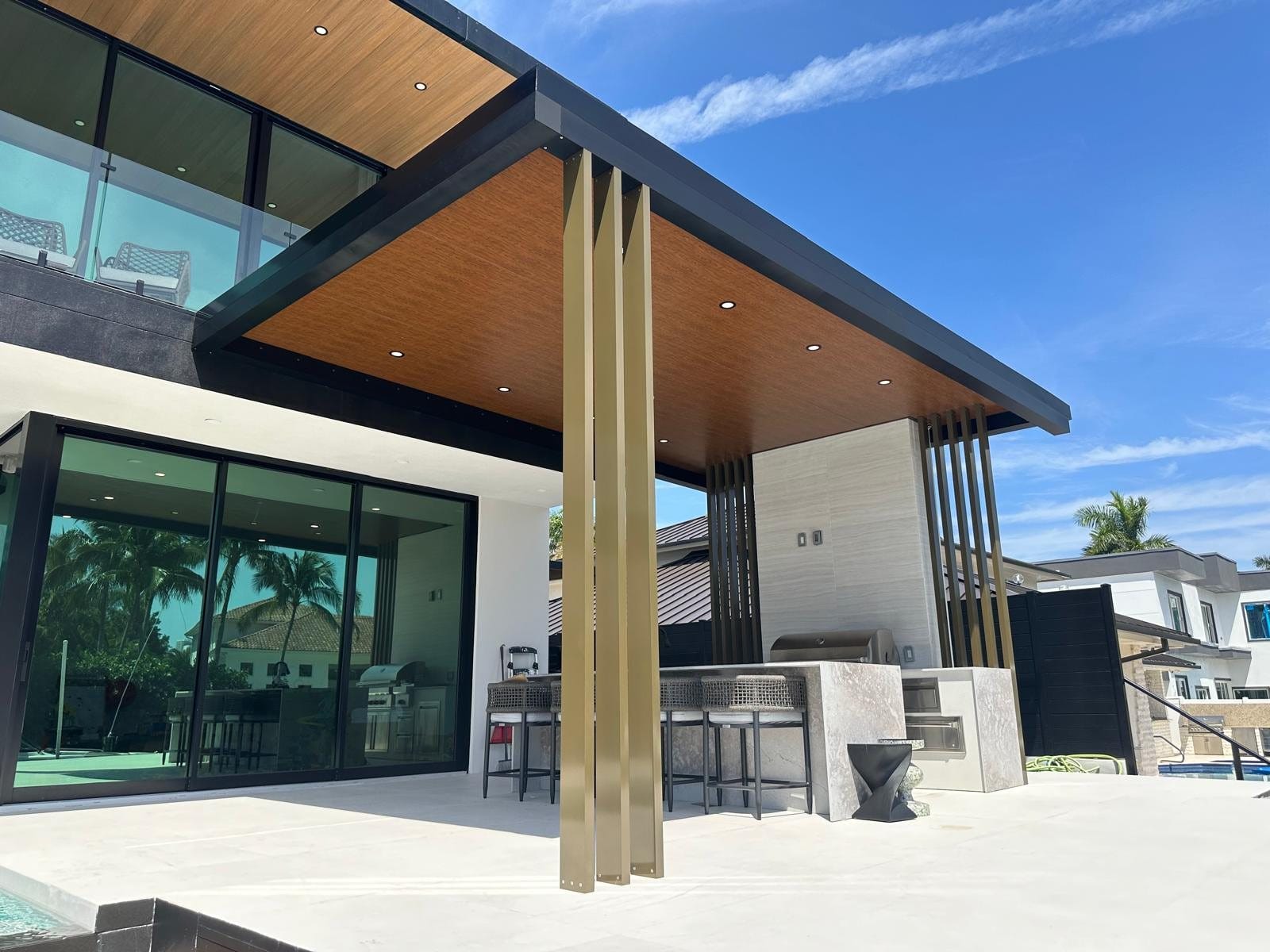
Dining set under a dark-framed canopy with a timber soffit and the canal beyond
A covered terrace on a canal lot, built by Elbaz Construction. Waterfront lots are among the properties most often mapped in flood zones; check your own address.

Step 2

How the 50% is calculated

The federal definition in 44 CFR 59.1 is short: any reconstruction, rehabilitation, addition or other improvement whose cost equals or exceeds 50 percent of the market value of the structure before work starts. Damage works the same way: if restoring a storm-damaged house would cost 50% or more of its pre-damage value, it is substantially damaged.

What counts toward the 50%

  • Materials and labor, including donated materials and owner or volunteer labor
  • Demolition, site preparation, management, overhead and profit
  • Structural work, windows, doors and roofing
  • Flooring, tile, fixtures, built-in cabinets, insulation
  • HVAC, plumbing, electrical, built-in appliances

What can be left out

  • Plans, surveys, permit and inspection fees
  • Clean-up and temporary stabilization
  • Pools, driveways, fences, landscaping, detached structures
  • Carpet over finished floors and plug-in appliances
  • Minimum work to fix code violations already cited

The lists come from FEMA’s desk reference for local officials, FEMA P-758, section 4.4. Market value covers the building only. FEMA accepts a professional appraisal (which it calls the most accurate), the assessed building value adjusted as the official specifies, actual cash value (replacement cost minus depreciation), or a qualified estimate by the official. In older South Florida neighborhoods, where the land carries most of the value, the structure’s value can be surprisingly low.

Interactive

Try the 50% calculator

Change any figure and the gauge updates. Items in the last group are shown for reference only: FEMA lets them be excluded, so they never move the needle.

Market value of the structure (land excluded)

Work that counts

Excluded (reference only)

Illustrative tool, not a determination. The floodplain administrator decides, using its own valuation method and your full cost breakdown.

50%
57%

$170,000 of $300,000

0%50% threshold100%

At 57%, this scope would likely be a substantial improvement if the house is in a FEMA flood zone.

Step 3

What happens if the project crosses 50%

FEMA’s owner guide (P-213) is plain: every aspect of the structure must be made compliant. That covers the lowest-floor elevation, foundation, enclosed areas below the floor, utilities and equipment, and flood-resistant materials. FEMA also warns that a non-compliant improved building can face flood insurance premiums more than three times higher, and coverage can be refused.

What compliant means once the 50% rule applies Cross-section of a house: the base flood elevation line, a second line one foot higher, and the lowest floor raised to at least that second line. GROUND BASE FLOOD ELEVATION (BFE) BFE + 1 FT: MINIMUM IN FLORIDA (FBC R322.2.1) LOWEST FLOOR FLOOR BELOW BFE SUBSTANTIAL IMPROVEMENT: THE WHOLE HOUSE MUST COMPLY
Illustration. Florida Building Code R322.2.1: in A and AE zones the lowest floor must be at or above BFE plus 1 ft, or the design flood elevation if higher. In V and coastal A zones the bottom of the lowest horizontal structural member must meet BFE plus 1 ft.

Some jurisdictions go further. In unincorporated Palm Beach County, ULDC Article 18 also requires the lowest floor to be at least 18 inches above the lowest adjacent road crown where there is no master drainage system, if that is higher.

Three paths once you are over

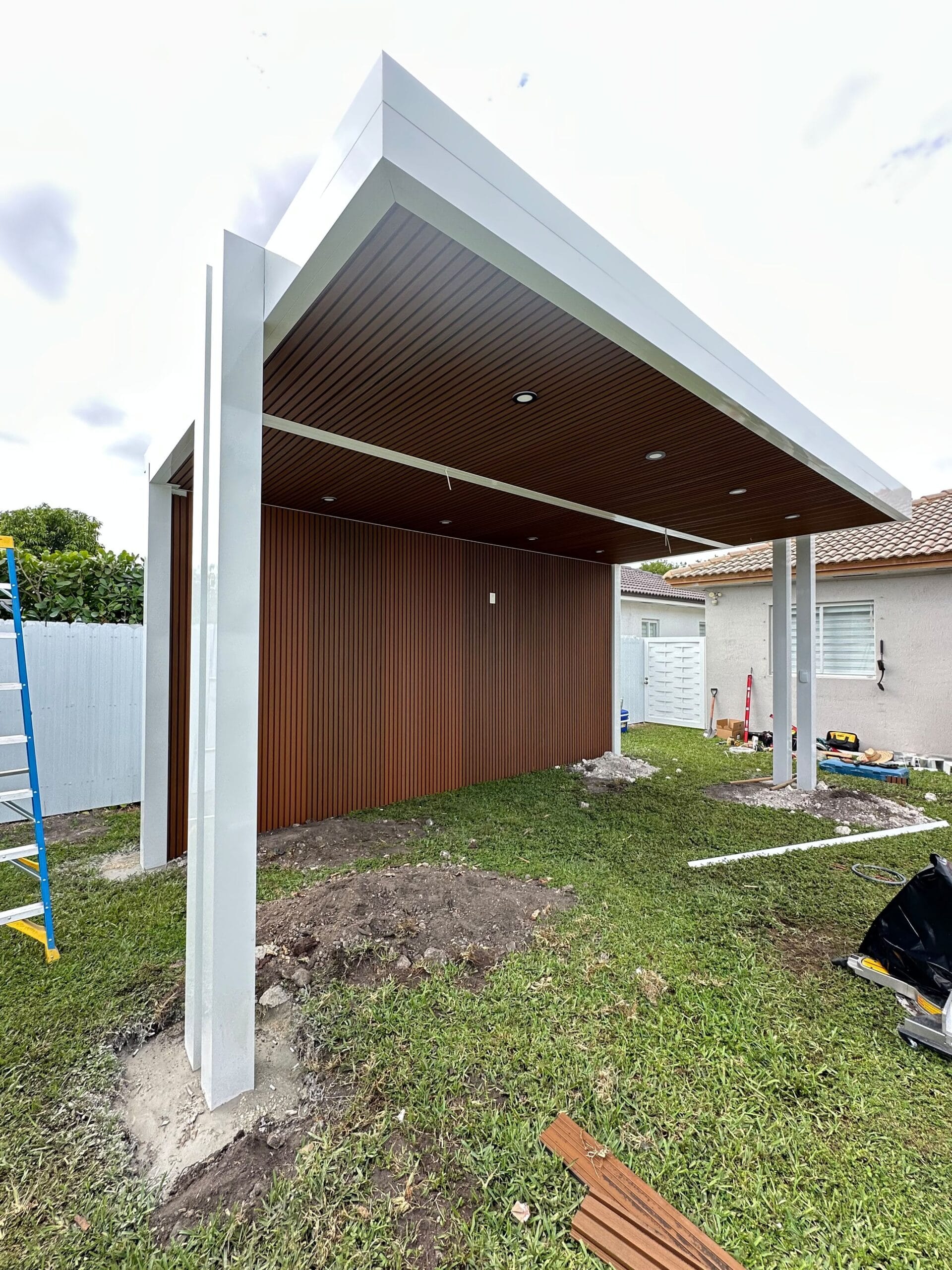
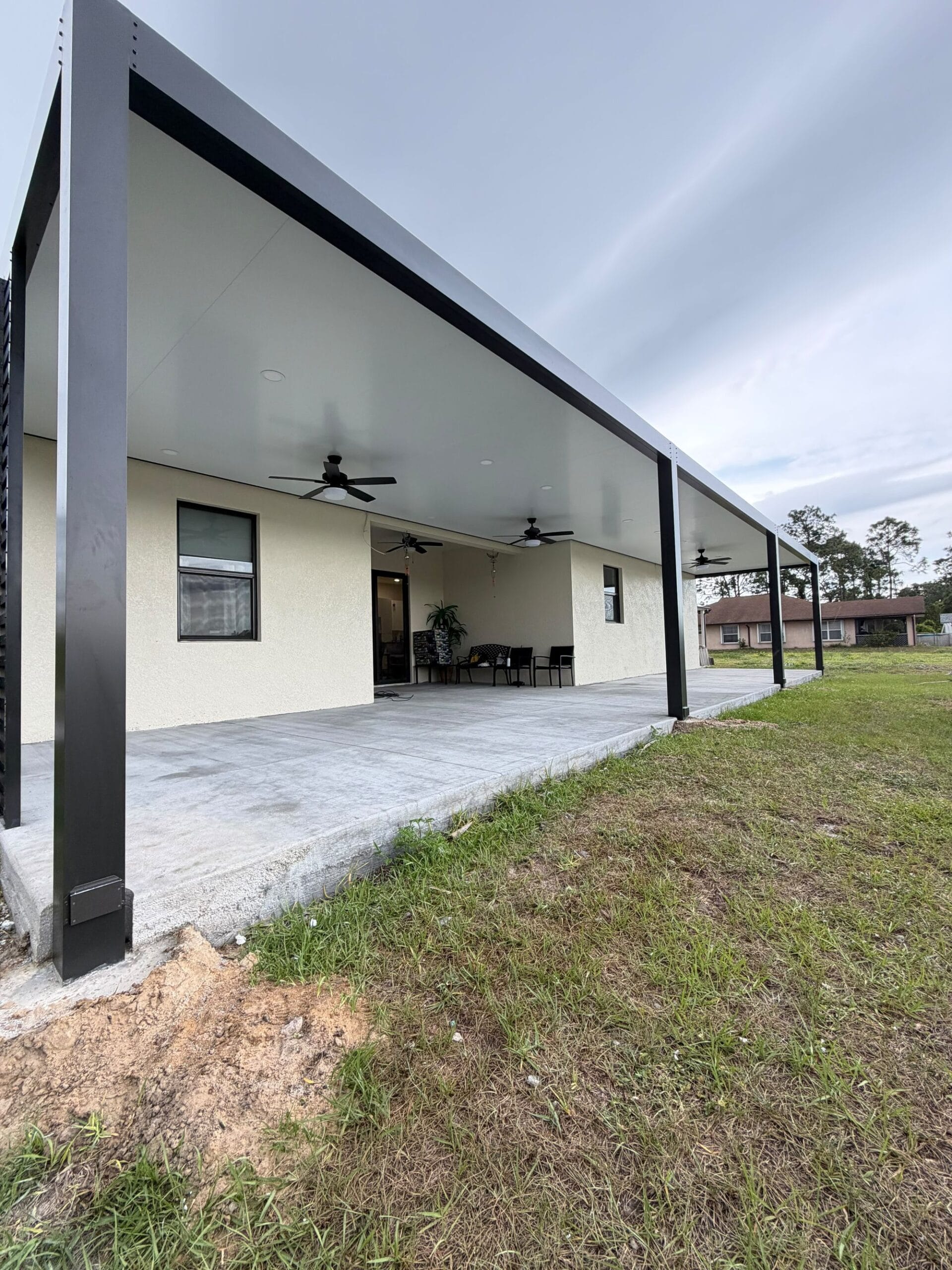
Long covered run with columns installed and the ground still openPath 1

Elevate the existing house

Raise the structure so the lowest floor meets the required elevation. Depends on the foundation and the lot.

Photo: columns and roof structure set on an Elbaz project
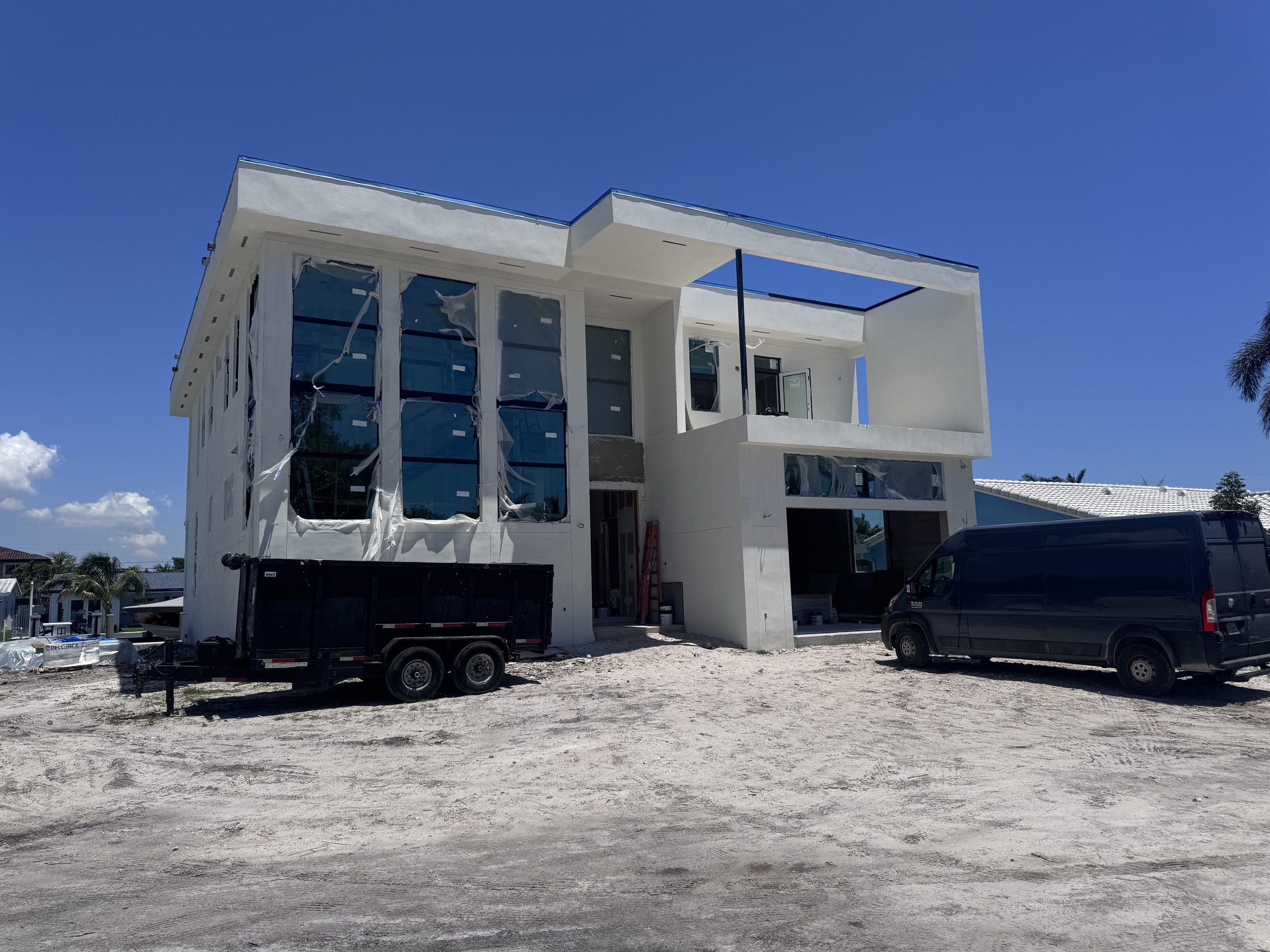
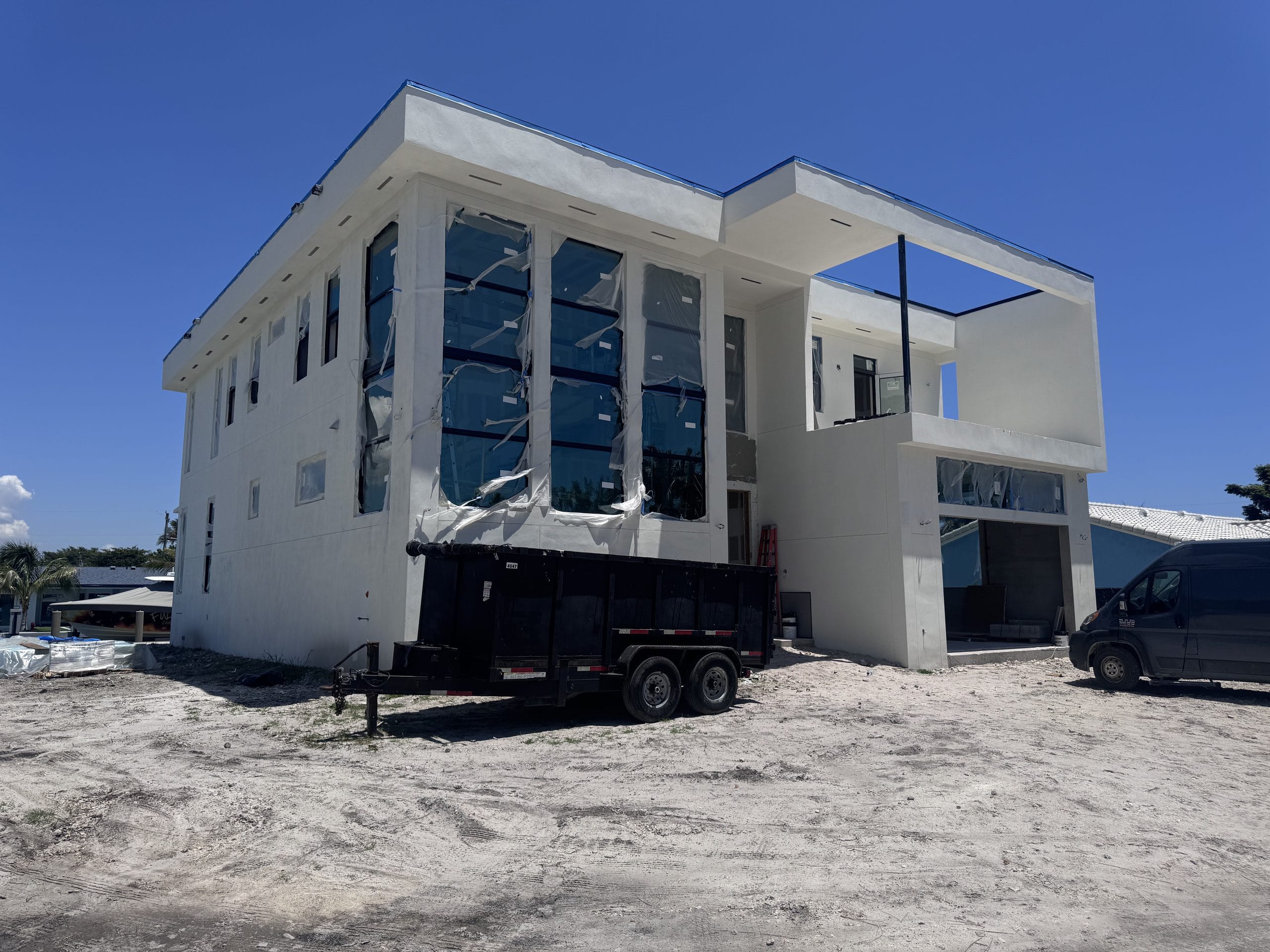
Three-quarter view of the custom home showing the flat roof, cantilevered upper terrace and floor-to-ceiling window wallPath 2

Rebuild to current rules

Demolish and build new at the required elevation. Often compared against elevating on older block homes.

Photo: a two-story custom home under construction by Elbaz
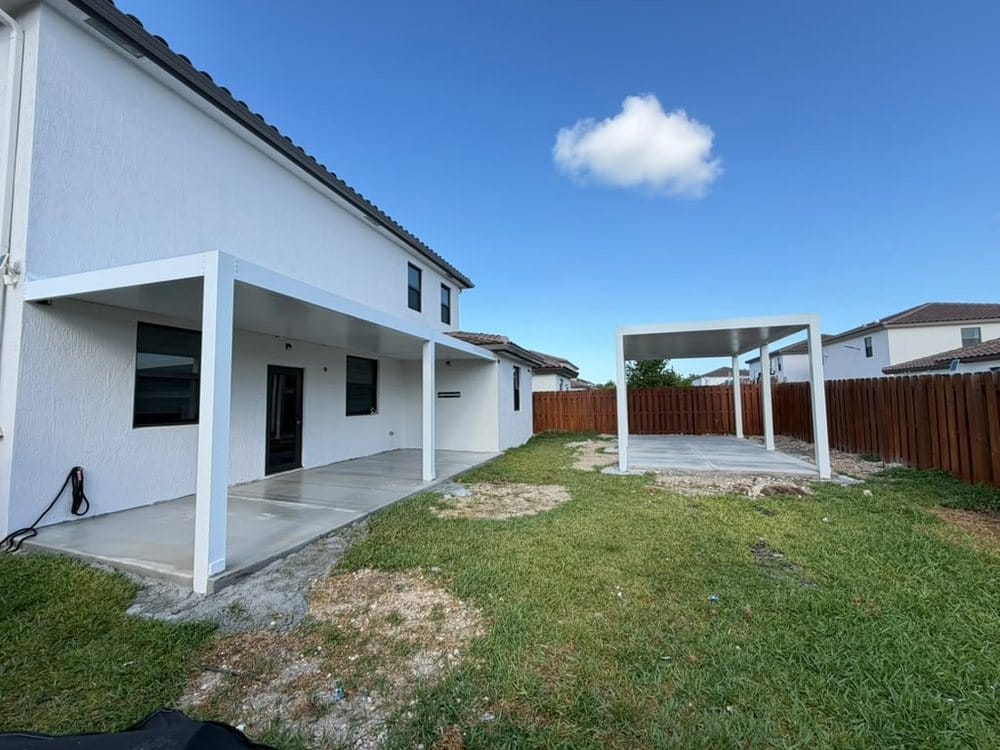
Rear elevation with the structure set and the slab poured, before deck finishesPath 3

Re-scope under 50%

Phase or reduce the work so the honest, complete cost stays under the threshold for this permit.

Photo: rear elevation with the structure set, slab poured

Step 4
Side, detached and second-story additions

Three kinds of addition and how the 50% rule treats them Left: a side addition structurally connected to the house. Middle: an addition joined only by a doorway, treated as not connected. Right: a second-story addition. SIDE ADDITION, CONNECTED House + addition comply if the combined work reaches 50% JOINED ONLY BY A DOORWAY Addition must always comply; house too if the total reaches 50% SECOND-STORY ADDITION Existing house must comply if the addition + other work reach 50%
Illustration of Florida Building Code, Existing Building, section 1103.5. FEMA treats a new doorway as the only change to the shared wall as “not structurally connected”.
  • Connected side addition: if the addition plus other work is a substantial improvement, both the addition and the house must comply. If not, the addition must not extend the house’s non-compliance.
  • Not structurally connected: the addition must always comply on its own; the house must also comply if the combined work reaches 50%.
  • Second story: if the addition plus other work is a substantial improvement, the existing building must be brought into compliance. A new story is usually a large share of a building’s value.
  • V zones: FEMA guidance says that when the work is a substantial improvement, both the house and the addition must be elevated.
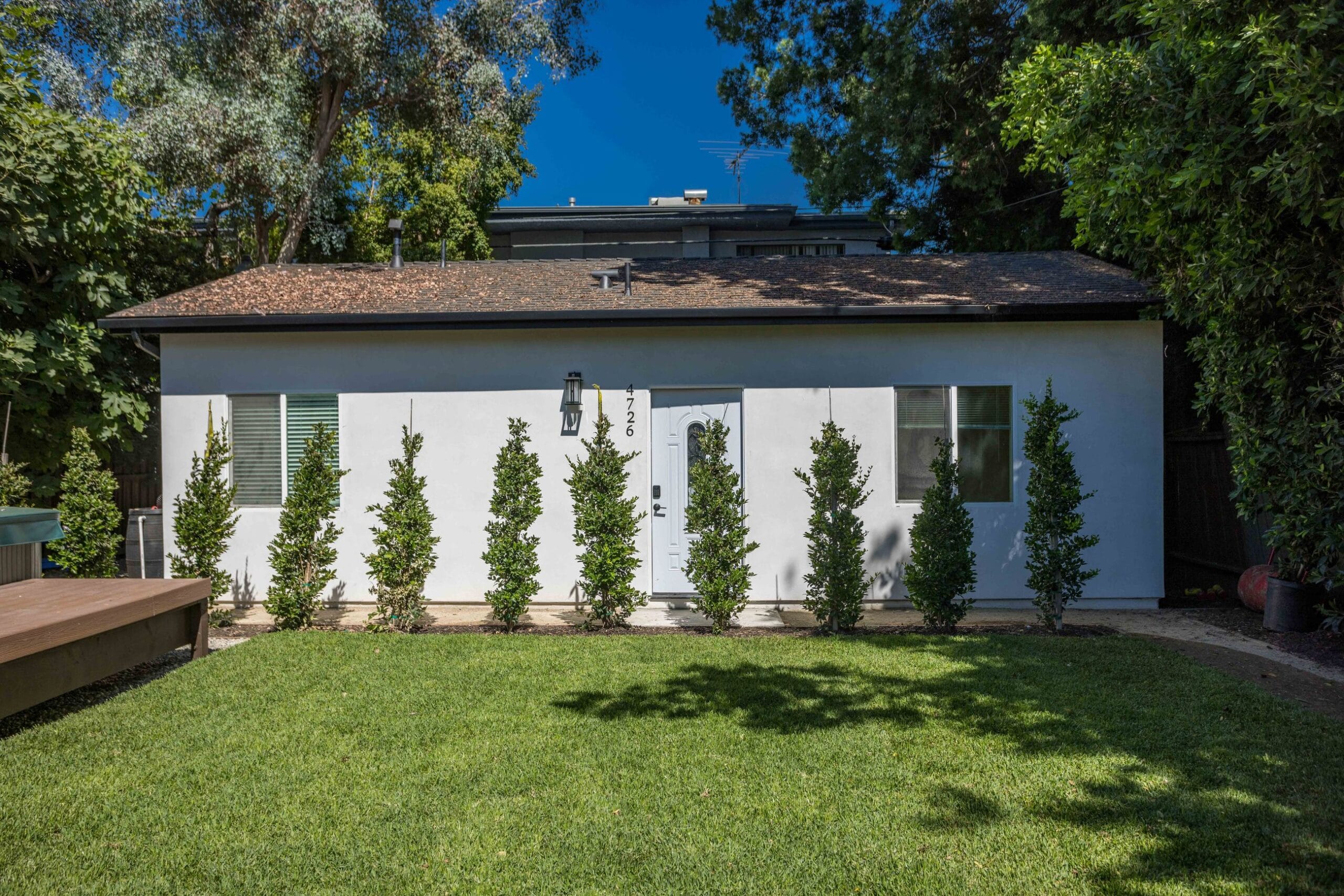
Detached converted unit with light stucco walls and a dark fascia, seen across a lawn behind a row of newly planted columnar shrubs
A detached converted unit behind a main house, completed by Elbaz Construction.
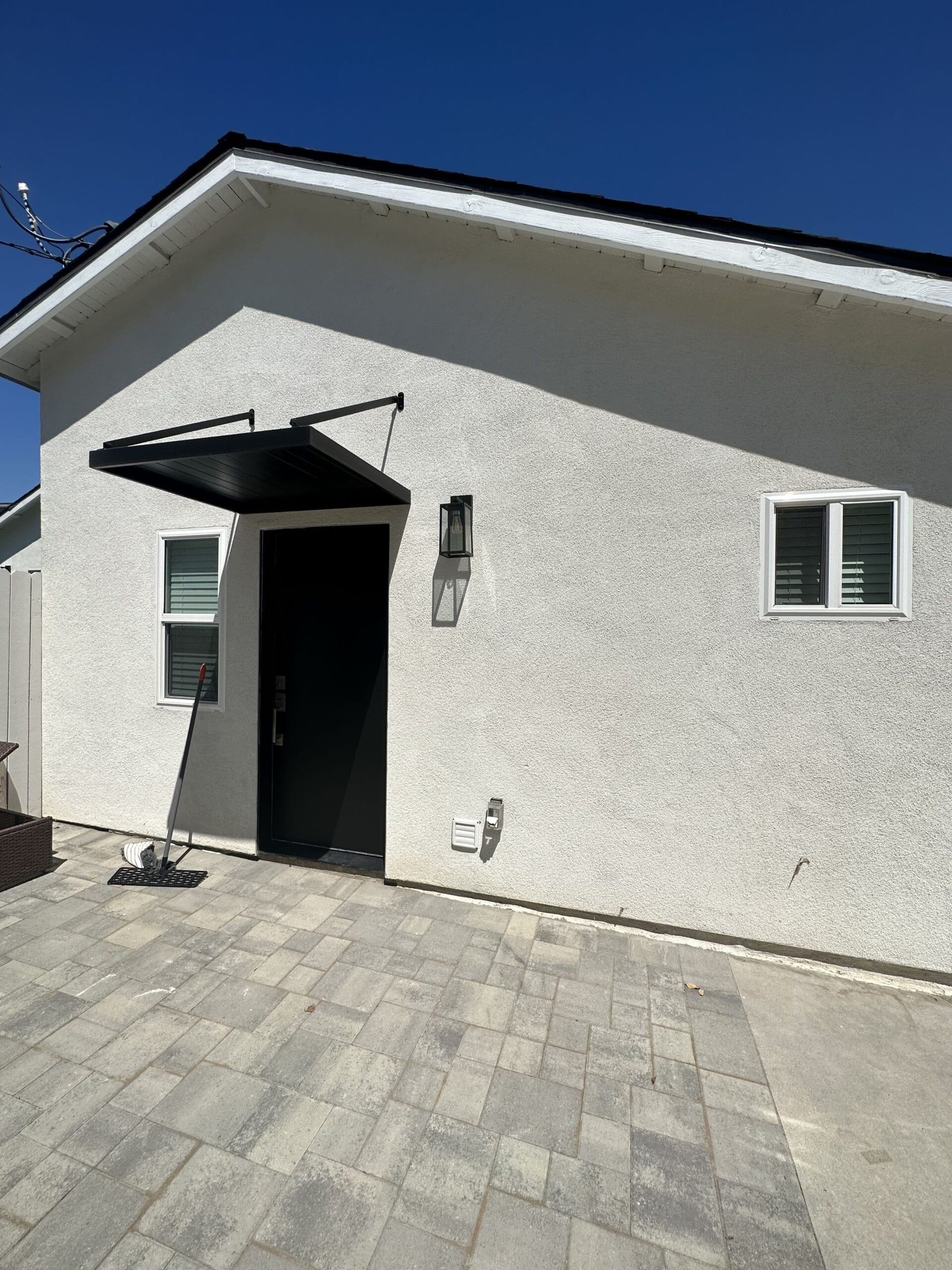
Single-storey stucco ADU with a black steel entry canopy, black door, shuttered window and a paver patio
A single-story studio ADU built by Elbaz Construction.

Step 5

What changed in Florida in 2025

  1. Nov 26, 2024State study of look-back periodsThe Office of Insurance Regulation’s final report inventories the cumulative periods written into local ordinances.
  2. Dec 20, 2024New Palm Beach County flood mapsUpdated FEMA maps take effect countywide.
  3. Jun 26, 2025SB 180 signed: look-backs bannedCreates section 163.31795: communities may not adopt or enforce a cumulative substantial improvement period.
  4. 2025Contracts off the permit checklistSection 553.79 amended: permits may not require the owner–builder contract or cost and profit statements.
  5. Jan 2026State model cost packetThe Division of Emergency Management publishes a model substantial-improvement cost packet for communities.
  6. Dec 31, 2026Florida Building Code, 9th editionThe next code edition takes effect statewide.
“A local government that is participating in the National Flood Insurance Program may not adopt or enforce an ordinance for substantial improvements or repairs to a structure which includes a cumulative substantial improvement period.”Section 163.31795, Florida Statutes

One source of confusion: SB 180 also mentions a 75% threshold. That provision (section 553.902) belongs to the energy code’s definition of a renovated building after a declared disaster. It does not change the 50% flood rule.

Interactive checklist

Before you commit to a design

0 of 6 done

Our process

How this shapes an Elbaz project

For whole-home renovations, home additions and second-story additions, we treat the flood zone and the 50% calculation as design inputs, not a surprise at plan review. We coordinate the structural engineering and permitting for our projects, and our permit guide explains how the three counties differ. County specifics: Miami-Dade, Broward, Palm Beach.

If you are weighing a large renovation or an addition on a lot in a flood zone, talk to us before the design is fixed: that is when the numbers are easiest to change.

Our work

Structure, additions and waterfront work

Real Elbaz Construction projects. Photos show the work only; none is presented as being in a particular city or flood zone. Tap a photo to enlarge.

Google reviews

What clients said on Google.

4.8348 Google reviews (checked Sep 2026)

Asher was the best choice I have made. We love the outcome of the ADU . They showed up on time and did a great job, were friendly. No issues at all during the whole process. Very organized team . I would recommend them to everyone I know !

Robert Bryan

Great experience! The team was professional, efficient, and delivered high-quality work on time. They communicated clearly throughout the project and exceeded our expectations. Highly recommend for any construction needs!

Andrew

If you are planning to remodel your kitchen or bathroom or do any other construction project, call Sean from Elbaz Construction . He has a lot of experience and will recommend the best options/ suggestions to your project. He did high quality job !

Kameron Allison

Thank you Ashley ! We love the new bathrooms. Good with communication and very clear with explanations . I will definitely use them again in the future

Andrew Tyupa

Asher has a lot of experience . We replaced our windows to energy efficient windows. He got down to business right away and did high quality work. His team is very professional! Thanks again

jessica berliner

I give them a five star rating not only for their excellent roofing skills and timelines, but also for their competitive pricing and the honesty and professionalism of the team !! We are very pleased with the outcome

Zachary Gugliotta

Genuine Google reviews of Elbaz Construction, reproduced as written. They describe general work with us, not the specific topic of this article. Read all reviews on Google.

Questions

Quick answers on the 50% rule

Rules vary by address and scope. For your property, call 754-236-0675.

No. It governs buildings in FEMA Special Flood Hazard Areas (A and V zones). In zone X the federal 50% rule does not apply, though your city’s other code requirements still do.

No. FEMA P-758 lists plans, specifications, surveys, and permit and inspection fees among the costs that can be excluded.

No. Outside improvements, including pools, driveways, fences, landscaping and detached accessory structures, can be excluded from the house’s calculation.

Not since June 26, 2025. Section 163.31795, Florida Statutes, bars communities in the flood insurance program from adopting or enforcing a cumulative substantial improvement period. Some city web pages have not been updated.

The federal definition excludes alterations of a designated historic structure as long as the work does not end its designation. Whether a house qualifies is decided locally; Coral Gables and Miami Beach, for example, run their own historic preservation boards.

Preferred contact method

We use your details only to respond to this enquiry. No lists, no resale.

Thanks — that came through.

Your details are with the Elbaz Construction team and we will come back to you, usually the same or next working day. If it is urgent, call (754) 236-0675.

Planning a remodel or addition?

Get the numbers right before the design is fixed

We scope whole-home renovations, additions and new construction across Miami-Dade, Broward and Palm Beach with the flood zone and the 50% test in mind from the first visit.