Frame 01OpeningOwner-builder permit assistance

Chapter 01 — What you are actually taking on

You become the contractor.

Legally, financially, and on site.

Florida law lets a property owner act as their own contractor on their own home under a specific, narrow exemption — Florida Statute 489.103(7). It is a real route and people use it successfully. But taking it means personally assuming full legal and financial responsibility for the construction, not simply saving a general contractor’s fee.

It is also one of the more misunderstood corners of Florida permitting law, and one that gets misused. There is a well-documented pattern in which an unlicensed individual asks a homeowner to pull an owner-builder permit so that person can perform licensed work without holding a licence. The homeowner carries the liability; the other party carries none.

We support genuinely qualifying owner-builders with the parts of the process that do not require you to give up your legal role — eligibility confirmation, document preparation and construction document assembly — while being direct about what the exemption requires and where it is abused. If you do not qualify, we would rather tell you that early than help you sign a disclosure you should not sign.
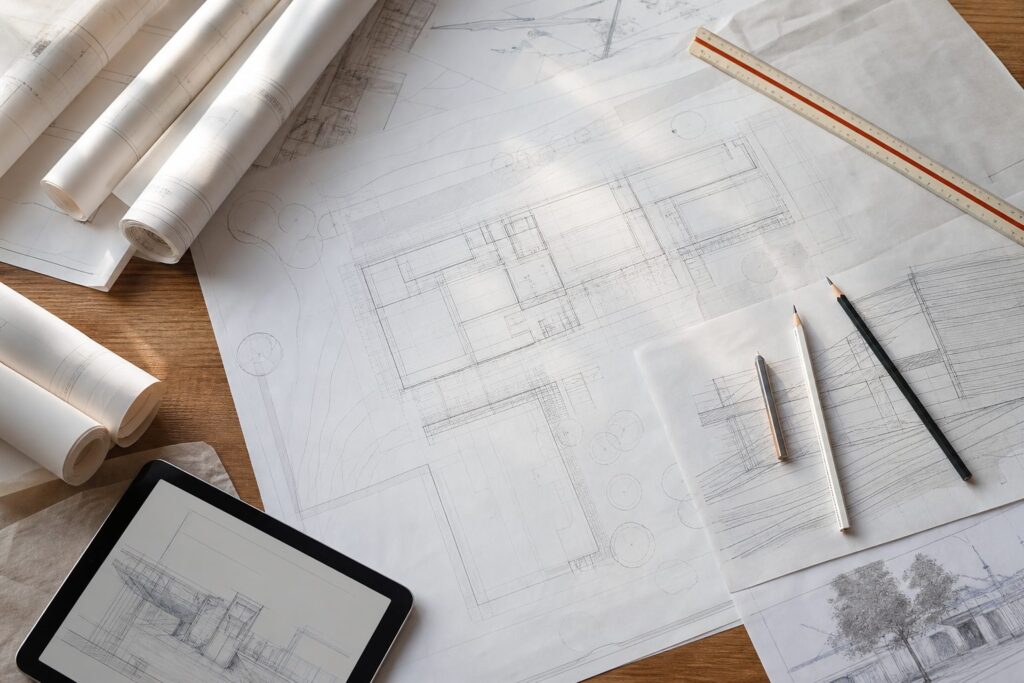
Illustration of a construction document set laid out on a desk with a scale rule and drawing tools
Construction document setScale and measurementOwner signs in personDisclosure is notarisedPlans support the application
Frame 01 · illustrativeThis is an illustrative reference image, not a photograph of Elbaz Construction work. Permitting is a document-and-process service and does not produce project photography, so every image on this page is illustrative.
  • Construction document setvisible in this frame
  • Scale and measurementvisible in this frame
  • Owner signs in personvisible in this frame
  • Disclosure is notarisedvisible in this frame
  • Plans support the applicationvisible in this frame
Image type
Illustrative reference, not an Elbaz project
Why
Permitting is a document service, not photographed work
Shown
A construction document set
489.103(7)

The statute

The owner-builder exemption in Florida law. It covers building or improving a one- or two-family residence or farm outbuilding intended for the owner’s own occupancy — not for sale or lease.

$75,000

Commercial ceiling

The same exemption covers owner-occupied commercial buildings only up to $75,000 in construction cost, under the same personal-supervision conditions.

1 YEAR

The sale trap

Sell or lease within one year of completing owner-built work and the law presumes it was built for sale or lease, which retroactively breaches the exemption.

Frame 02ScopeWhat is included

Chapter 02 — What owner-builder assistance covers

You hold the permit. We do the paperwork.

Eligibility, drawings, submission, inspections

Scene 01Eligibility
Illustration of a table set for a project consultation with a folded drawing set and notepad

Do you actually qualify?

The exemption applies to a one- or two-family residence or farm outbuilding intended for your own occupancy, and to owner-occupied commercial buildings up to $75,000. It requires you to personally provide direct on-site supervision of any work not done by licensed contractors. It is not a general licence to build for others or to build speculatively.

If the answer is no, we say so before you sign anything.

Scene 02Disclosure
Illustration of a single official document on a desk beside a notary embosser and pen

The statement you sign in person

An owner-builder completes and signs a notarised Owner-Builder Disclosure Statement and appears in person at the building department to sign the permit application. In most jurisdictions it cannot be handled by mail or through a representative.

If someone offers to sign it for you, that is the warning sign.

Scene 03Documents
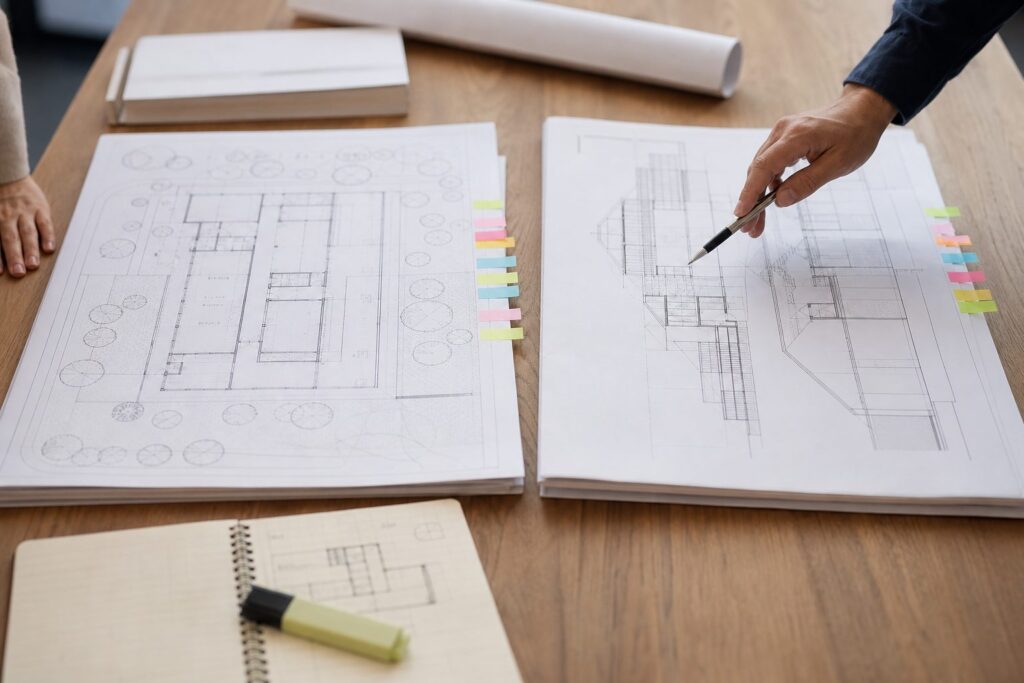
Illustration of two drawing sets side by side during plan review, with tabs marking pages for comment

Construction documents that pass review

The application needs a coherent document set. We help assemble and prepare it — drawings, product approvals and supporting information — so the submission is complete, because incomplete submissions are the main reason owner-builder applications stall.

Most delays are document problems, not decision problems.

Scene 04Responsibility
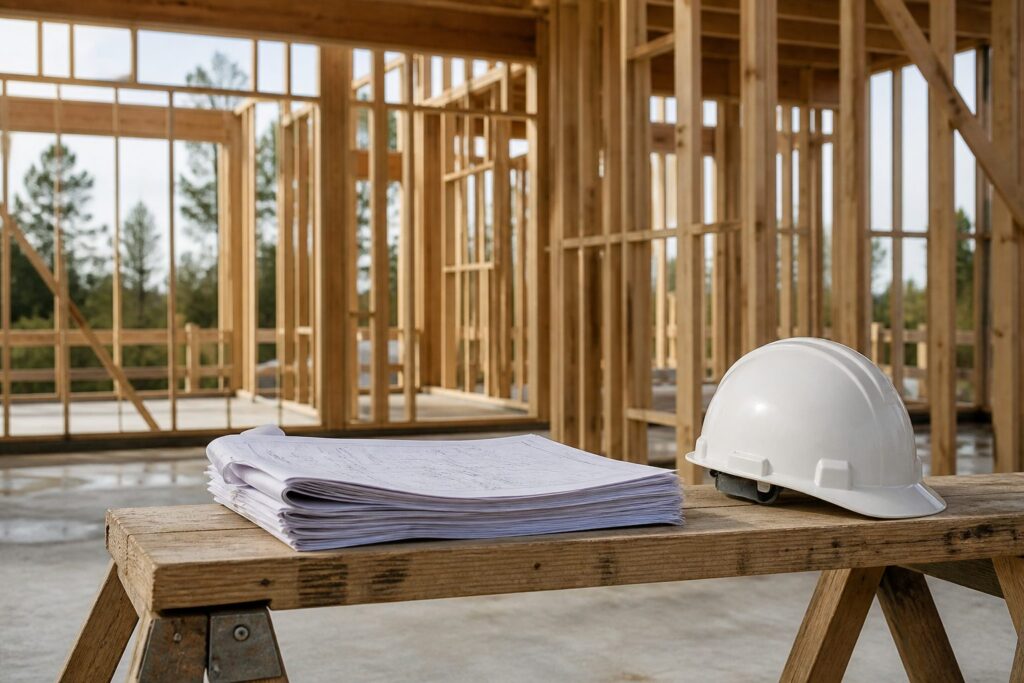
Illustration of a drawing set and hard hat on a sawhorse in front of a framed house under construction

Supervision is not a formality

The exemption is conditioned on you personally supervising work not performed by licensed contractors. That means being present and directing it — not delegating that role to somebody else and signing the paperwork.

The supervision requirement is the whole basis of the exemption.

Scene 04 is an illustrative diagram. Permitting does not photograph well.

Not sure whether you qualify as an owner-builder? That is the first thing we check.

Frame 03Reference sequenceIllustrative · no project photography

Chapter 03 — Application to closeout

How the process runs.

Illustrative reference sequence

Illustrative reference images

These are illustrative reference images, not photographs of Elbaz Construction work. Permitting produces documents and inspections rather than photogenic projects, and we would rather illustrate it plainly than dress it up. The process they describe is real. Use the arrows, the ticks or the arrow keys.

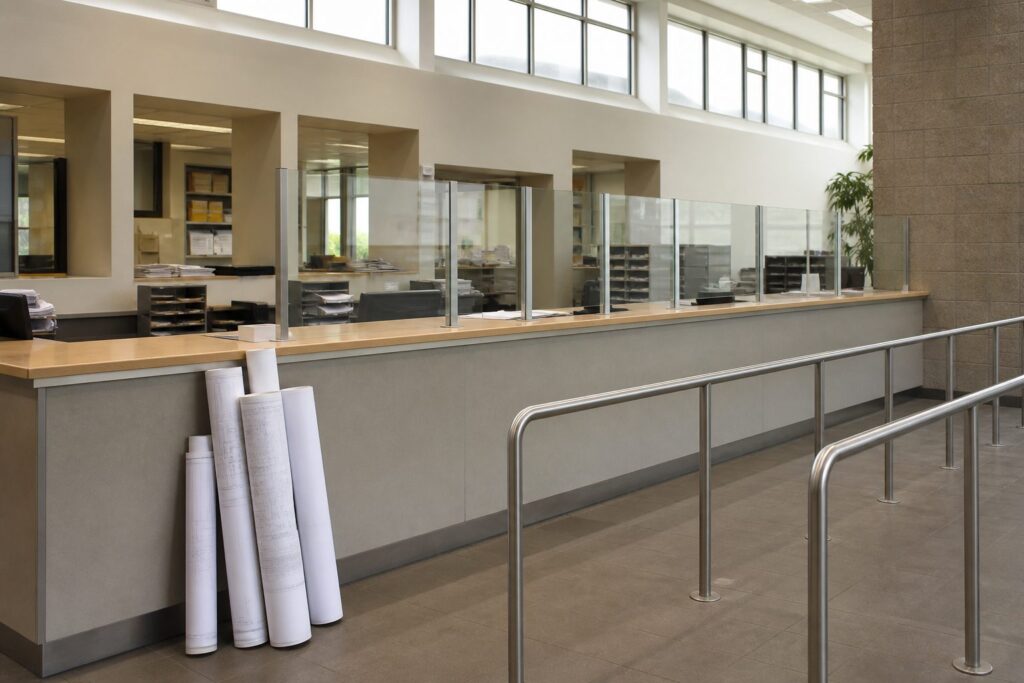
Illustration of a municipal permitting counter with drawing tubes resting against it
01 · In person, at the counter

01 / 05

01 · In person, at the counter

The owner-builder signs the permit application in person at the building department. That requirement exists precisely so the person taking on the liability is the person in the room, and in most jurisdictions there is no way around it.

02 · Plan review

The submitted set is reviewed and comments come back. Responding to comments is the stage that most often stalls an owner-builder application, because it needs someone who can read the comment and produce the document that answers it.

03 · Rough-in inspections

Framing, electrical, plumbing and mechanical are inspected before anything is closed up. Each inspection gates the next stage of work, so failing one does not just cost a revisit — it stops the trade behind it.

04 · On site, supervising

The exemption is conditioned on the owner personally supervising work not performed by licensed contractors. Inspections are scheduled around the work rather than the other way round.

05 · Final and certificate

Final inspection and, on new construction, a certificate of occupancy. Until that is issued the work is not signed off, and an unclosed permit follows the property rather than the person.

Want to talk the process through before you commit to it? Call us.

Frame 04The process, readIllustrative, and labelled as such

Chapter 04 — Reading the process

What this actually involves.

Illustrative, and labelled as such

Why these are illustrations

Permitting assistance is a document-and-process service. There is no completed building to photograph that would honestly represent it, so rather than borrow construction photography and let it imply something else, this page illustrates the process and says so.

The disclosure is the moment

Signing the notarised Owner-Builder Disclosure Statement is when the responsibility transfers. It states in plain terms that you are legally and financially responsible for the construction, that the work must comply with the Florida Building Code, and that you may not hire an unlicensed person to act as your contractor or to supervise work requiring a licence.

Documents are where it stalls

Most owner-builder applications do not fail on principle; they stall because the submission is incomplete or a review comment goes unanswered. That is the part we can help with without touching your legal role.

Inspections are sequential

Rough-in inspections gate the stages behind them. On an owner-built project there is no contractor absorbing that scheduling risk, so the co-ordination burden sits with the owner.

The exemption has an expiry of sorts

Selling or leasing within one year of completion creates a legal presumption that the work was built for sale or lease, which retroactively breaches the exemption. That can mean permit revocation, fines up to $10,000, and complications during due diligence on the sale itself.
What is not claimed

No image on this page is a photograph of an Elbaz Construction project. Nothing here is legal advice, and none of it is a determination about your property or your eligibility.

Every application starts with whether you are eligible to sign it at all.

Frame 05MaterialsIllustrative · not project photography

Chapter 05 — Documents, process and risk

What a submission is actually made of.

And what each part exposes you to

Illustrative diagrams

Document

Owner-Builder Disclosure Statement

A notarised statement, signed in person, setting out that you are legally and financially responsible for the construction, that the work must comply with the Florida Building Code, and that you may not hire an unlicensed person to act as your contractor.

UpkeepKeep your copy with the property records; it matters at sale.

Document

Construction documents

Drawings and supporting information sufficient for plan review, including product approvals for exterior assemblies where the scope requires them.

UpkeepKeep the approved set; it is the reference for every inspection.

Process

Permit application and fees

The application itself, signed in person by the owner, together with the fees and any jurisdiction-specific forms. Requirements vary by municipality.

UpkeepTrack the permit number; you will need it at every stage.

Process

Inspection schedule

A sequence of inspections that gate the stages of work, from foundation and rough-in through to final. Each is booked by the permit holder.

UpkeepBook early; inspection slots are the most common scheduling constraint.

Process

Licensed trades under an owner-builder permit

Owners commonly engage licensed contractors for specific trades. Those trades pull their own permits under their own licences where required — which is what licensure means.

UpkeepVerify licences yourself, and keep the records.

Risk

The one-year presumption

Selling or leasing within a year of completing owner-built work creates the legal presumption that it was built for sale or lease, breaching the exemption retroactively. Consequences can include permit revocation and fines up to $10,000.

UpkeepIf a sale is even possible within a year, take advice before you start.

These panels are illustrative diagrams explaining the owner-builder process in general. They are not photographs of Elbaz Construction work, and nothing on this page is legal advice.

A rejected submission is usually a missing document. We will tell you which.

Frame 06Before you signIllustrative · not our photographs

Chapter 06 — Three things worth understanding first

Before you sign.

Illustrative reference images

Illustrative reference images

The owner-builder route works well for people who genuinely intend to run their own project. It goes badly for people who were told it was a formality. These three points are where the difference shows.

Illustration of a construction project file, folded drawings, hard hat and pen on a desk

01The file

You are the permit holder

Every document, every inspection booking and every response to a review comment belongs to you. A contractor normally absorbs that administrative load; on an owner-built project it is yours, and it runs for the whole duration of the work.

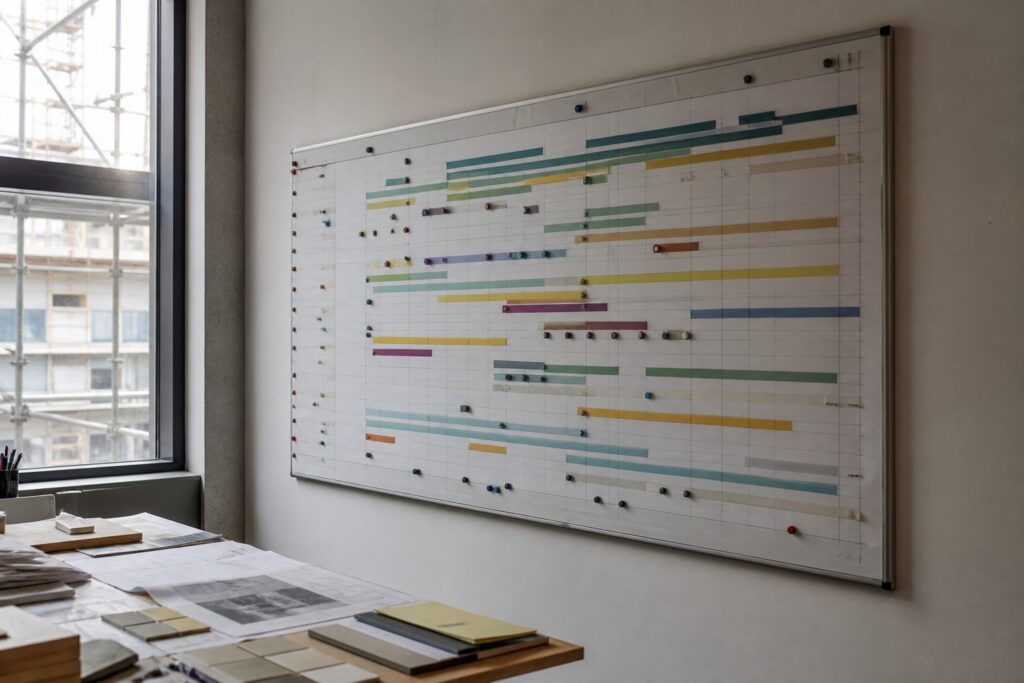
Illustration of a planning board showing an abstract construction programme

02The programme

Inspections set the pace

Rough-in inspections gate the trades behind them. Without a contractor co-ordinating that sequence, a missed booking does not delay one task — it delays everything waiting on it.

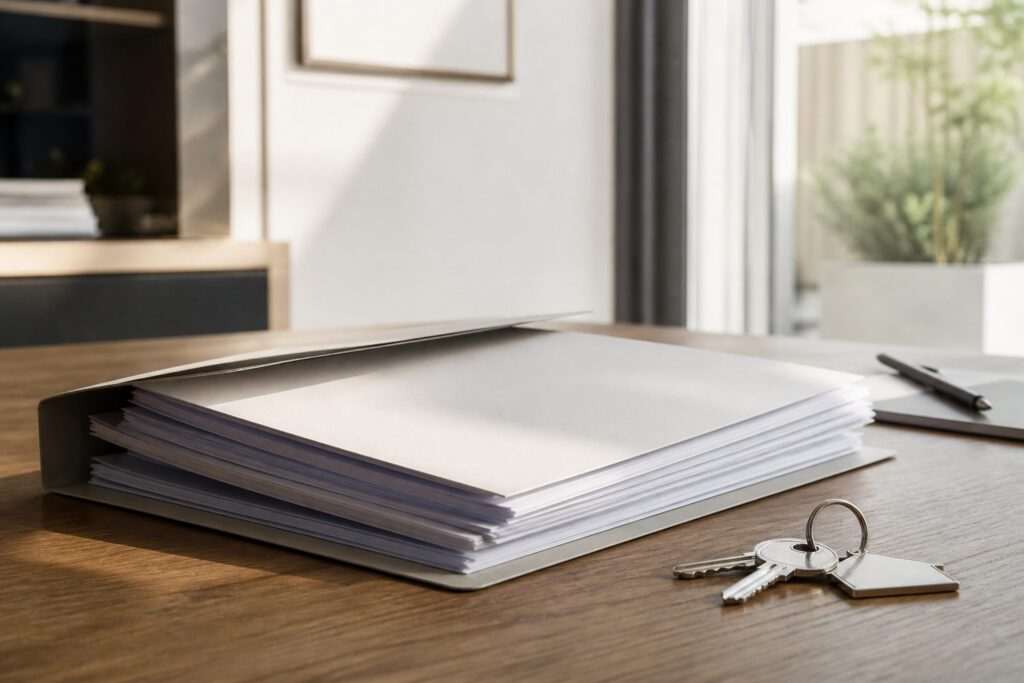
Illustration of closeout documents in a folder on a desk beside a set of keys

03The end

An open permit follows the property

Work is not finished when it looks finished. It is finished when the final inspection passes and, where applicable, the certificate is issued. An unclosed permit surfaces later, usually during due diligence on a sale, and it attaches to the property rather than to whoever was responsible.

Send us your drawings and we will tell you what the department will ask for.

Frame 07ProcessNine stages

Chapter 07 — Nine stages, in order

How the permitting process runs.

Consultation to permit close-out

Eligibility conversation

What you are building, on what property, for whose occupancy, and whether you genuinely intend to supervise the work personally. This is the conversation that decides whether the rest applies at all.

You getA straight answer about whether you qualify.

CheckEligibility established before any document is prepared.

Scope definition

What work is in the permit, which trades will be licensed contractors and which you will supervise directly, and whether the project stays inside the exemption.

You getA clear split between licensed trades and owner-supervised work.

CheckCommercial projects checked against the $75,000 ceiling.

Construction documents

Assembling and preparing the drawing set and supporting information the application needs so that it is complete when it is lodged.

You getA submission that is complete on day one.

CheckDocument set checked against the jurisdiction’s list.

Product approvals

Where the scope includes exterior assemblies, the relevant product approval documentation is gathered and matched to the configuration being installed.

You getApprovals collected before submission, not after a comment.

CheckApproval configuration matched to the specified product.

Application and disclosure

The Owner-Builder Disclosure Statement completed and notarised, and the application signed by you in person at the building department.

You getYou know exactly what you are signing before you sign it.

CheckDisclosure reviewed with you line by line.

Plan review responses

When comments come back, preparing the documents that answer them so the review closes rather than stalls.

You getComments answered in writing and tracked to closure.

CheckNothing left open on the reviewer’s list.

During construction

You supervise the work not performed by licensed contractors, and licensed trades pull their own permits under their own licences where required.

You getA clear record of who is responsible for what.

CheckLicence verification records kept with the project file.

Inspection sequence

Booking and passing the rough-in and progress inspections that gate each stage of the work.

You getA schedule you can actually work to.

CheckEach inspection booked before the trade behind it is ready.

Final and closeout

Final inspection, certificate of occupancy where applicable, and closing the permit so it does not surface years later against the property.

You getA closed permit and a complete file.

CheckPermit confirmed closed, not assumed closed.

We prepare and track the submission. You stay the permit holder throughout.

Frame 08ApprovalsPlanning, permits, inspections

Chapter 08 — The law, plainly

What the exemption requires.

And where it is misused

This section is deliberately blunt. The owner-builder exemption is narrow, it is conditional, and the consequences of breaching it fall on the owner rather than on whoever suggested it.

What the exemption covers

Under Florida Statute 489.103(7), a property owner acting as their own contractor, personally providing direct on-site supervision of work not performed by licensed contractors, may build or improve a farm outbuilding or a one- or two-family residence intended for the owner’s own occupancy — not offered for sale or lease.

The commercial limit

The same exemption covers owner-occupied commercial buildings, but only up to $75,000 in construction cost, under the same personal-supervision conditions.

What it is not

It is not a general licence to build for others, and it is not a route to speculative construction. Those uses fall outside the exemption entirely.

The disclosure statement

A notarised Owner-Builder Disclosure Statement must be completed and signed, and the owner must appear in person at the building department to sign the permit application. In most jurisdictions it cannot be done by mail or through a representative.

What the statement says

In plain terms: that you are legally and financially responsible for the construction, that the work must comply with the Florida Building Code, and that you may not hire an unlicensed person to act as your contractor or to supervise work that requires a licence.

The one-year sale presumption

If an owner sells or leases the property within one year of completing owner-built work, the law presumes the work was built for sale or lease — retroactively violating the exemption, which only covers construction for the owner’s own occupancy.

The consequences

Violating the exemption can mean the permit is revoked and can carry fines up to $10,000. It can also complicate a sale if the issue surfaces during due diligence.

The scam pattern

Licensed contractors are required to pull permits under their own licence for work they perform. An unlicensed individual who proposes doing the work while asking you to pull an owner-builder permit "on their behalf" is a well-documented red flag: it lets them perform licensed work without a licence, while shifting all legal liability onto you.

What a genuine owner-builder looks like

Someone who actually intends to personally supervise the construction — not a legal stand-in for a person who could not pull the permit themselves.

Where we fit

We help with eligibility confirmation, document preparation and construction document assembly. We do not ask you to pull a permit for work we would perform, because that is precisely the pattern above. Where a project needs a licensed contractor, we would rather quote it as one.

This page describes Florida law in general terms and is not legal advice, and nothing here is a determination about your property or your eligibility. Requirements and forms vary by municipality. For advice on your specific circumstances, consult an attorney.

The rules differ by jurisdiction. Let us look at where your property sits.

Frame 09VariablesCost · programme · decisions

Chapter 09 — What moves the timeline

Cost, programme and the decisions behind both.

Scope, jurisdiction, and how complete the drawings are

Fewer variables

Clearly eligible

Your own home, for your own occupancy, no sale planned, and you genuinely intend to supervise the work yourself.

  • One- or two-family residence
  • Owner occupancy, not for sale or lease
  • Personal on-site supervision intended
  • Licensed trades engaged where required
More to confirm

Worth checking carefully

Owner-occupied commercial premises, a larger scope, or a project where several licensed trades will do most of the work.

  • Commercial capped at $75,000 construction cost
  • Supervision responsibility still personal
  • Trade licences verified and recorded
  • Scope checked against the exemption
A different route is needed

Do not proceed

Building to sell or lease, a sale likely within a year, or somebody else asking you to pull the permit for work they will perform.

  • Speculative building falls outside the exemption
  • One-year sale creates a legal presumption
  • Unlicensed party requesting the permit is a red flag
  • A licensed contractor is the correct route

Scope of work

What is actually in the permit determines the document set, the review and the inspection sequence.

Structural elements

Anything structural brings engineering into the document set and lengthens review.

Exterior assemblies

Windows, doors and roofing bring product approval documentation into the submission.

Jurisdiction

Forms, checklists and review times differ by municipality, which affects preparation as much as waiting.

Completeness at submission

An incomplete submission is the most common and most avoidable cause of delay.

Number of licensed trades

More trades means more licences to verify and more permits pulled under other licences.

Your availability

Personal supervision and in-person signing are requirements, so your own time is a real project constraint.

Inspection scheduling

Booking slots and passing first time is what keeps an owner-built programme moving.

Our involvement here is assistance, not construction: eligibility confirmation, document preparation and construction document assembly. What that costs depends on the scope and the document set, and we quote it on that basis. Permit fees themselves are set by your jurisdiction and paid by you as the permit holder. Worth saying plainly: the owner-builder route saves a contractor’s fee and buys you the contractor’s liability, administration and scheduling risk in exchange. For some people that is a good trade. For many it is not, and we will say which we think you are.

For a realistic timeline, we need the scope and the jurisdiction.

Frame 10Sequence of workIllustrative diagram

Chapter 10 — The order of work

How the owner-builder process runs.

Eligibility check to permit close-out

Illustrative diagram

Stage 01

Eligibility and scope

Confirm the property, the intended occupancy and the scope fall inside the exemption.

Stage 02

Document assembly

Prepare the drawing set and supporting information the jurisdiction requires.

Stage 03

Product approvals

Gather approval documentation for exterior assemblies where the scope includes them.

Stage 04

Disclosure and application

Complete and notarise the disclosure statement; the owner signs the application in person.

Stage 05

Plan review

Respond to review comments with the documents that answer them until the review closes.

Stage 06

Construction and supervision

Work proceeds with the owner personally supervising anything not performed by licensed contractors.

Stage 07

Inspections

Rough-in and progress inspections booked and passed in sequence.

Stage 08

Final and closeout

Final inspection, certificate where applicable, and confirmation that the permit is closed.

An illustrative diagram of the general order of an owner-builder permit process. It is not a photograph of a project, forms and sequences vary by municipality, and it is not legal advice.

If you have already been rejected once, we start by reading the comments.

Frame 11On siteWhat to expect while it happens

Chapter 11 — What running your own permit is like

The administration.

Illustrative reference footage

Frame 11 · on siteAssembled from the illustrative reference images used on this page. It is not footage of an Elbaz Construction project — permitting does not produce project photography, and we would rather illustrate it than borrow something else.

You are the point of contactEvery question from the building department comes to you, and every answer has to come back from you.
In person, more than onceSigning the application is in person. Depending on the jurisdiction, other steps may be too.
Booking inspectionsInspections are booked by the permit holder and have to fit the trades’ schedules. This is the single biggest time cost people underestimate.
Verifying licencesIf you engage trades, verifying their licences and insurance is your responsibility now. Keep the records.
When something failsA failed inspection stops the work behind it. There is no contractor absorbing that; the rescheduling is yours.
Keeping the fileApproved drawings, product approvals, inspection records and the disclosure statement all belong in one place from day one.
Closing it outThe job is finished when the permit is closed. Confirm it rather than assume it — an open permit surfaces at sale.

Ready to talk through what you would be taking on?

Frame 12QuestionsFAQ and credentials

Chapter 12 — Questions, and why us

What owners ask before they sign.

Grouped so you can find yours

Eligibility

Under Florida Statute 489.103(7), a property owner building or improving a farm outbuilding or a one- or two-family residence intended for their own occupancy — not offered for sale or lease — while personally providing direct on-site supervision of work not performed by licensed contractors.

Only owner-occupied commercial buildings, and only up to $75,000 in construction cost, under the same personal-supervision conditions.

No. The exemption covers construction for the owner’s own occupancy. Speculative building falls outside it entirely.

The disclosure

A notarised statement you sign confirming that you are legally and financially responsible for the construction, that the work must comply with the Florida Building Code, and that you may not hire an unlicensed person to act as your contractor or to supervise work requiring a licence.

In most jurisdictions, no. The owner must appear in person at the building department to sign the permit application. That requirement exists so the person accepting the liability is the person present.

Risk

Florida law presumes work sold or leased within one year of completion was built for sale or lease, which retroactively violates the exemption. That can mean the permit is revoked, fines up to $10,000, and complications during due diligence on the sale.

No — it is a well-documented red flag. Licensed contractors are required to pull permits under their own licence for work they perform. Being asked to pull an owner-builder permit "on their behalf" lets an unlicensed person perform licensed work while shifting all the legal liability onto you.

You are the responsible party for code compliance and for the construction. That is what the disclosure statement says, and it is the substance of the exemption rather than a formality attached to it.

Working with trades

Owners commonly do. Licensed trades pull their own permits under their own licences where required — that is a core part of what licensure means. Verifying those licences becomes your responsibility.

You do, for anything not performed by licensed contractors. That personal supervision is a condition of the exemption, not an optional extra.

Our role

Eligibility confirmation, document preparation and construction document assembly — the parts of the process that do not require you to give up your legal role as owner-builder.

No. That is precisely the pattern that gets homeowners into trouble, and we will not take part in it. Where a project needs a licensed contractor, we would rather quote it as one.

Then that is the answer, and it is more useful early than late. We would rather lose the enquiry than help somebody sign a disclosure they should not sign.

Practicalities

An incomplete submission, or a plan-review comment that goes unanswered because nobody is sure what document would satisfy it. Both are avoidable, and both are what assistance is actually for.

Confirm it with the building department rather than assuming it from the final inspection. An open permit attaches to the property and usually surfaces at sale.

Still have questions? Talk to a licensed contractor before you sign anything.

Frame 13ReviewsGoogle

Chapter 13 — What clients said

Reviews, quoted as written.

Rated 4.8 from 343 Google reviews at the time of writing.

Frame R1ReviewGoogle
If you are planning to remodel your kitchen or bathroom or do any other construction project, call Sean from Elbaz Construction . He has a lot of experience and will recommend the best options/ suggestions to your project. He did high quality job !

Kameron AllisonGoogle review

Frame R2ReviewGoogle
Great experience! The team was professional, efficient, and delivered high-quality work on time. They communicated clearly throughout the project and exceeded our expectations. Highly recommend for any construction needs!

AndrewGoogle review

Frame R3ReviewGoogle
Sean has experience and he gave me the best ideas for my kitchen and bathroom project. He did high quality Job . We are very satisfied

J CGoogle review

Read every review on Google, unedited.

Schedule a Consultation (754) 236-0675
Preferred contact method

We use your details only to respond to this enquiry. No lists, no resale.

Thanks — that came through.

Your enquiry is with the Elbaz Construction team. A licensed contractor will call you back to ask about the lot, the drawings and your timing. If it is easier to talk now, call (754) 236-0675, Sunday to Friday 7am to 7pm.

Frame 14StartConsultation, not a sales visit

Chapter 14 — Start here

Tell us the project.

An eligibility conversation, not a sales visit

The first question is whether the exemption genuinely applies to you, and it is answerable in one conversation. If it does, we can help with the documents. If it does not, we will tell you that — and if somebody has asked you to pull a permit for their work, we will tell you what that is.

What happens after you send it

01
We read what you sendThe property, what you are building, and who will occupy it.
02
We call you backA licensed contractor, to ask the questions that decide whether the exemption applies.
03
We confirm eligibilityOccupancy, scope and supervision checked against what the exemption actually covers.
04
You get it in writingEither a scope for document assistance, or a plain explanation of why another route is the right one.

Useful to have ready

  • The property address and whether you own it
  • What you intend to build or improve
  • Who will occupy the property afterwards
  • Whether a sale or lease is possible within a year
  • Whether anyone has asked you to pull the permit for them